Archive

Uncategorized

A couple of weeks ago I went to my first dConstruct conference.
It’s a brilliant one day event full of clever people talking about new technology and how it will affect people, culture and the world around us.

This year, the theme was Communicating with Machines.
The theme was pretty loose, and most people didn’t actually talk all that much about it – but there was some interesting IoT nuggets.

Here’s a quick synopsis of what I remember from the talks.
They’ll be online shortly I’m sure, so you can listen to all of the really important bits that I’ve forgotten…

First up – AMBER CASE, a cyborg anthropologist. Started Geoloqi.
Defined a Cyborg as ‘anything that attaches external appendages to themselves to deal with new spaces.’
Talked a lot about a really interesting guy called Steve Mann, who started experimenting with wearable technology in the 1980s. (Interestingly, one of the things he pioneered was ‘diminished reality’, not augmented reality, where billboards etc are cancelled out by the technology – and instead display useful things like ‘remember milk’ and ‘your bus is 2 mins late’)

By 1998 he had his tech down to the size of sunglasses.
But creating ‘input’ was always the issue. Increasingly difficult to break away from the mouse.
We’ve gone from solid buttons (blackberry style) to liquid buttons (iPhone style)… Perhaps next, buttons in air? Problems being battery drain and privacy.

She went on to suggest that calm technology might be next in line. Processes that happen in the background, ambient notifications etc. Essentially, there when you need it and not when you don’t.
Geoloqi started to experiment with location based ambient notifications. Leaving messages around the city, which could then be picked up when you were in that area. Messages such as ‘This bridge is 40 years old’ or ‘My mates and I are in class writing you this message.’

Wikipedia has GPS Coordinates on wikipedia – these could even line up to where you are.
‘Don’t Eat That’ – an app that shows location based results on restaurant inspection scores.
Location based tech could work as part of home automation. E.g House could say hello when you arrive. Could let you know hyper-local weather trends (e.g when to head out for a bike ride.) Could let you know when your next bus will arrive.

Interesting testing procedure when developing tech. Rather than pay lots of people to run all over town, instead created a real world Pacman game. People ran all over the city because they WANTED to, and allowed them to test their tech.

And if we have location data, then what about if we correlated that with food data, stress data, who I’m with data, time of day data, productivity data, happiness data, ambient noise data, amount of sleep data etc? The quantified self.

The hardest bit about all of this will be getting platform owners and fragmented data sets to work together. Who will do it? Google? Apple? Microsoft?

The best tech will probably be invisible.
It will also probably help take things that are already invisible, and make them visible. e.g Harvard Happiness Challenge – did experiment where rated happiness every half an hour. Worked out that she wasn’t happy at work. So quit.

All devices should be aiming to make us superhumans.

Next up was LUKE WROBLEWSKI.
Luke’s talk was perhaps the slickest animated keynote I’ve ever seen.

He talked about infinite inputs (interesting topic considering Ambers data sets above.)
He talked about how in his lifetime he’s had mouse-mac, clickwheel-iPod and touchscreen-iPhone.
Each time a new imput has come out, there’s been new interactions to learn from a developer point of view.
And it takes AGES to learn again…

Usually you can’t just adapt what you already have (look at the generic desktop calendar widget on a mobile phone vs Google Mobile Flight tracker.’
Or Amazon desktop store, vs Amazon mobile store, vs Amazon Flow (simply take a picture of something you want and it scans through Amazon and finds it for you.)

We’ve had accelerometer inputs, magnetometer inputs and we now have full 9 axis motion and orientation sensing.

Inputs are becoming hugely advanced. Samsung ‘Smart-stay’ used the front facing camera, and checks to see if you’re looking at the screen. If you’re not looking, it pauses whatever is on (e.g Youtube) until you look back.
Google glass even has the beginnings of a bone transducer for sound.

Where next?
Disney Imagineering Touche project? Perhaps.
Capacitive touch sensitive. Objects like a table can suddenly sense whether there’s an arm, or a hand, or two hands, or two arms on it. A doorknob can tell whether it’s been grasped or just touched etc.
So soon everything will be an input.
And what then. Well, we’ll have to start learning a little bit faster!

NICOLE SULLIVAN talked about trolling.
Tenuous link to communicating with machines I think – more communicating via machines – and unfortunately I didn’t make too many notes in this one.

She talked about there being different types of troll: jealous troll, grammar nazi, biased troll and scary troll.

Interestingly she also talked about something Project Implicit, run by Harvard at http://goo.gl/2601D
Well worth a look.

SIMONE REBAUDENGO was up next, and talked about the Secret Lives of Connected Products.

He used a line I’d heard previously from John Lasseter, about how ‘a products main goal is to be used.’
And suggested perhaps this might mean peer pressure could develop between products.
He then showed his toaster project, which was great.
The toaster handle is very cute.
It’s also extremely competitive – picking its workplace depending upon the number of people there, what the space is like, whether there are any other toasters in the vicinity etc.
The toaster can tweet to try and drum up toasters from the office, or get excited when someone comes close.
It can even decide to leave if it’s not used enough.
It’s quite an interesting concept when a person doesn’t demonstrate their buying power with a product, but instead demonstrates their keeping power.
Essentially Simone was saying that connected products shouldn’t just be connected. Instead we need to start looking at the relationships between connected products. And by doing so, we’ve got a much better chance of making sense of it all.
Lunchtime came around and we got to have a play with some of the things in the foyer.
The Happiness machine (an internet connected printer that prints random happy thoughts from across the internet) and the Noisy Table (a ping pong table that makes sounds and music as it’s played) were great.
And then I popped off to Brighton Pier for some fish and chips.
After lunch, we had the delights of SARAH ANGLISS.
Sarah is a musician – using physical, automated and digital instruments to make her music.
She talked a bit about the Uncanny Valley – an interesting phenomenon that shows as machines etc get closer to looking like humans, we stop being empathetic and start fearing them.
She also talked about how some of us are obsessed with the uncanny – audiophiles are continually chasing musical nirvana, and are always one piece of kit away. They want a perfect copy of what was recorded.
I found it really interesting when she talked about infrasonic sound – tones that are so low that you feel it rather than hear it. Often used in church organs etc – it can often make you feel ‘at one with the music’ and ‘absorbed.’ Fascinating.
I can’t remember exactly why, but she also talked about the Italian Castrati – singers that were castrated before coming of age, to preserve their vocal range. Weirdly it also messed with their hormones and they generally grew to be very tall, very slim and very good looking.
She finished with one of her own compositions – very ethereal.
KEREN ELAZARI talked about hackers and hacking.
She referenced Arthur C Clarkes three laws at the start of her talk.
I love the third one… ‘Any sufficiently advanced technology is indistinguishable from magic’ by Arthur C Clarke.
The second one is equally brilliant: ‘the only way of discovering the limits of the possible is to venture a little way past them into the impossible.’
She talked about the Singularity University, which brings people together from all over the globe to use technology for good.
And a little bit about hackers and the hacker manifesto.
MACIEJ CEGLOWSKI was a hilarious speaker.
He talked about fan fiction – one of the main customer bases on his site Pinboard.
It’s a genuinely hilarious talk and well worth searching out.
He stuck up for fans, because they a)  are SO NICE b) fight censorship c) fight for privacy d) never sold out e) transgress  f) improve our culture
And he shared some top tips for developing.
The first of which was ‘Social is not a syrup.’ You can’t just add it on the top.
In fact, it’s not even a noun.
The second was that ‘You shouldn’t make it too easy’. His pet theory is around commenting. If you make it sufficiently difficult to comment, then you only get the people that are actually interested commenting.
The third was ‘Stop futzing with it’. Too true.
And the fourth was ‘Shut up and listen’. When developing Pinboard, he started a google document for potential users to write down any functionality that they’re like to see. In the end… he had a 53 page document. But it allowed him to work out what was most important to people.
DAN WILLIAMS spoke about the ramifications of communicating with machines everywhere.
Particularly vehement about Scenetap – a camera on the door of every club that records venue demographics (num of girls, boys, potential economic class etc.)
He found it shocking because it doesn’t offer an opt-out.
Apple stores are the same – camera as you enter.
In fact cameras are everywhere.
And under the data protection act, you can legally request the video images of yourself.
Which has given birth to the brilliant Manifesto for CCTV Filmakers.
He also spoke about the new recycling bins in the city, which have had an amazing scope creep.
First they were bins, then they were advertising sites, now they actually watch people walking past and can track them all along the street. The annoying bit being of course that they don’t function well as a bin!
Essentially it comes down to how we find ways of explaining with regards to data collection – as currently it’s just not happening.
Finally then, ADAM BUXTON spoke.
He was genuinely hilarious.
He talked about how twitter is like acid – it magnifies your personality.
And talked about his history with technology.
I think it’s worth rooting out the video to watch his presentation – as he used the slides brilliantly as a counterpoint to what he’s saying.
And that’s it. Looking forward to next year!

Back in June, I set out on doing a number of ’24’ challenges.
Of which one was 24 films.

Well it’s not really working without a solid list, so I’ve decided to change slightly and instead work through 24 film classics that I’ve never seen before.

I’m slightly embarassed I’ve gone through life without seeing any of the films below, so hopefully this challenge will put that right.

Here’s that list:

1. American Beauty
2. The Birds
3. The Empire Strikes Back
4. The Fog
5. The Godfather
6. King Kong
7. Up
8. Zorro
9. The Shawshank Redemption
10. Goodfellas
11. Se7en
12. The Usual Suspects
13. Casablanca
14. It’s A Wonderful Life
15. Reservoir Dogs
16. Singin’ In The Rain
17. Some Like It Hot
18. The Graduate
19. The Untouchables
20. The Good, The Bad And The Ugly
21. Memento
22. Donnie Darko
23. Fargo
24. A Clockwork Orange

And in between writing the list and getting it online, I’ve already seen two…

1. American Beauty
2. The Birds
3. The Empire Strikes Back
4. The Fog
5. The Godfather
6. King Kong
7. Up
8. Zorro
9. The Shawshank Redemption
10. Goodfellas
11. Se7en
12. The Usual Suspects
13. Casablanca
14. It’s A Wonderful Life
15. Reservoir Dogs
16. Singin’ In The Rain
17. Some Like It Hot
18. The Graduate
19. The Untouchables
20. The Good, The Bad And The Ugly
21. Memento
22. Donnie Darko
23. Fargo
24. A Clockwork Orange

It seems a bit futile ‘reviewing’ these films. They’re been reviewed enough already.
So I’ll think of something different to do with them once I’ve watched them.

Soph and I popped along to the Gruffalo exhibition a few weekends ago.
(Yes, there was a child in tow – it wasn’t just us being weird.)

Julia Donaldson’s work was cute, but the thing that I really fell in love with was the work of her illustrators, particularly Axel Scheffler.

Axel’s creative process and his relationship with his editor really interested me.
Here’s a snippet written by him:

I did the initial drawings of the Gruffalo in my sketchbook one afternoon. When I showed them to my editor she said the monster was too scary, so I softened him. At first I gave the mouse clothes, German lederhosen, but I changed that. I found the forest backdrop a bit of a struggle, perhaps because I am a perfections or perhaps because I used up all of my green and brown pens on the trees.

Here’s an early proof from the follow up to the Gruffalo, the Gruffalo’s Child.

And here’s one from Tabby McTat, followed by the finished proof.

I think this letter from his editor is a pretty decent example of how to give feedback to an artist.
Quite interesting.

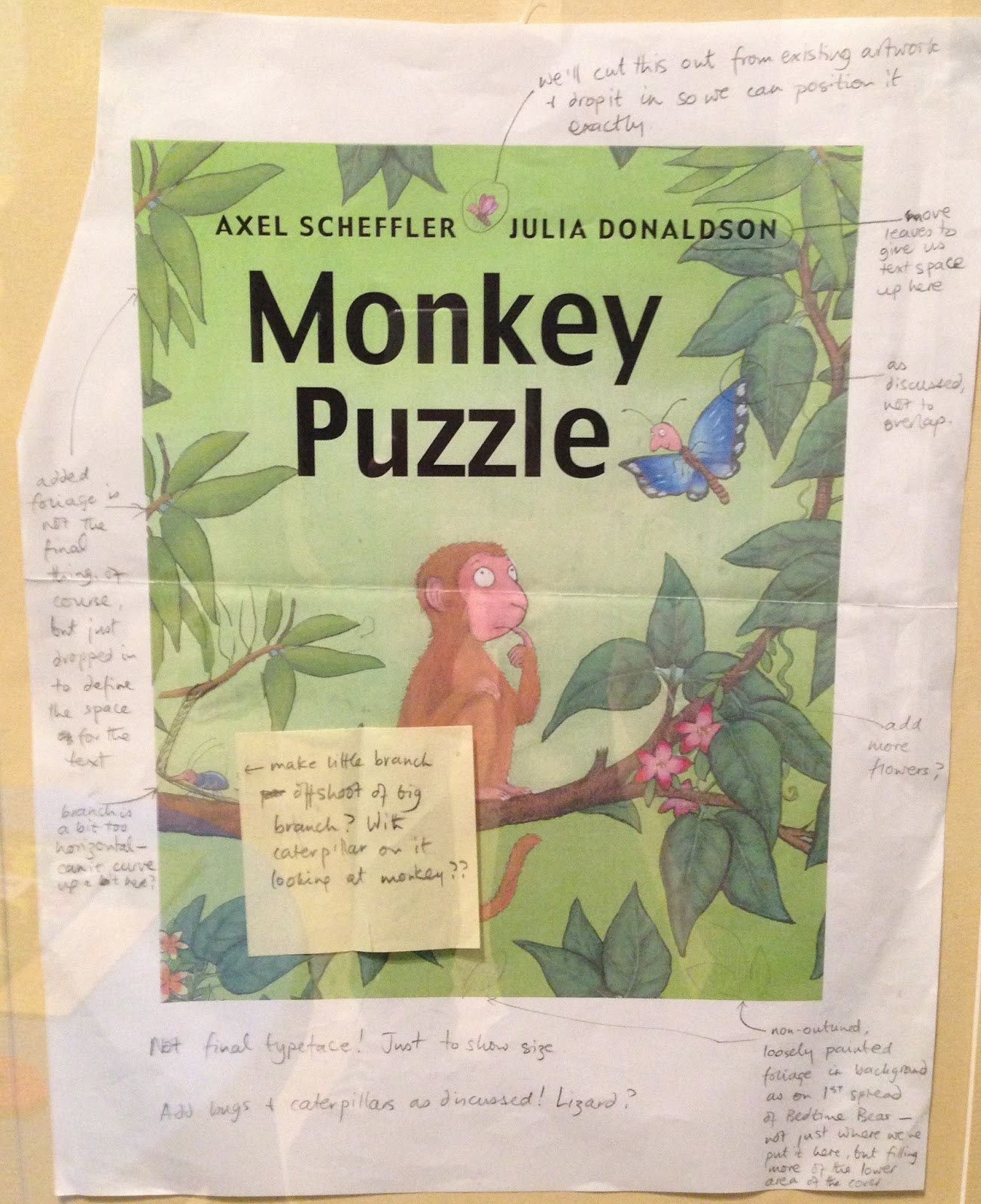
And again, quite interesting to see the notes and feedback on the front cover of the book Monkey Puzzle.
(Note the switch in order of Axel and Julia’s name from the proof to the final edition…)

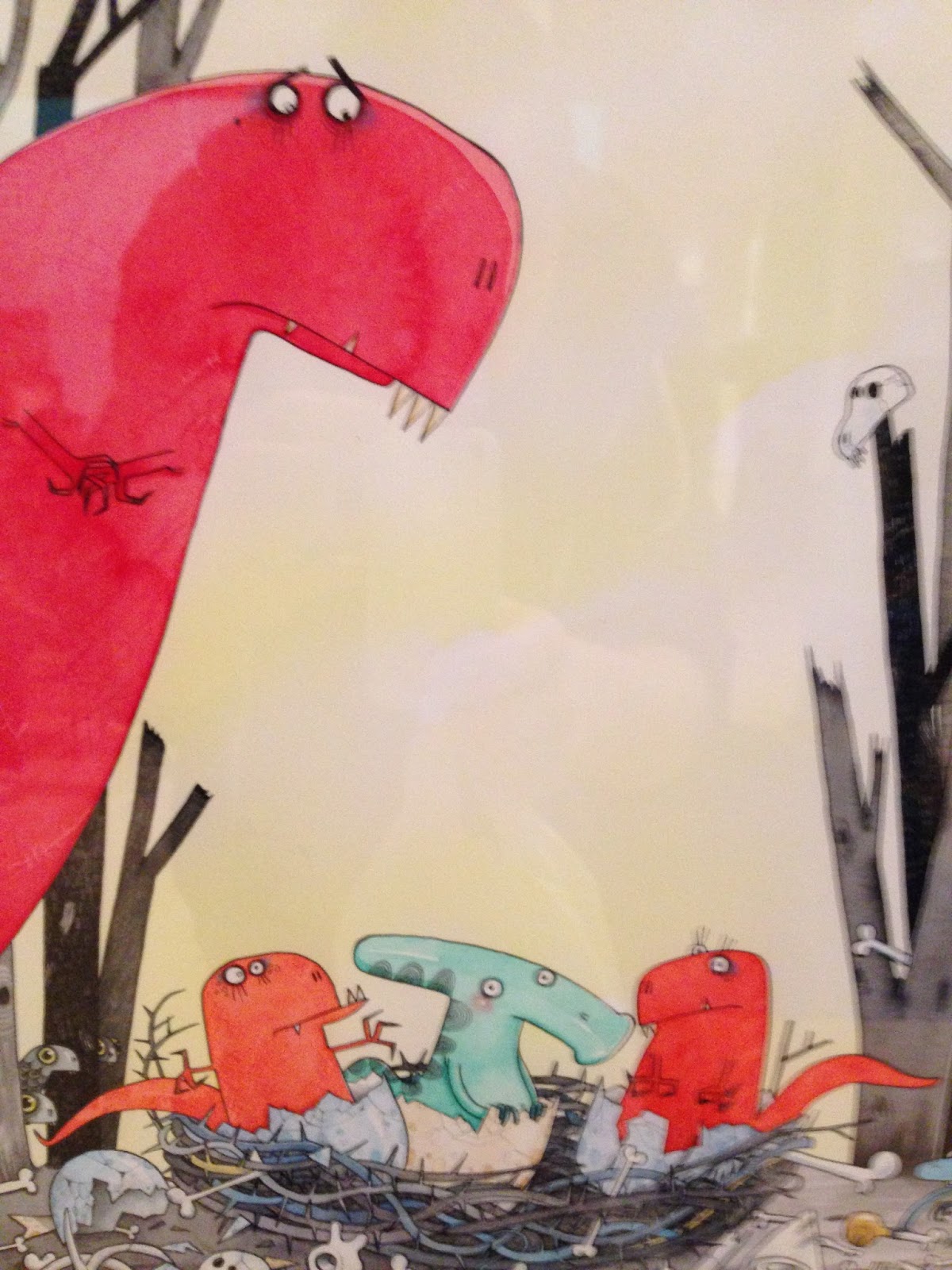
A couple of illustrators really stuck out for me.

David Roberts work was brilliantly odd.

Lydia Monks also really stuck out.
I really love her technique – using photographs of real materials to fill certain parts of the image.
I think the ram in particular is a nice touch.

The art of propaganda is not telling lies but rather seeking the truth you require and giving it mixed up with some truths the audience wants to hear. R. Crossman

The word ‘Propaganda’ has its origins in the word propagate – used in reference to the dissemination of beliefs and doctrine in the Catholic church in the 17th century.

When you enter the exhibition, you’re greeted by a 1949 propaganda instructional video.
Some of the techniques mentioned include:

Glittering generalities
Transfer
Name calling
Card Stacking
Testimonial
Plain folks
and… Band wagon.

Glittering generalities is such a brilliant phrase.

There’s some interesting examples from the wars.
Here’s a book that Germany published in the US in 1915 to discourage America from entering World War 1 on the British side.

Britain had its own propaganda experts.
I’d never heard of Lord Northcliffe before the exhibition, but he owned The Times, The Daily Mail and a number of other papers before and during World War 1.
When you consider this was an age before television, radio or the internet – you can understand the overwhelming power that one man had over public opinion.
He wrote a number of propaganda ‘maxims’ as a guide for the Committee on Enemy Propaganda.
Here’s some of them:
  • Useless material is worse than no material.
  • Undigested material is no material.
  • Overlapping with propaganda in neutral countries, Austria and Turkey, is unavoidable. No energy need be wasted therefore in trying to avoid it. Go to your objective by any route.
  • What can be done by open means must not be done by occult means. What can be done by normal methods must not be done by special agents.
  • Lies are the least effective form of propaganda. The effect of a lie diminishes and the effect of a frank statement increases with the square of the time that has ensued after it has been told.
  • Propaganda that looks like propaganda is third rate propaganda.
  • Never shove your propaganda to a conclusion he can reach unaided.
  • Unless men are very ill or very uncomfortable, they resist fears and welcome hopes. The human mind dismisses fears and accepts and even invents hope with all its strength. Propaganda that merely threatens achieves nothing unless it holds out hopes also.
  • No man will blame himself if there is anyone else to blame. Never blame your propagandee. Blame his Government, blame his leaders. Never blame ‘the German’ or ‘Germany’. Indignation with others is the natural state of man.
  • For the purpose of propaganda in germany at any rate, the German is a brave, honest, orderly, clean, able, good-hearted man, gentle matured and cultured but scandalously misled; he was, in Switzerland, the first republican in Europe; he flourishes in the republics of America; Tacitus witnesses to his virtuous and democratic past; and the Anglo-Saxons, the Franks and Lozbards were all Germanic peoples.

This picture shows Mao as a young man, striding to single-handedly win victory to the 1922 miners’ strike in Anyuan. It’s believed to be the most reproduced painting anywhere in the world, with more than 900 million copies made.

There are a number of interesting propaganda techniques used in the image.
Clouds: the clouds part with the arrival of Mao, suggesting a better, brighter future for China.
Lone figure: Mao is the sole deliverer of revolution.
Clothes: Mao wears plain clothes – implying he’s a man of the people.
Clenched fists: showing Mao’s determination to succeed.
Umbrella: Showing extensive travel in all weathers.

You may know the poster campaign ‘Dig for Victory’ – but it took many forms, including the Potato Pete cartoon.

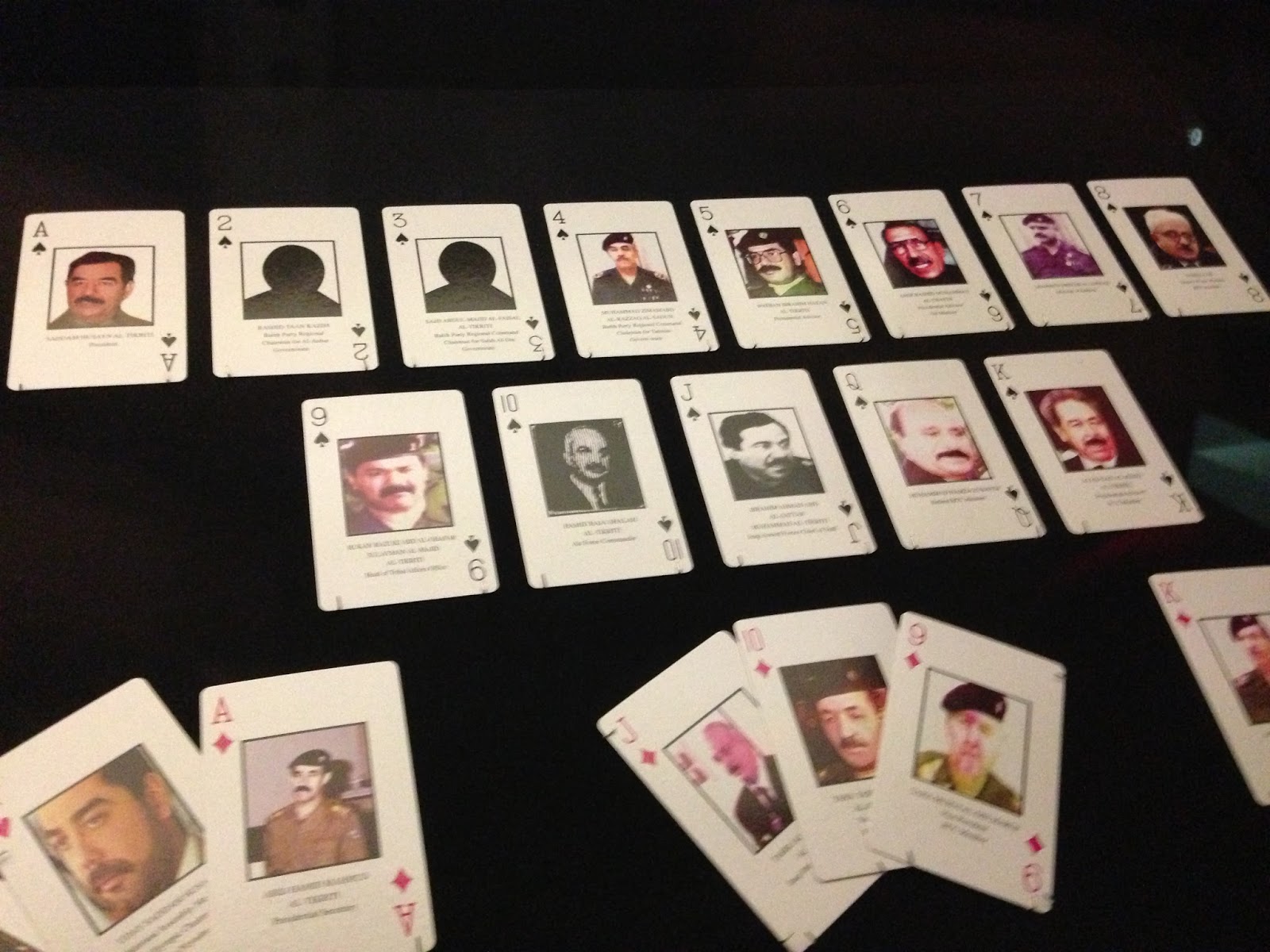
Amazing to learn that the US army was issued with playing cards featuring prominent members of Saddam Hussein’s regime.
A really nice solution – considering the amount of card games that are probably played whilst waiting for action.

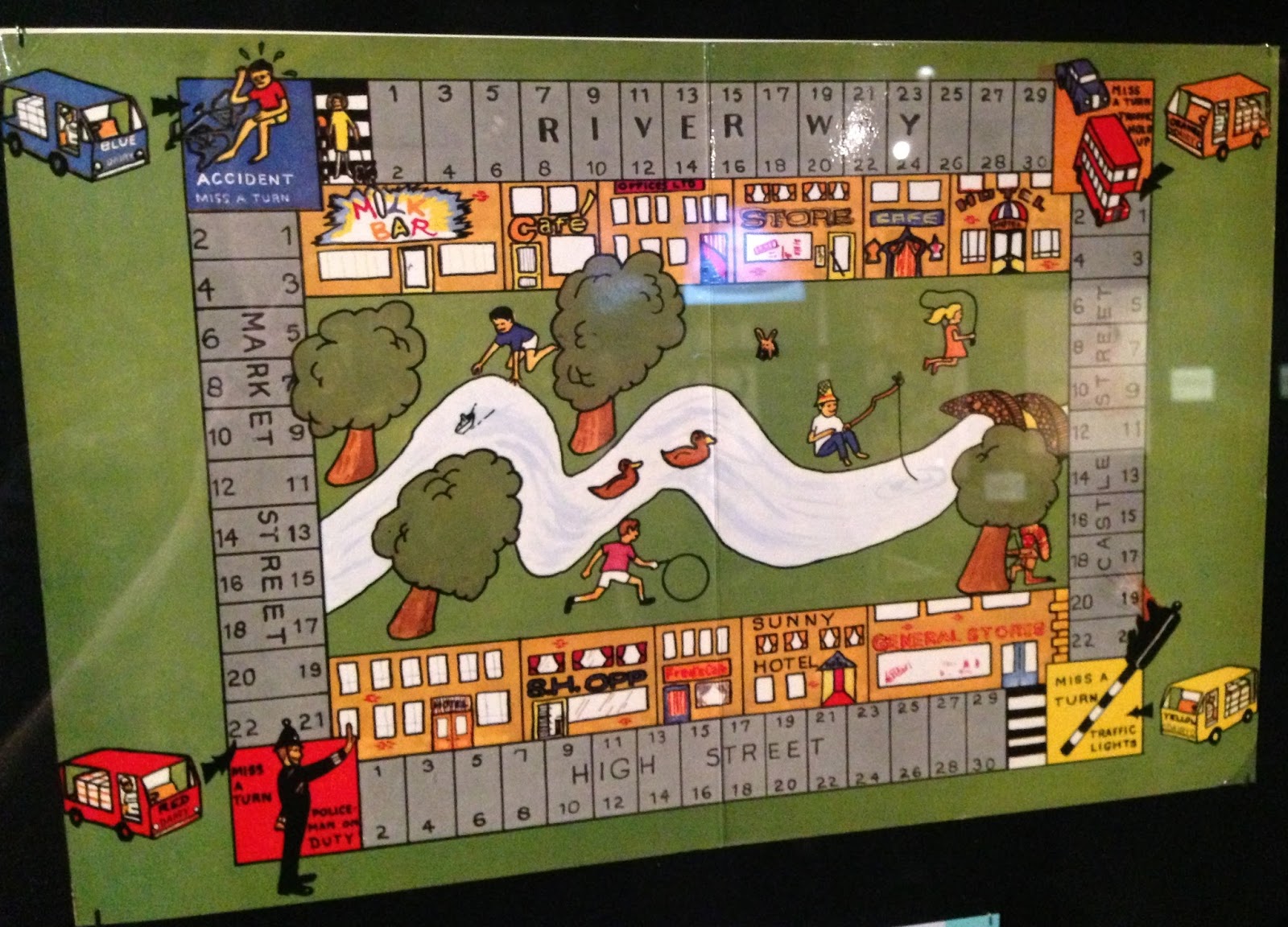
I thought this was also quite an interesting game.
A board game designed to encourage children to drink milk by the Milk Marketing Board, a UK government agency established in 1933 to control milk production and distribution.


At the National Gallery the other day, I saw a portrait of Jesse Boot, founder of Boots (the chemist).
Rather embarrasingly, I knew literally nothing about one of the great entrepreneurs of the Victorian age until that point.

Jesse was the son of a medical herbalist in Nottingham.
At the age of ten he began working in his father’s shop.

His first significant business venture was in Feb 1877, when he caused a minor sensation in Nottingham by launching an advertising campaign that increased weekly shop takings from £20 to £100.

New shops in surrounding soon followed and by 1914, he had built up a retail chain of 560 branches – combining the sale of medicines with books and ‘fancy goods’.

He sold his controlling stake in the company in 1920 for £2.275m and devoted the rest of his life to philanthropic efforts.

Think he’d be an interesting subject to look into a little more.

I think this might be my favourite so far.

Down House is Charles Darwin’s old gaff.
He moved there to escape London life – choosing the house more on its location than its looks.

Darwin liked it because it was built in an interesting area – the topography was varied and the soil changes from Thames clay to Downe chalk within a five minute walk in either direction of the house.
This meant that different plants and wildlife could be found in all directions – perfect for his experiments.

The exhibits within the house were laid out brilliantly.
I was really interested to read that Darwin hadn’t done too well at school or university.
Taking the job on the Beagle was almost a last resort – not a reward for ability.

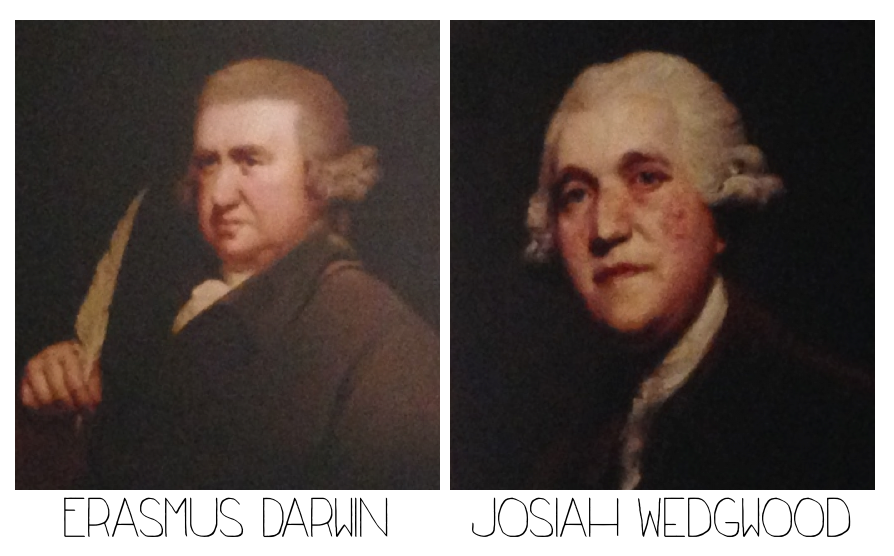
Both his grandparents, Erasmus Darwin and Josiah Wedgwood were important and influential figures in the industrial revolution. He lived a hugely privileged life, thanks to the Wedgewood-Darwin fortune.

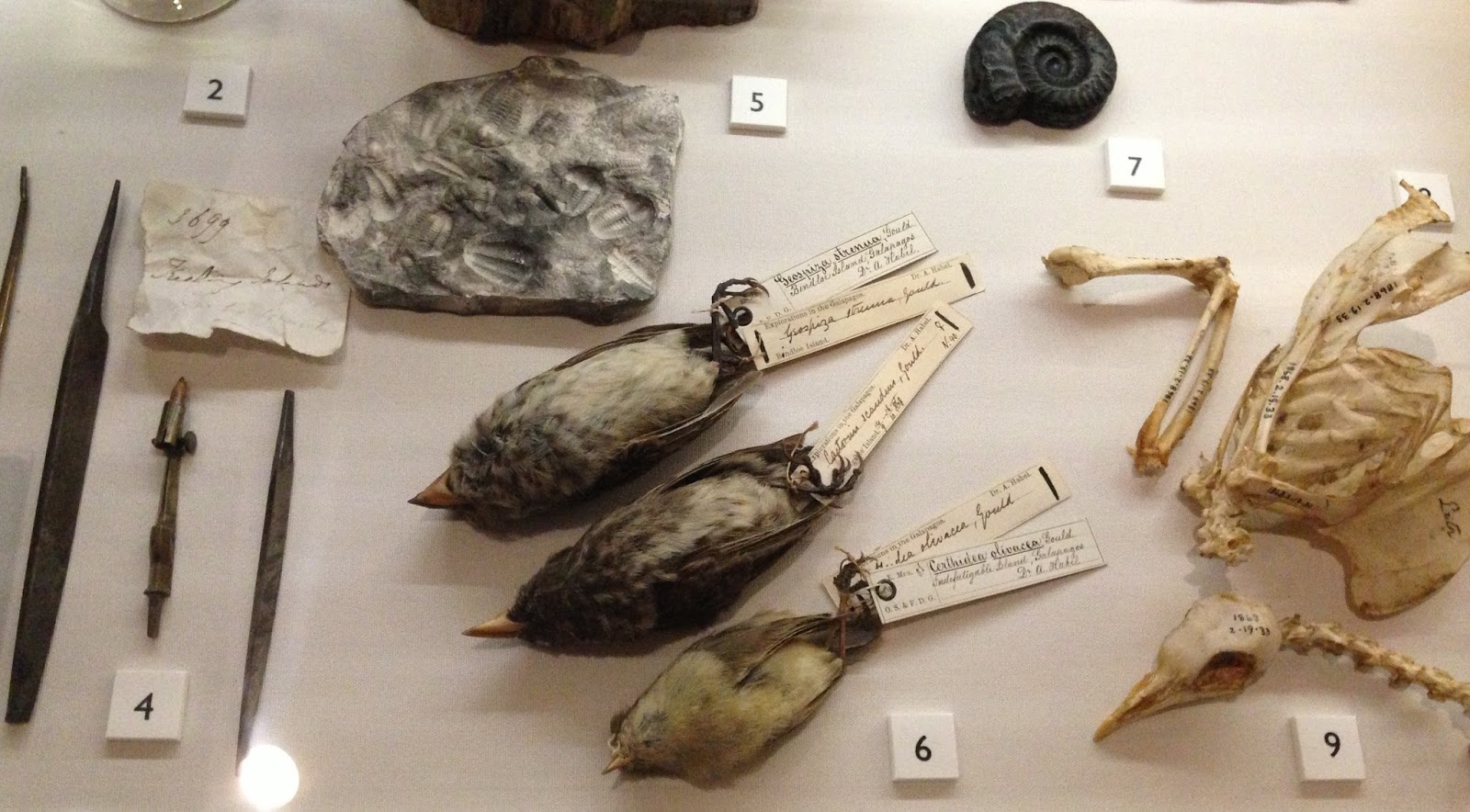
One of the things that really interested me was his passion for collecting things.
He amassed huge collections of different things, and he was extremely ordered in the way that he catalogued everything.

Even as a small boy, he collected small pebbles.
In Cambridge, Darwin and his cousin Fox collected beetles fanatically.
They devised ingenious traps, employed labourers to help and spent hours creating beetle arrangements.

When on the Beagle, he collected and shipped thousands of specimens back to England.
In many cases, he only came to realise their significance after he’d returned home.

In his autobiography, Darwin stated ‘The passion for collecting, which leads a man to be a systematic naturalist, a virtuoso, or a miser was very strong in me.’ 

We decided to go on a garden tour around the grounds.
If you ever go, do this. Couldn’t recommend it more.

We went into Darwin’s lab and saw some of the different plants that we kept for experiments.

We learnt about Darwin’s experiments with bees. For people to accept his theory of evolution by natural selection, Darwin had to explain how the hexagonal cells found in the wax of a beehive were formed by natural processes.

He worked out that the hexagonal shape is made by compressing cylindrical cells together – not magic…

Darwin used to keep fit by doing five laps of the ‘Sandwalk’ – a one mile looped footpath at the bottom of his garden.

He’d complete the circuit five times, kicking over five flint stones as he went round.
His kids used to play a trick on him, putting the flints back up again once he was out of sight – and he’d inevitably end up doing more than five laps.

Thinking whilst walking seems to be a habit of most of the brightest minds in the world.
I think that’s quite interesting.

Darwin seemed to be a fan of notebooks.
A man after my own heart.

He also spent nearly 20 years writing and verifying Origin, before allowing it to be published.

He was a prolific letter writer – apparently penning over 14,000 whilst at Down House.
He often requested advice and expertise from other scientists and luminaries, and penned responses to any questions or debate about his book.

His family actually even had a poem on the subject:
Write a letter, write a letter;
Good advice will make it better;
Father, mother, brother, sister,
Let us all advise each other.

In 1851, Darwin spent £20 on ‘stationary, stamps and newspapers’, roughly £1000 in today’s money.

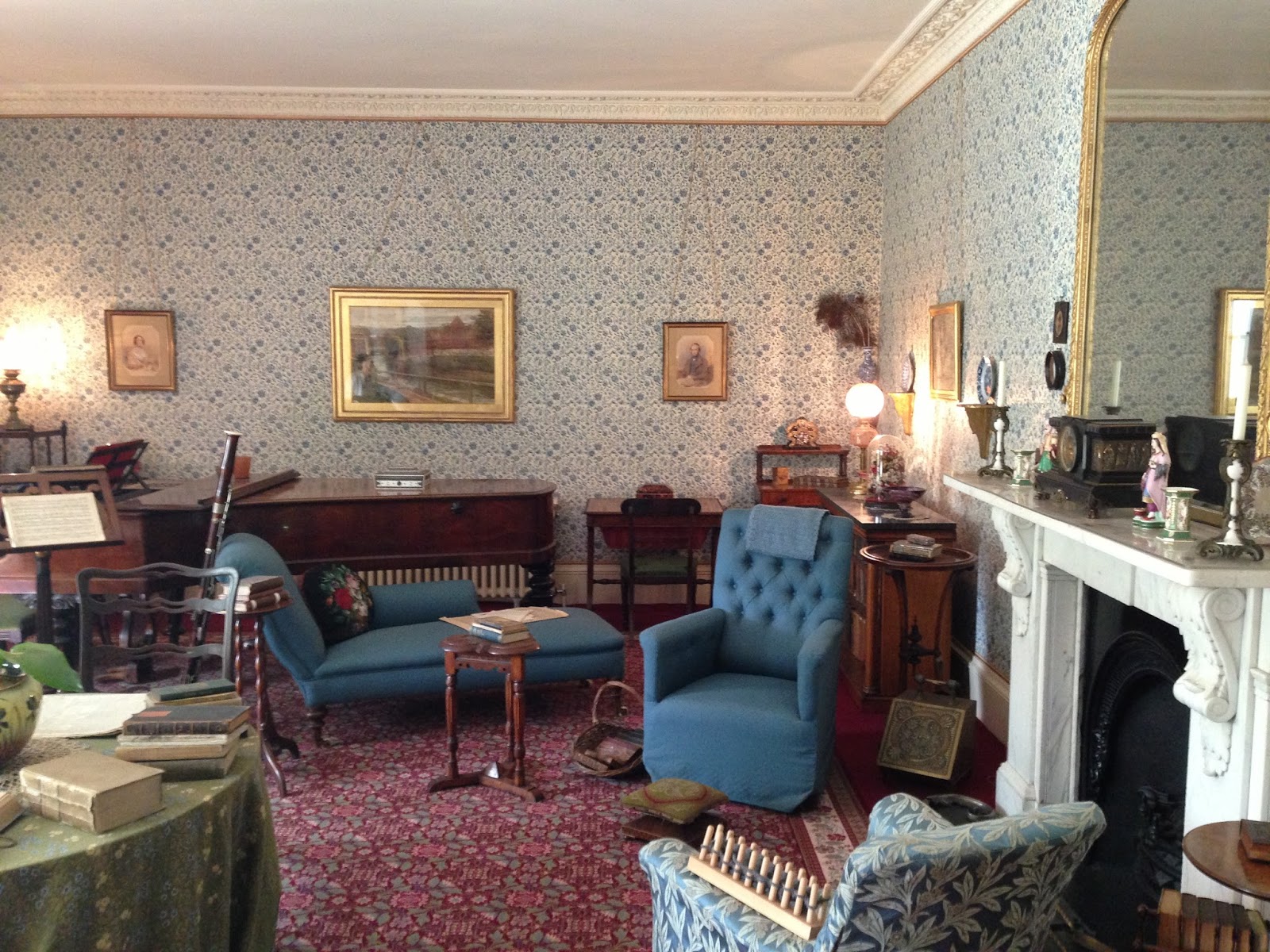
The drawing room in the house has been restored by the English Heritage to exactly how Darwin had had it.
Darwin and his wife-cousin Emma used to play two games of backgammon in there every night.
Darwin kept a running score, in a notebook of course.


And ah, the best bit of the house.
The study.
Man can only dream of a study as handsome as this.

I REALLY want these shelves and cabinets.


FIVE FACTS

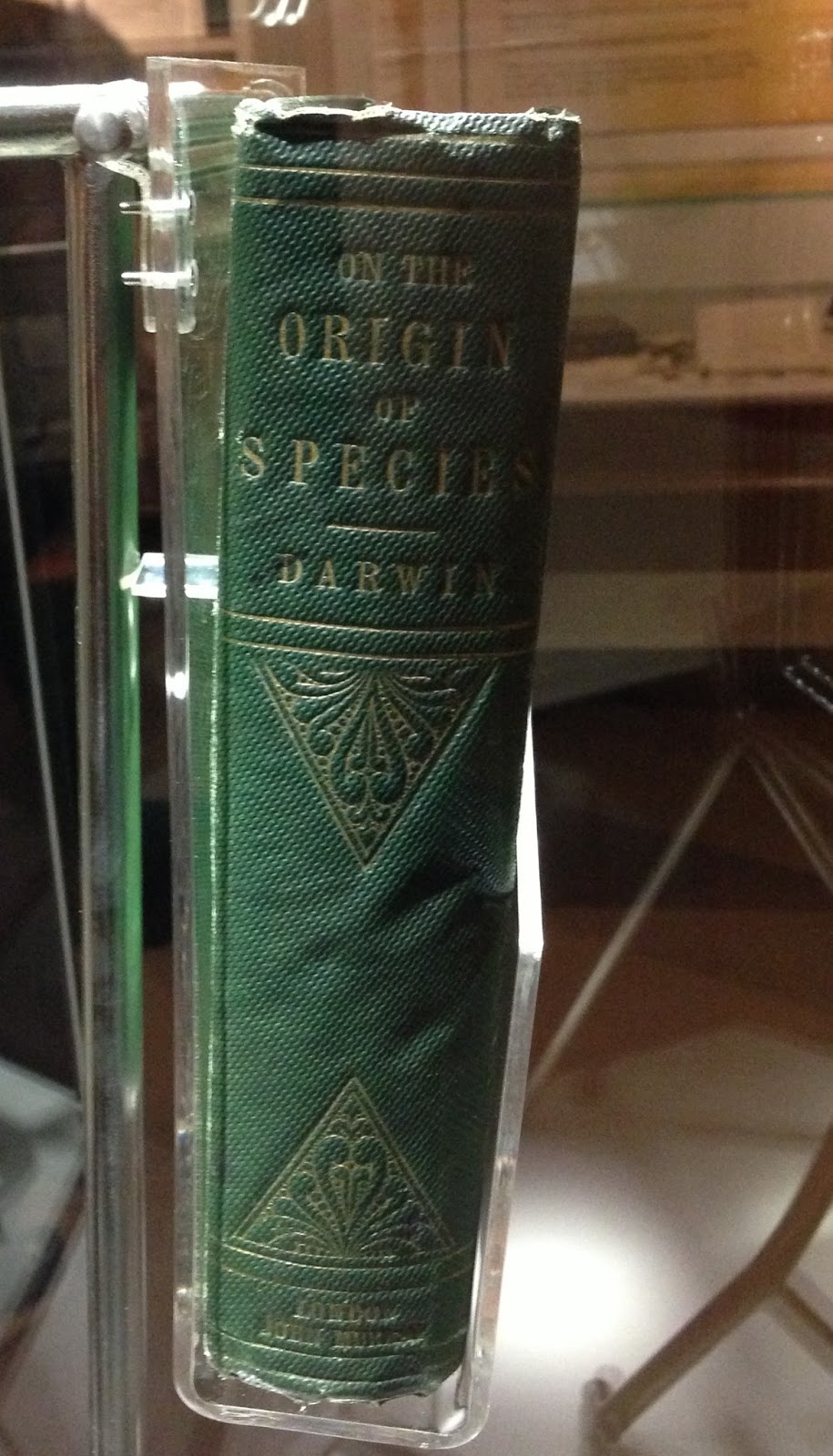
#1. The first initial print run (1,250 copies) of On the Origin of Species sold out on its first day.
#2. At Cambridge, Darwin was a member of the Glutton Club which specialised in eating unusual creatures. It’s recorded that he tried Bittern and Hawk whilst there.
#3. Darwin was only 22 when he went out on the HMS
#4. The phrase ‘Survival of the Fittest’ wasn’t written by Darwin. Philosopher Herbert Spencer coined the phrase.
#5. Darwin was an avid reader, and took books with him wherever he went. He used to snap large books in half to lighten the load when carrying them.

1. Cartoon Museum 

2. Churchill War Rooms 
3. Cinema Museum 
4. Dennis Sever’s House 
5. Dr Johnson’s house 
6. Design Museum 
7. Down House 
8. The Geffrye Museum 
9. London Film Museum 
10. London Transport Museum 
11. Mansion House 
12. Brunel Museum 
13. Museum of the Order of St John 
14. Musical Museum 
15. Old Operating Theatre Museum & Herb Garret
16. Pollock’s Toy Museum 
17. Rose Theatre exhibition 
18. Fashion and Textile Museum 
19. Royal College of Music Archives and Museum of Instruments 
20. Sherlock Holmes Museum 
21. Twinings Museum 
22. V&A Museum of Childhood 
23. Bank of England museum 
24. The Stephens Museum 

Second museum of the weekend, and second friend bullied into visiting it with me.

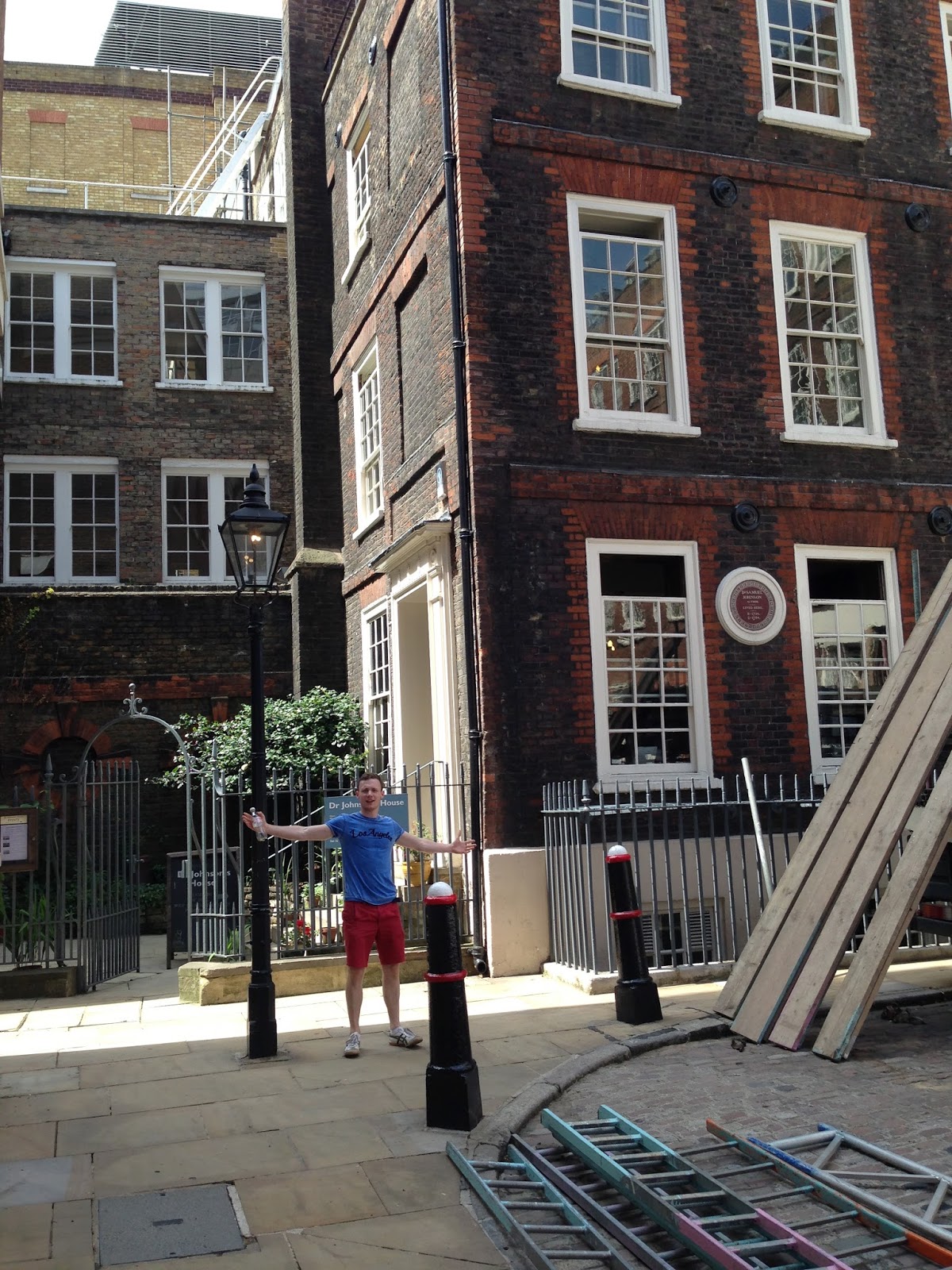
Tobin and I took a stroll through Farringdon on Saturday to visit Dr Johnson’s House.

Despite Tobin continually referring to him as Samuel. ‘L.’ Johnson, this museum was a delight.

Dr Samuel Johnson was a hugely influential writer in the eighteenth century – most famously penning ‘A Dictionary of the English Language.’ Although not the first English dictionary, it was deemed the most comprehensive and became the standard tome for the next 150 years.

How comprehensive does a dictionary have to be? Well the previous dictionary of choice defined ‘Black’ as ‘A colour’ and a ‘Dog’ as ‘An animal well known.’

Johnson wrote over 70 biographies, numerous essays and contributed to lots of periodicals including The Rambler, The Idler and The Adventurer.

The details of his life have been meticulously shared, thanks to his biography (written by friend, Boswell), numerous letters and diaries.

Imagine sending so many letters you had to carry a letter case…

Johnson struggled with money throughout his life, even when he was living at Gough Street.

At one time, Johnson owed so much money for milk that the milkman tried to have him arrested. Johnson barricaded his front door with his bed, shouting that he would “defend his citadel to the utmost.”

Amazingly – you can look up at the height of the house through the staircases of all four floors.

 Johnson feared that too much solitude would allow his imagination to take over his reason and send him made, so he’d deliberately surround himself with people. The house would be filled with a miscellany of lodgers including family, friends, casual acquaintances and total strangers. Personalities would often clash – and many a quarrel was heard in Gough Square.
He was quite unusual of the time, in that he held a high opinion of the intellectual possibilities of women – counting several of the ‘Bluestockings’ – a well known group of female thinkers and writers – amongst his friends.

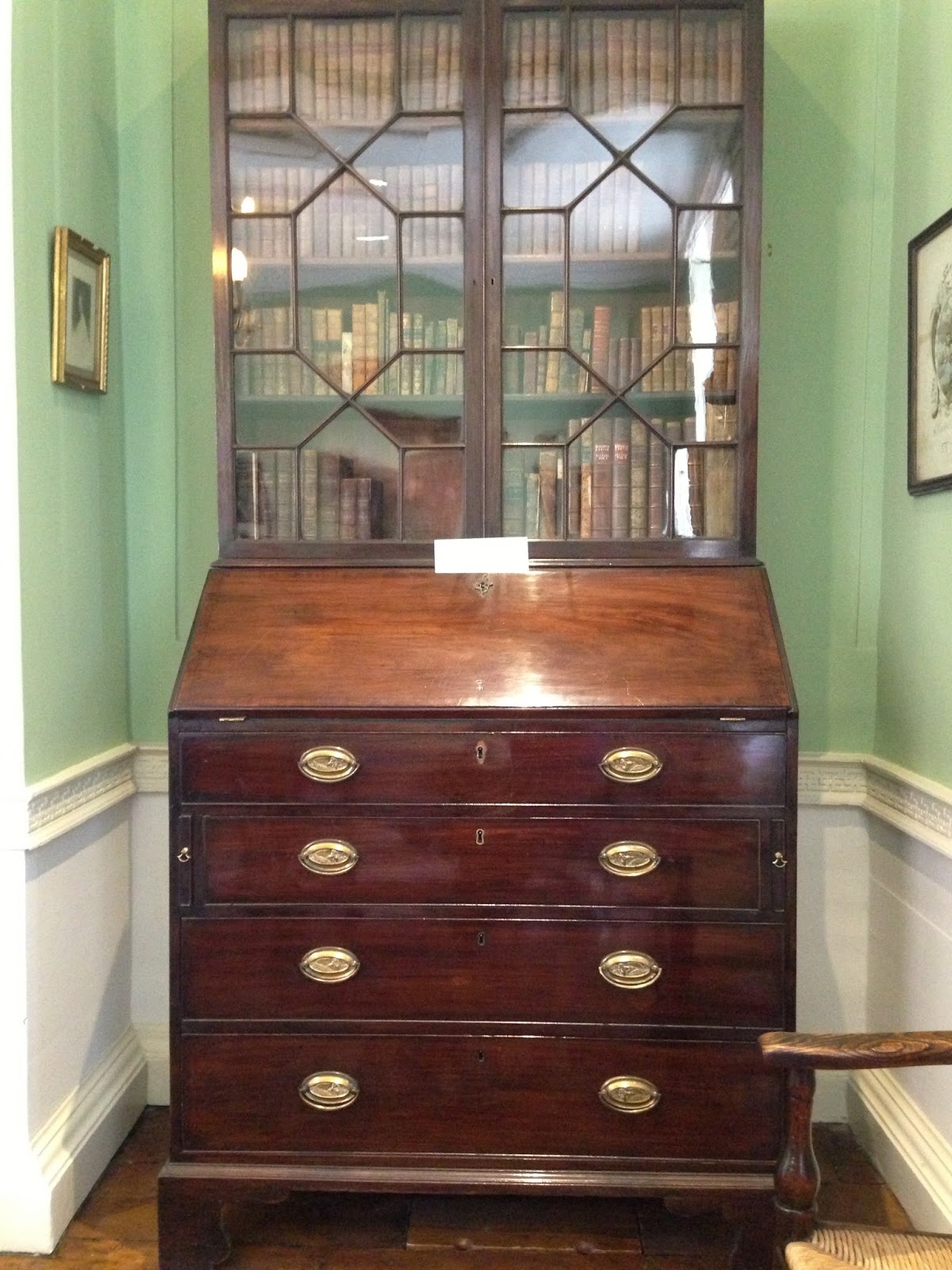
The bureau below belonged to Elizabeth Carter, longstanding friend of Johnson and hugely successful classicist.

They met whilst both writing for ‘The Gentleman’s Magazine.’
Carter used to get up around 4am to write and work late into the night, taking snuff to keep herself awake.

This strange looking chair, said to have come from the Cock Tavern was on display in the Withdrawing room. No one is exactly sure how you’re meant to sit on it – but I’m pretty sure it involves straddling it…

Tobin seemed to enjoy the dressing up most of all.

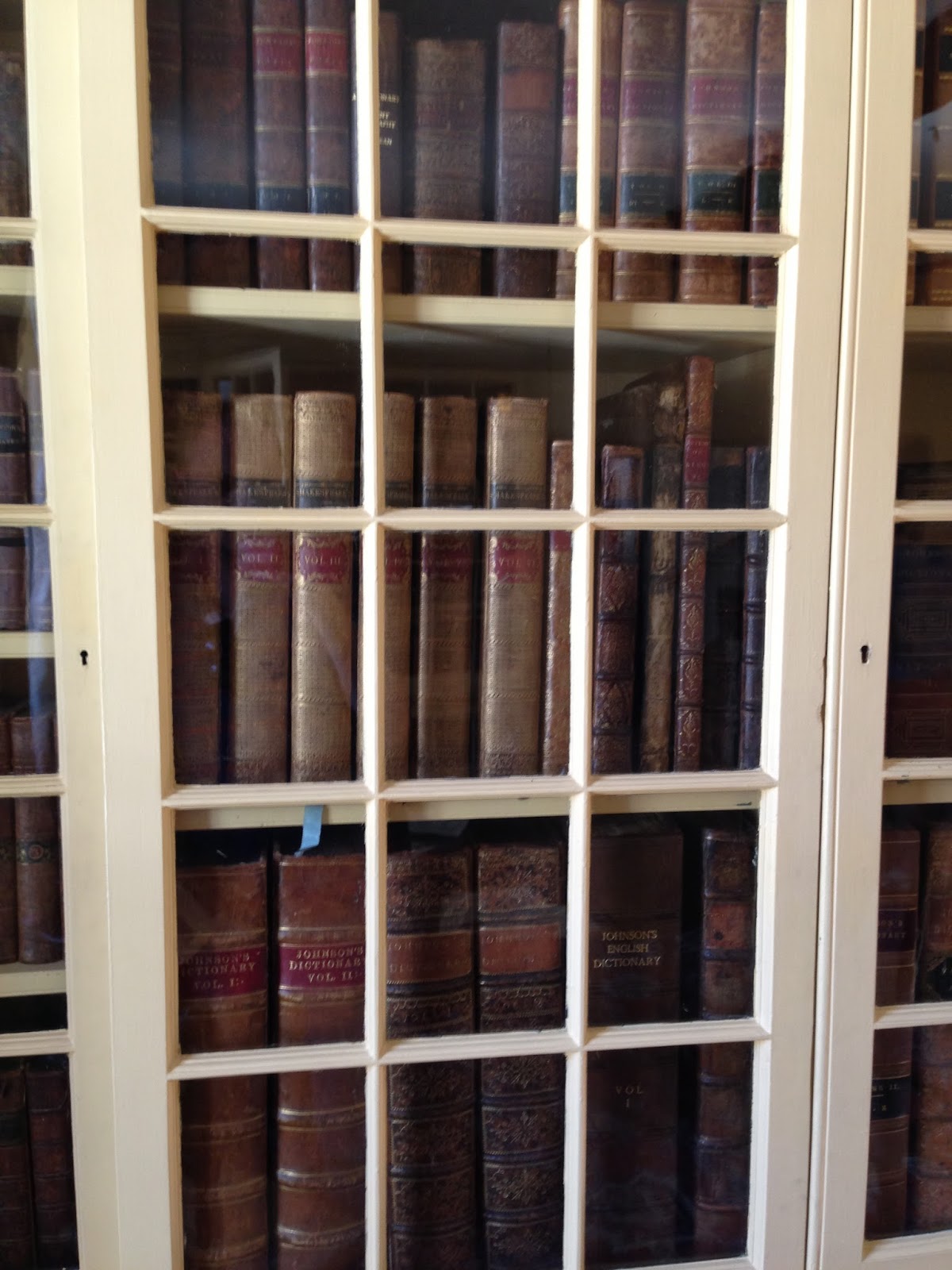
Johnson was a huge lover of literature, owning an awful lot of books.

But whilst he loved literature, the same courtesy didn’t extend to the books themselves.
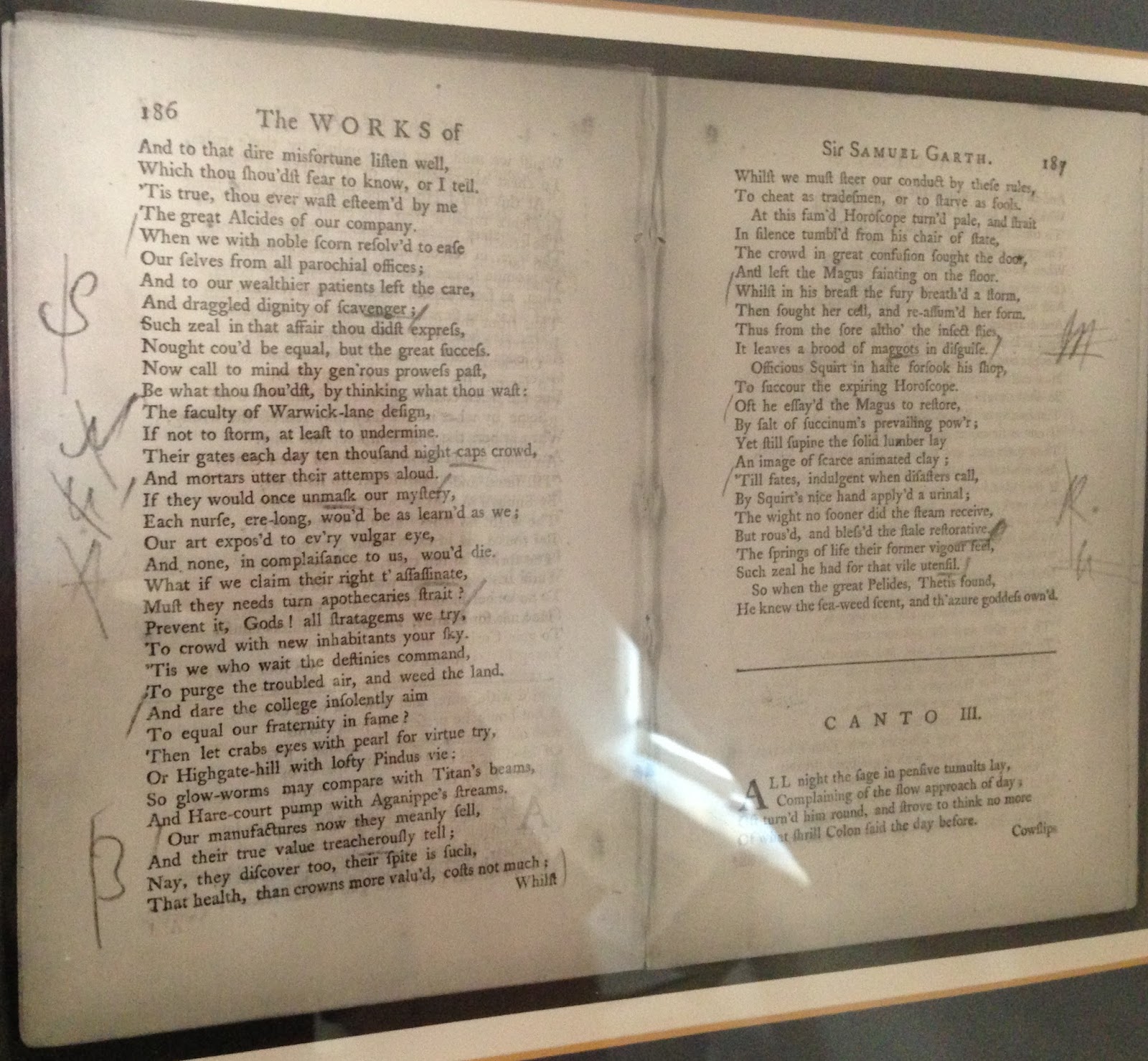
His books were scrawled upon and thumbed indelicately – regardless of value. Johnson stated that he only ever marked in pencil and any scribbles could be easily rubbed out using breadcrumbs.

His friends, however, had differing opinions, reporting his books as ‘so defaced as to be scarce worth owning.’

When Johnson set out to write the Dictionary, he had ambitious goals for the English language, describing it as a weedy garden that needed order.

He was fantastically thorough. One verb, ‘To Put’ was listed with over 100 variations for use.

Another neat trick from Johnson was to use quotations to show each word in context. In all, he used 110,000 quotations in his dictionary.

Every so often though, he’d allow his personal opinion and sense of humour to influence his definitions.
One such example is –
Oats: A grain, which in England is generally given to horses, but in Scotland supports the people.

FIVE FACTS
#1. Dr. Johnson wrote an entire novel, Rasselas, in a single week to pay for his mother’s funeral.

#2. Johnson is allegedly the second most quotes Englishman after Shakespeare due to his spoken and written word.

#3. Elizabeth Carter used to get up around 4am to write and work late into the night, taking snuff to keep herself awake.

#4. Johnson owned over 3000 books when he died in 1784.

#5. The pockets of Johnson’s coat were said to be big enough to hold the folio volumes of his Dictionary.

Here’s his dictionary, with a 50p placed upon it.

1. Cartoon Museum 

2. Churchill War Rooms 
3. Cinema Museum 
4. Dennis Sever’s House 
5. Dr Johnson’s house 
6. Design Museum 
7. Down House 
8. The Geffrye Museum 
9. London Film Museum 
10. London Transport Museum 
11. Mansion House 
12. Brunel Museum 
13. Museum of the Order of St John 
14. Musical Museum 
15. Old Operating Theatre Museum & Herb Garret
16. Pollock’s Toy Museum 
17. Rose Theatre exhibition 
18. Fashion and Textile Museum 
19. Royal College of Music Archives and Museum of Instruments 
20. Sherlock Holmes Museum 
21. Twinings Museum 
22. V&A Museum of Childhood 
23. Bank of England museum 
24. The Stephens Museum 

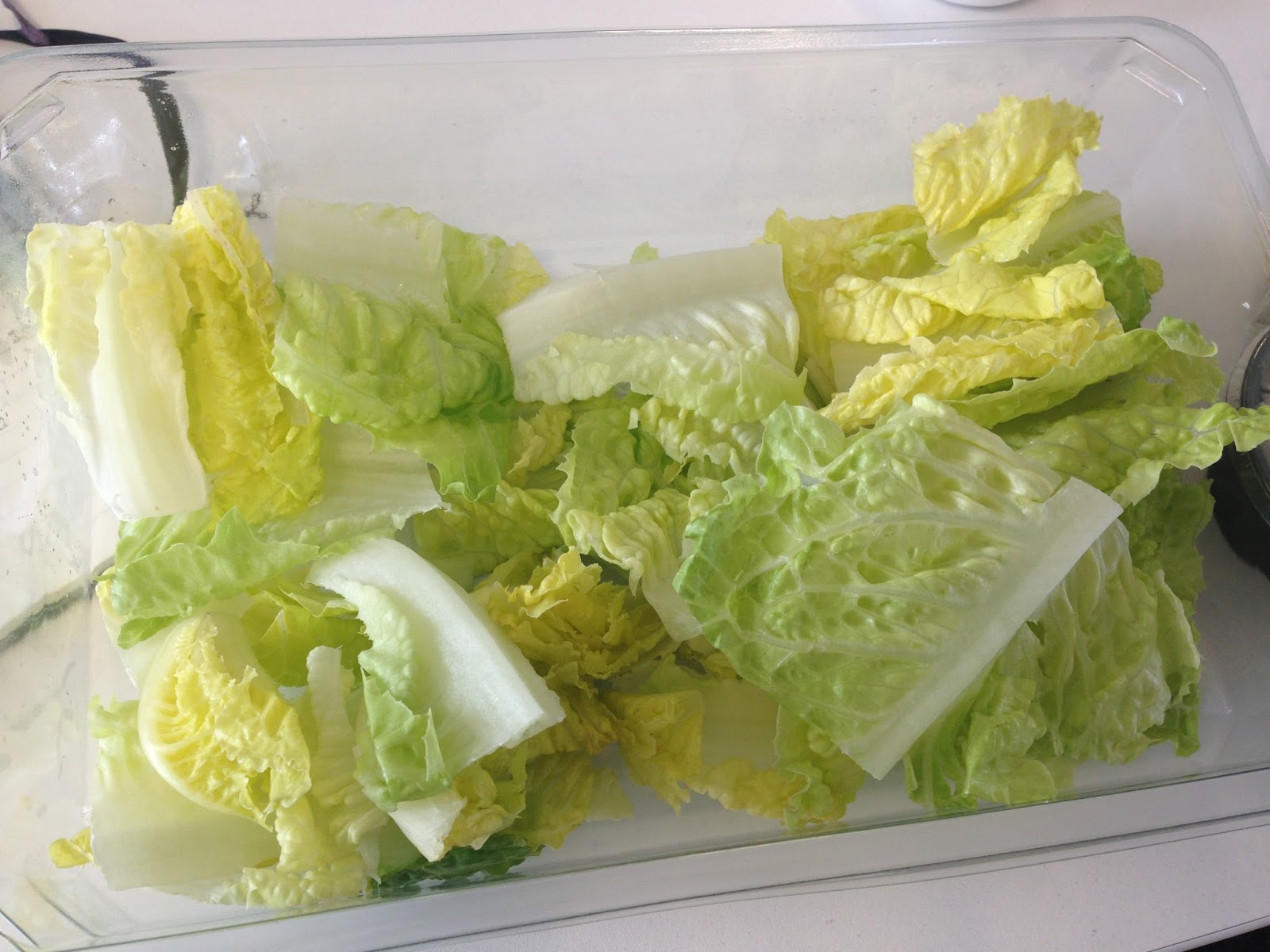
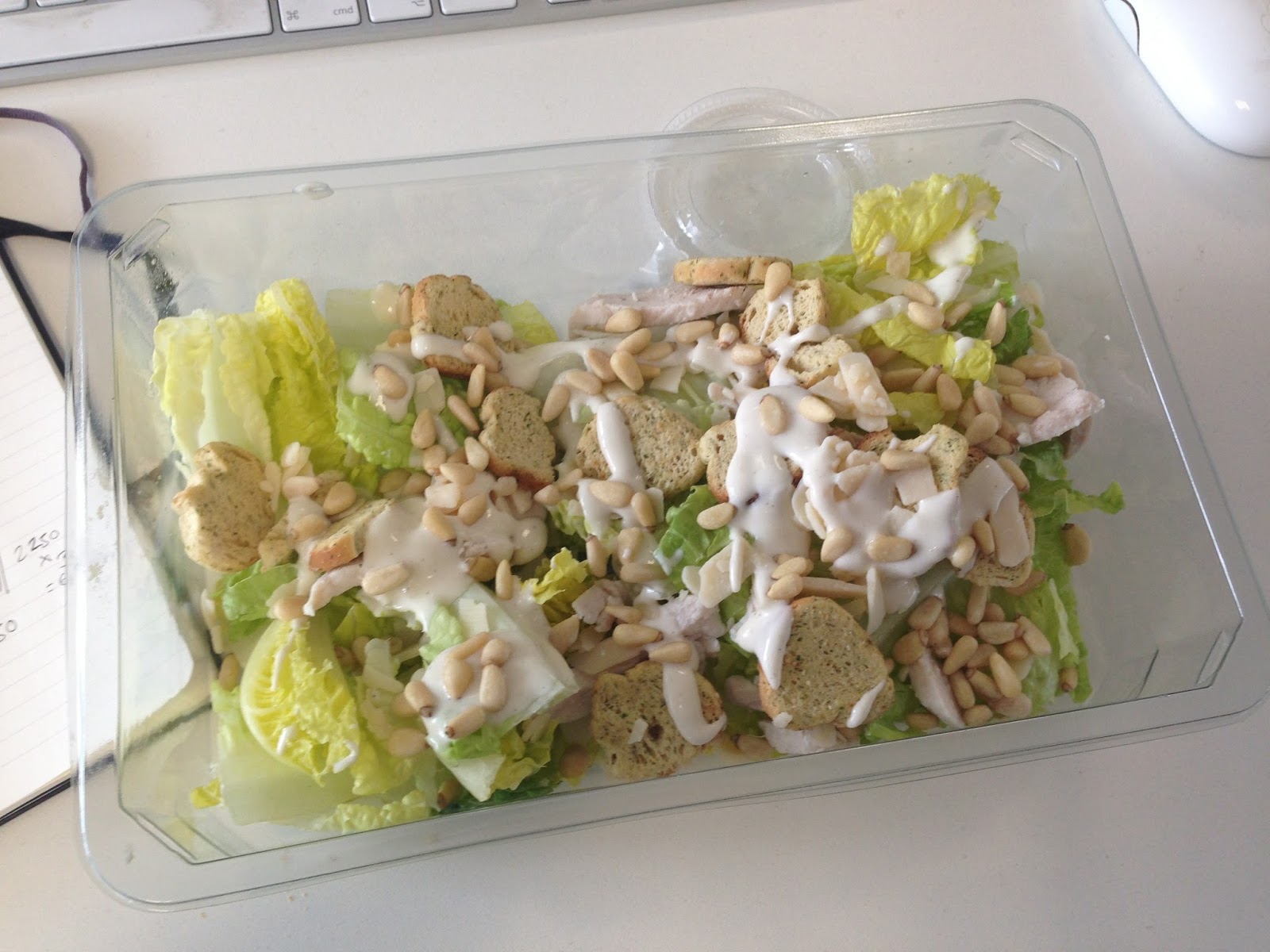
For the last week or so, I’ve been routinely buying this caesar salad from Tesco.
I don’t think anyone would describe me as a ‘salad eater.’But for some reason I really like this one.

I’ve come to the conclusion it’s because there’s some sort of ritual involved in ‘making’ it.

It’s a bit like Dairylea Lunchables in the playground – it gets you using your hands and preparing your food yourself.

(despite being a salad, notice the copious amount of dressing. Not so healthy after all…)