Archive

Uncategorized

#1.
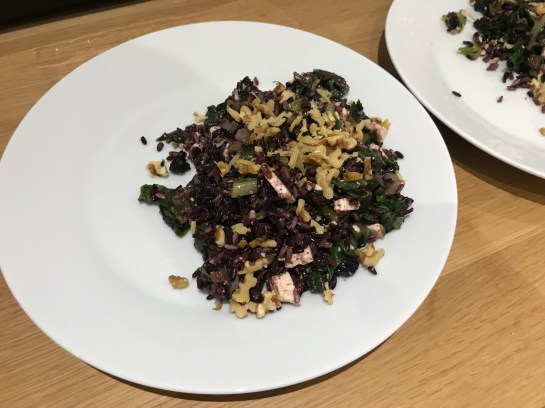
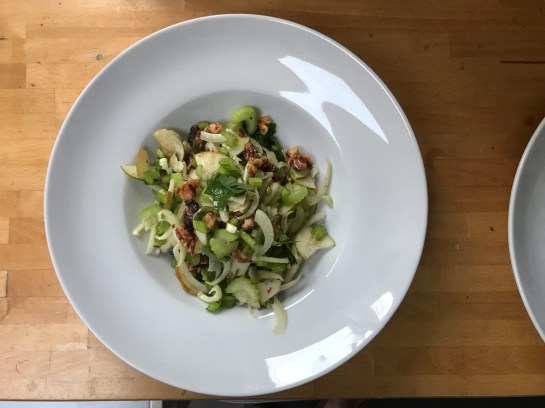
Name: Autum Celery Salad
Chef: Russell Norman
Recipe: Very finely slice four stalks of celery and roughly chop the leaves. Dry fry walnuts until brown and toasted. Core and slice two ripe comice pears. Finely slice two medium fennel bulbs. Mix with sea salt, olive oil and the juice of a lemon. Finish with finely grated parmesan.

IMG_0939

#1.
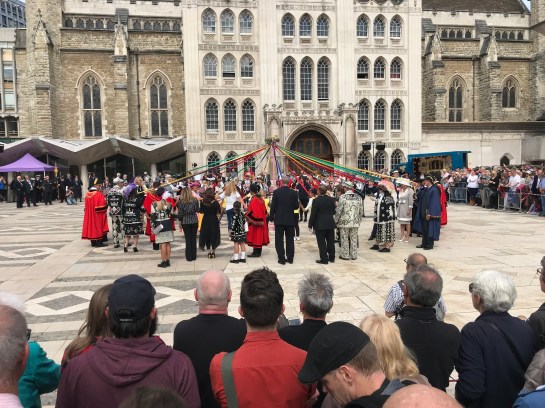
Custom: The Election of the Mayor of Ock Street
About: The election of the mock-Mayor of Abingdon, now run by the local morris group. The day includes a marathon of morris dancing, followed by voting and the election ceremony.

IMG_7244

#2.
Custom: The Knollys Rose Ceremony
About: A peppercorn-rent ceremony, organised by the Company of Watermen and Lightermen of the River Thames. The rent of one rose is paid to the Lord Mayor, customary ever since Sir Robert Knolly’s wife built a footbridge across city land.

IMG_2056

#3.
Custom: The Procession of the Worshipful Company of Vintners
About: A procession from Vitners Hall to a church across the road, where the Company’s new master is sworn in. The path is swept clear ahead of the procession.

IMG_7030

#4.
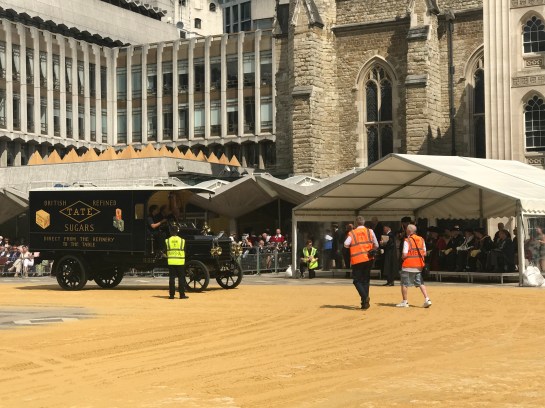
Custom: The Cart Marking Ceremony
About: Vehicles are brought forward to the master of the company, who inspects them, before the keeper of the Guildhall brands them with a red hot iron. The city’s vehicles were once licensed this way, now the event is purely ceremonial.

IMG_0748

#5.
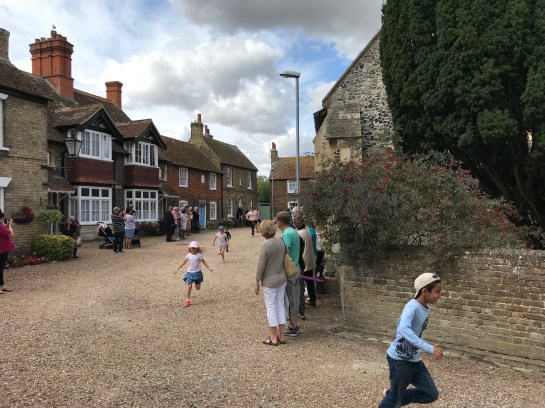
Custom: Sandwich Bartlemas Bun Run
About: To celebrate St Bartholomew’s Day, children race around this quaint chapel in Sandwich. Upon completion, all the children are given a sweet currant bun for their efforts.

IMG_6728


Last year was hard to get out and explore interesting things and places. But (thanks to having such a supportive/forgiving wife) I managed to complete the Works of Art challenge. This year I’m going to push my luck even further. I’ll see how I get on.

29 Folk Traditions and British Rituals
My grandad was a morris dancer. To the members of Lassington Oak, he was the accordionist, the foreman, and more often than not, the squire too. I knew him as Grampy. When I was much younger, we went to see him dance at solstices,  wassails, and other traditional festivals across the cotswolds. But when he died, we stopped. With this challenge, I’m going to attempt to revisit that world – and see 29 traditional folk festivals, rituals and customs across the UK.

29 Hot Sauces
I get through a lot of sriracha. Whenever a meal needs spicing up, I use it. And I put it on plenty of meals that don’t need it too. This year I want to change it up a bit. Try some new hot sauces. They won’t all be blistering heat – I’m not challenging myself to try the hottest sauce. But it’ll hopefully help me escape the repetition of the flying goose.

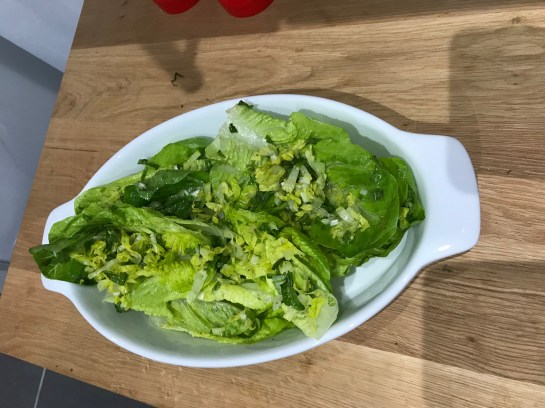
29 Salads
I was going to do another booze related challenge, because I enjoyed the 26 cocktails challenge so much. But I figure I’m probably going to have my fill of foaming jugs of ale at the folk festivals. So instead, I’m going to attempt something relatively healthy and make 29 salads (from various different chefs and recipe books).

Not a bumper year for these challenges, especially when compared to 2017. In fact, I only managed to complete one of them: 28 works of art. (Little wonder – we had a delightful little sprog in October, and it knocked us for six.) But it was a goodie. Herbs and Roald Dahl books will have to wait a little while. They’re still something I want to tick off.

Here are my top five from the works of art:

Summary 28.001

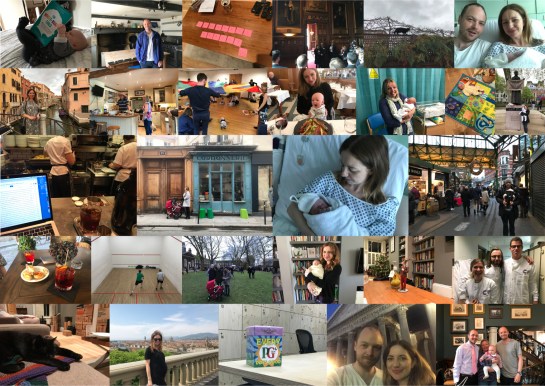
Like every year before, here are the 28 photos that best sum up the year.

28 image summary.001

#28.
Piece: Taddei Tondo
Artist: Michelangelo
About: I’d planned to write about a near flawless replica of the Last Supper for my final piece. It’s at the RA, and its quite a spectacle – painted just a few years after Leonardo died. But it didn’t sit right with me having a replica on this list. Luckily, the neighbouring display case holds the Taddei Tonda, the only marble sculpture by Michelangelo in Great Britain. Not a bad substitution! On the left hand side stands an infant figure representing John the Baptist. He’s showing Christ a goldfinch, symbolising his impending crucifixion. Christ is pulling away – some think in fear, others believe its a playful move. To my eye, it certainly looks like fear. It was marvellous to be able to get so up close to it. The piece was left unfinished, allowing the viewer to see the chisel marks of Michelangelo – its breathtaking.

IMG_0667

#27.
Piece: The Ambassadors
Artist: Hans Holbein the Younger
About: What makes this painting special is not its subjects (two young men of privilege, working as ambassadors in the 16th century) but the symbols smuggled within. Many believe its intention was to reinforce links between the two men and religion. Objects on the shelf, for example, include a shepherds dial, a quadrant, and a sundial – all instruments used to better understand and map the heavens. The lute with the broken string suggests discord – perhaps amongst the church. And a skull in the foreground (the symbol for mortality) is rendered anamorphically, so only reveals itself when you view the painting from the right.

IMG_0749

#25.
Piece: Mona Lisa
Artist: Leonardo Da Vinci
About: The most iconic of them all. It’s disappointing that the Louvre’s security won’t let you within ten metres of it. Da Vinci carried the canvas around with him for most of his life. To create her knowing smile and following eyes, he employed a forgotten technique called sfumato – the blurring of the edges of the mouth and the corners of her eyes. The blur gives no fixed point for the viewer, and so the smile seems elusive and the eyes seem to follow you wherever you go. Amazing.

IMG_6417

#26.
Piece: Venus De Milo
Artist: Alexandros
About: The Venus De Milo isn’t just admired for its beauty, but also its imperfection. With broken arms and a missing plinth, it somehow seems complete than it was when it was created. In fact, artist recreations of its original form seem to prove that less is more. The missing arms were actually found in fragments at her excavation, but were discarded later by the French for having a rougher appearance. The plinth (featuring Alexandros’ name) on which she stood was also discarded – an embarrassment to those who had paid for the statue on the presumption it had been created by Praxiteles.

IMG_3158

#23.
Piece: William Shakespeare
Artist: John Taylor
About: John Taylor may well be the wrong name. But he’s certainly considered the most likely person to have painted the Chandos portrait of Shakespeare. It hangs in the Portrait Gallery, and was in fact the founding piece of their collection. It’s the most famous portrait of Shakespeare, perhaps because its the only known painting that could’ve been painted from a live sitting – all other paintings date to years following his death.

IMG_5572

#24.
Piece: A Bar at the Folies-Bergère
Artist: Édouard Manet
About: This is Manet’s final major work, and he certainly went out with a bang. The painting shows a bar lady at work in a famous Parisienne music hall. Whilst it’s hotly debated, most believe Manet has consciously shifted perspective here to show the two faces of a bar person. Look at her face, and you see sadness – distant, bored and cold. But in the mirror over her right shoulder, we see she’s merrily entertaining one of the bar’s patrons (perhaps that’s meant to be us, the viewer) – she’s incredibly close and leaning in. The Guardian called it “one of the keystones of modern art.”

IMG_5589

#17.
Piece: The Fighting Temeraire tugged to her last berth to be broken up
Artist: JMW Turner
About: Here, Turner explores striking contrasts. Light and dark, detailed and atmospheric, old guard and new, each are played to great effect – in fact, it was voted the UK’s favourite painting in 2005. The HMS Temeraire was a warship famous for its fight in the Battle of Trafalgar. It is pictured being towed by a steam-powered tug to the shipbreakers, on what would be its final voyage.

IMG_3536

#18.
Piece: Ophelia
Artist: Sir John Everett Millais
About: An iconic example of the pre-raphaelite movement, which opposed the Royal Academy ideals typified by artist Raphael. The pre-raphaelites believed the landscape of a painting was just as important as the subject (in comparison to Raphael and his counterparts) and so Millais chose to paint the background first. Up close, you see that even the tiniest detail of plant life is accurately cast.

IMG_6268

#19.
Piece: Pelagos
Artist: Barbara Hepworth
About: Hepworth’s work explores, for the most part at least, relationships and the interplay between people and environments. She worked from a studio in St Ives and the coast is often a focus. In Pelagos, one of her most famous sculptures, she draws on the ‘tension between herself and the sea, the wind, or the hills’, using taut strings to bridge the gap between two peaks of a wooden spiral.

IMG_2025

#20.
Piece: Bathers at Asnières
Artist: Georges Seurat
About: A step-change in the art world: gone are the impressionist sweeps and swirls, and instead we have carefully considered pointillism. This was the painting with which Seurat developed his pointillistic technique, using dots created with a conte crayon to slowly build up subtle tonal changes.

IMG_4431

#21.
Piece: Sunflowers
Artist: Vincent Van Gogh
About: One of Van Gogh’s most loved paintings, it is in fact one of four sunflower paintings he created for Paul Gauguin. Both the vibrancy of colour, and the layering of yellow on yellow, were groundbreaking at the time, and its influence can be seen in the work of many artists today including David Hockney. The sunflower seeds were created with a technique known as impasto.

IMG_4205

#22.
Piece: Bacchus and Ariadne
Artist: Titian
About: A famous 16th century painting, commissioned to decorate one of the rooms at the Ducal palace in Ferrara (near Bologna.) Pictured we see Ariadne near the shoreline, recently spurned by her lover Theseus, caught unawares by Bacchus, god of wine. What’s most striking here is the richness of colour – deep blues, mossy greens and warm reds – a quality Titian was obsessed with getting right.

IMG_1546

Thoughts on 2017:
The Big Stuff:
A big year for us. We met Laurel Wilding Harris. We left Shepherdess Walk for Whitechapel. And then left Whitechapel for Stepney Green. Longish trip to Italy (Rome, Florence, Bologna, Venice.) Shortish trip to New York. I worked on some big pitches at work, and helped win a few of them. Launched Possibilitea. Launched GlitteringEy.es. APG gold for CRUK. I was invited to become a trustee of Depaul UK. And with my parents moving house, I waved goodbye to my childhood home in Gotherington.
The Small Stuff:
Adhered to 
’Weekly squash’ better in the first half of the year than the second. Finally achieved “The Usual?” at Workshop Coffee before it closed down. Ordered far too much from Tayyabs and Chicken Shop. I managed a full year of journalling, and Monday morning week-planning. Didn’t go to enough gigs. We had some nice weekends away seeing friends and family. Dry January. Wet November and December. And a white Christmas (well, Boxing Day). Amazing what can happen in a year.

Travel:
New Year Blog post Images.004

Quote for the year:
“Get some sleep before the baby arrives.”

Books read: 33
Best three books:
New Year Blog post Images.003.jpeg

Number of photos taken: 9858
Number of songs starred on Spotify: 110
Most listened to track: White noise – BP 228 hz
Series watched: Yes Minister, Yes Prime Minister, Inside No 9, Episodes, Better Call Saul, Brass Eye, Line of Duty, Flea Bag, The Crown, Parks and Recreation
Album of the Year: Laura Marling – Semper Femina
Film of the Year: The Lego Batman Movie

Pub Quizzes Partaken: 0
Pub Quizzes Won: 0
Trips to the doctor: 1
Trips to the dentist: 3
Trips to the vet: 1

Museums visited: 21
Museums by month:
New Year Blog post Images.001
New Year Blog post Images.002
New Year’s Resolutions:
Dry January. More writing. More dinners with friends and family. Master Adobe Illustrator. Redo the kitchen and the bathroom.