I loved this visit.

IMG_0451


Not so much a museum, as a working office, a home and a court of justice.

Mansion House is the residence of the Lord Mayor of the City of London.

The Mayor acts as a diplomat for the city – promoting its businesses and helping to improve the welfare of its residents.

It may sound like quite a nice life – but we were informed it’s a busy one.

The Mayor regularly has over 12 engagements a day, and almost every meal is a working one – a working breakfast followed by a working lunch followed by a working dinner. She never gets to just kick back, put on a film and eat cheese. How sad.

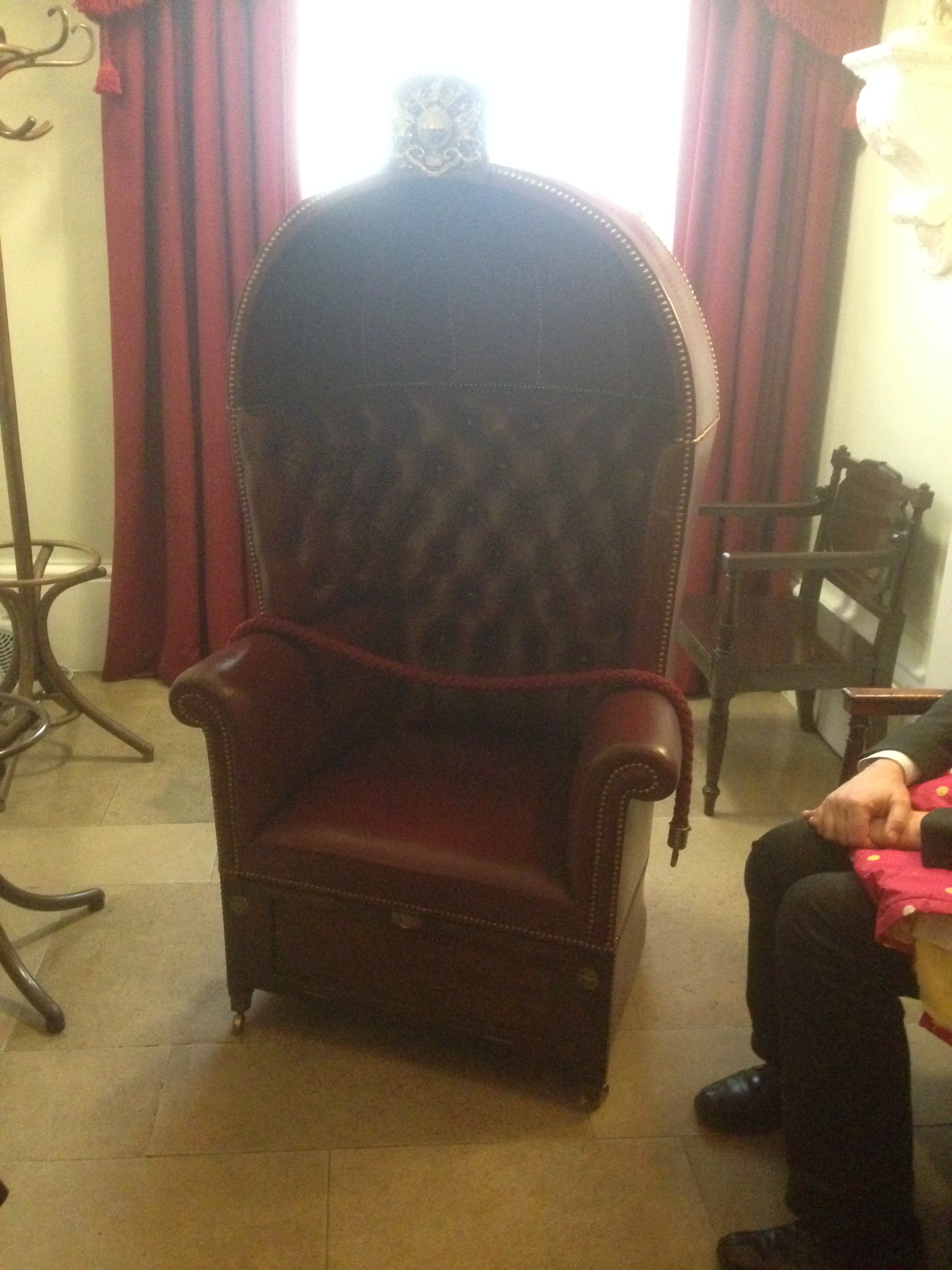
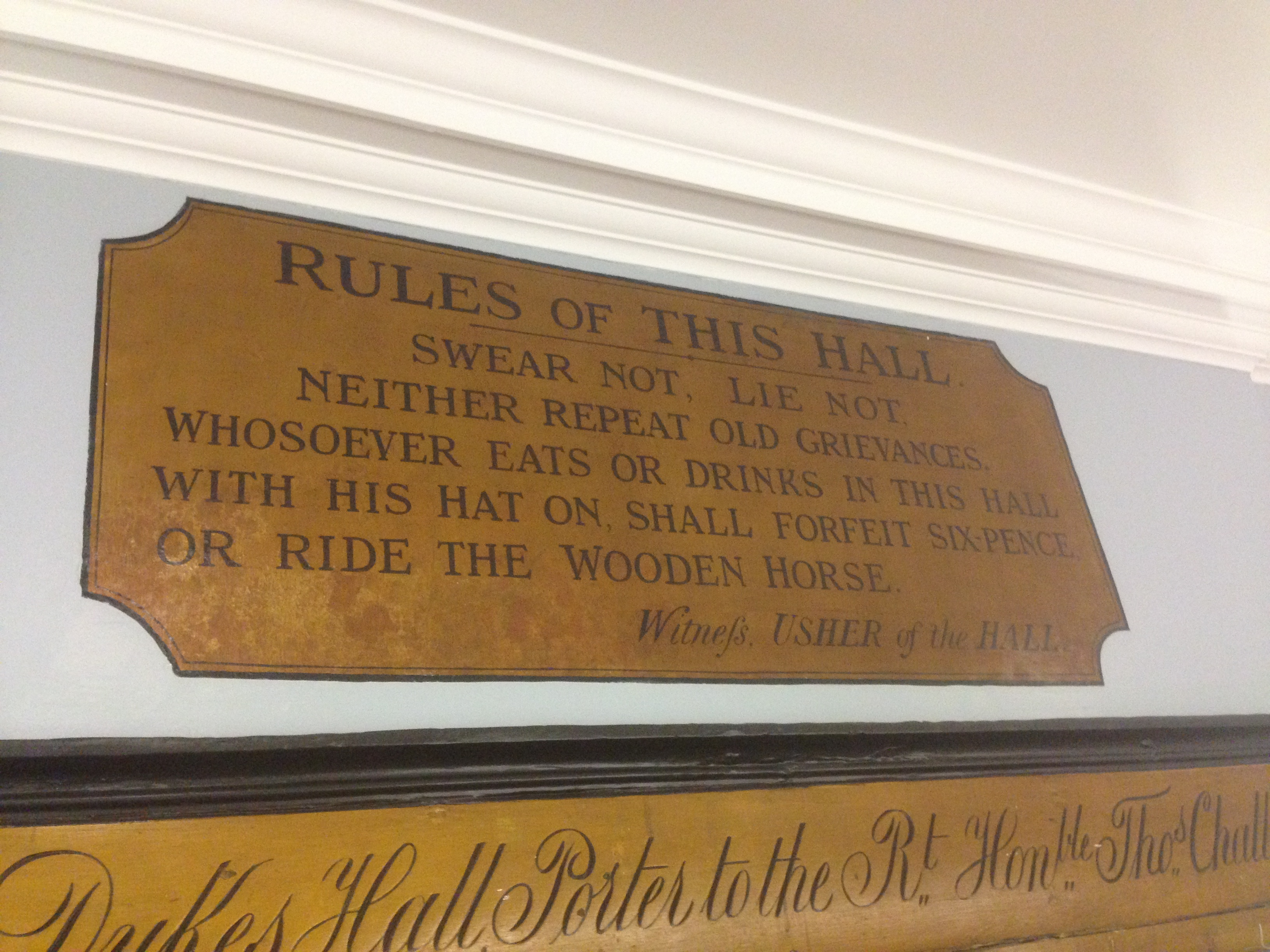
In the entrance hall sits an original porter’s chair – it’s beautiful, almost regal.

IMG_0455

We were lucky enough to visit on the day of the Mayor’s Easter Banquet.

IMG_0464

The thrones were laid out for the greeting ceremony. Later that evening, the Lord Mayor, the Mayor’s two sheriffs, and all of their partners would have sat here and greeted the banquet guests. Quite a daunting affair.

IMG_0458

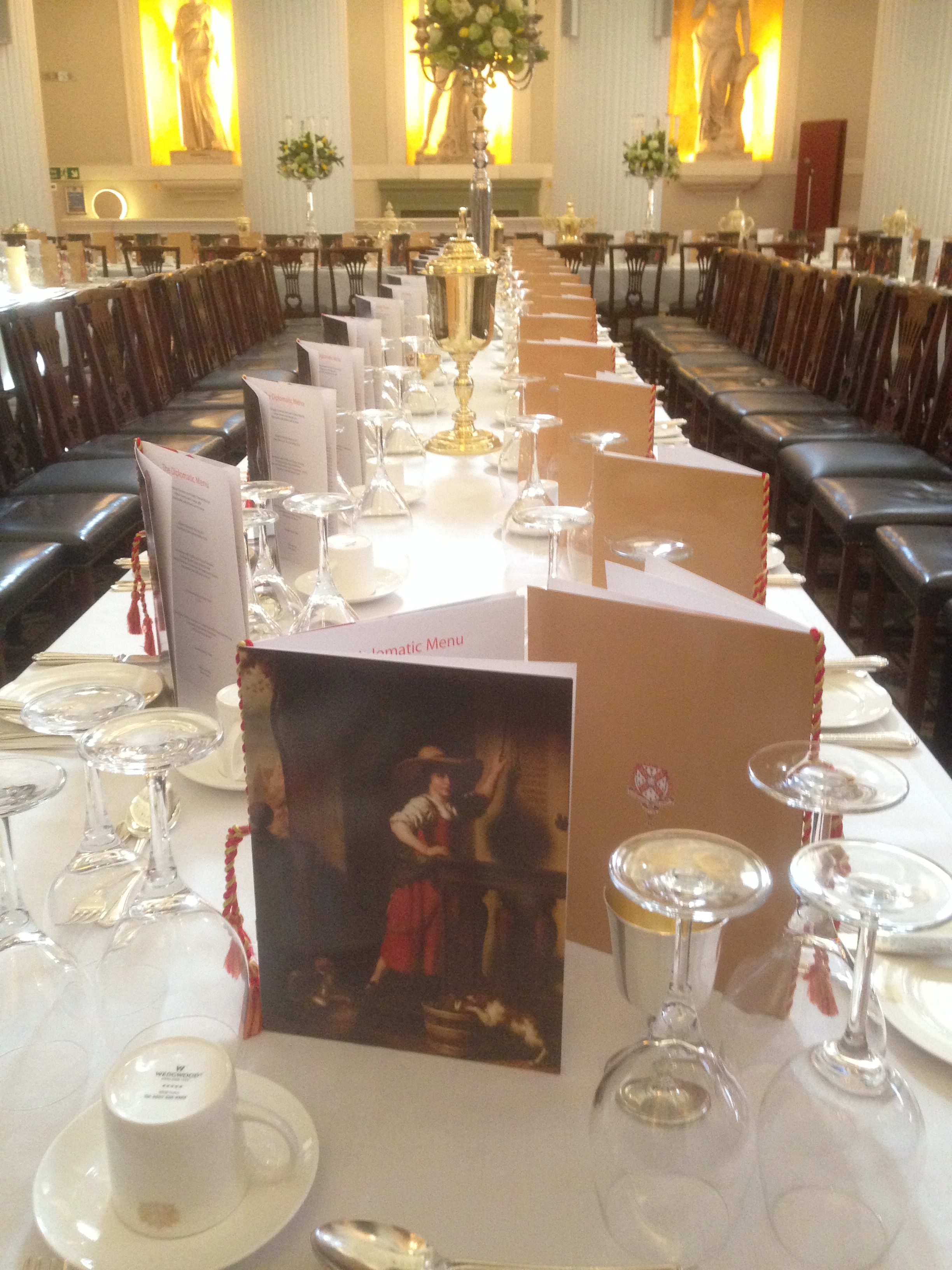
In the Egyptian Hall, the staff were busy preparing the tables for the banquet.

IMG_0482

On the table, you can see the Guild’s Loving Cups. The Ceremony of the Loving Cup is said to go back to Saxon times, before the Norman conquest of 1066. The ceremony is fairly complicated, and involves ‘drinking to your neighbour’, who ensures you aren’t stabbed in the back (literally) whilst drinking.

IMG_0485

We also got to see the Mayor’s Mace and Sword up close – which was pretty awesome.

IMG_0546

But perhaps the best thing was the gents – look how great that sign is!

IMG_0553

FIVE FACTS

#1. The porter’s chair in the entrance hall has a drawer below the seat. In the past the drawer held hot coals to warm the porter’s bottom.

#2. The Queen walked through the same entrance that we did at her Diamond Jubilee a few years ago.

#3. The chandeliers are the weight of nearly 3 average men.

#4. The house is closed for the entire month of August and over 300 litres of paint are used in its renovation.

#5. In one of the stained glass windows, you can see the scene of the Peasant Revolt, in which the leader Tyler is stabbed by the Lord Mayor, who believed he was planning to kill the King.

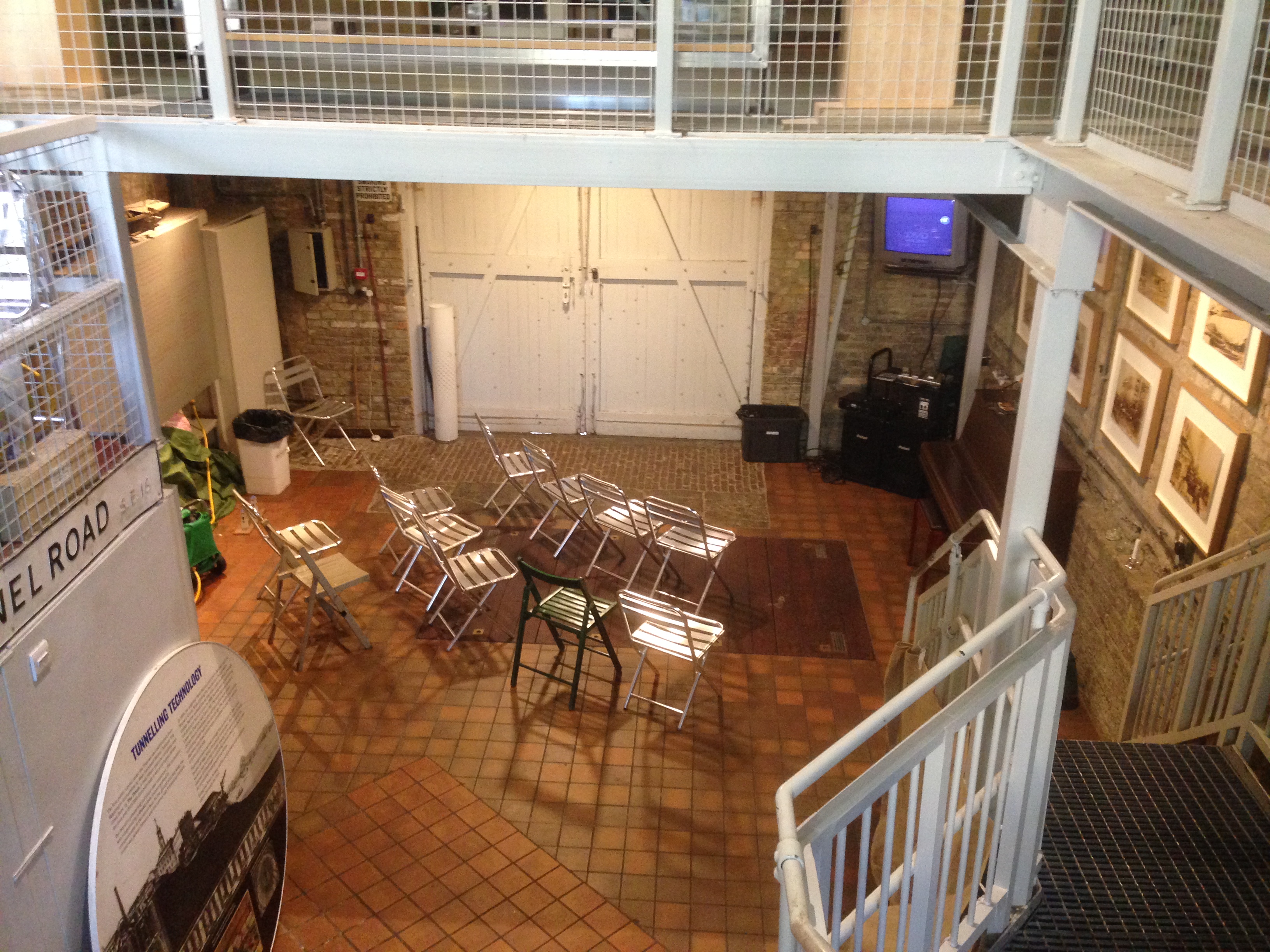
The Brunel Museum is located in Brunel’s engine house in Rotherhithe.

Image

It’s a bit ramshackle – there’s a piano and watering cans on the lower deck – but it’s sort of lovely because of that.

It feels a bit like someone was so passionate about Brunel, they made a museum in their shed. That’s not a bad thing – the passion really does show through.

Image

The tunnelling technique used for the Thames Tunnel was actually invented by Marc Isambard Brunel, Isambard Kingdom Brunel’s father.

In the early 19th century, the Thames was as congested as the city’s roads are today. At any time, there were up to 3000 large merchant ships and thousands of small boats on the water. Any bridges were horrendously crowded, and the Thames waterman used this to their advantage, charging huge sums of money to ferry people from one side of the river to the other.

Engineers struggled to build bridges downriver that were high enough for merchant ships to travel beneath. Brunel suggested ‘a bridge underground’ – developing plans for a tunnel beneath the Thames.

The wet earth of the Thames riverbed collapses easily, making tunnelling impossible. Marc Brunel developed a tunnel shield, that held the earth in place whilst workmen build brick tunnel walls beneath.

Image

Isambard Kingdom Brunel was raised by his father to be an engineer. His education included several years at the prestigious Henri Quatre college in Paris and an apprenticeship with the world famous watchmaker Abraham Louis Breguet. Only a few months into the project, and at only 19 years old, Isambard took on the role of chief engineer at the tunnel site.

The project moved at a slow pace. In optimal conditions, the tunnel advanced about 7 feet a week. This dropped to less than a foot a month in poor conditions.

The tunnel took 18 years to complete – costing Marc Brunel his wealth and his health.

Once completed, the tunnel became a huge visitor attraction, and many guidebooks were published in different languages – explaining how it was built and offering detailed illustrations for interested guests.

Image

It was custom in the 19th century to celebrate a great achievement by producing a set of special medals. The tunnel was no exception and a commemorative set of medals were on display in the museum.

Image

The tunnel shafts were painted with famous scenes from around the world to amuse and educate pedestrians on their long climb.

Today, the tunnel is used by Transport for London – making in the oldest section of tunnel in the oldest underground system in the world.

FIVE FACTS

#1. The Thames Tunnel was dubbed ‘The Great Bore’ by The Times.

#2. At the time of the Thames Tunnel, Marc Brunel already claimed several famous inventions, including a boot-making machine, circular saws, an early sewing machine, and a device for copying out letters.

#3. All digging for the Thames Tunnel was done by hand, as there were no power tools.

#4. The tunnel was referred to as the eighth wonder of the world by governments around the world.

#5. Isambard lived on the site of the Cabinet War Rooms, holding an office next door.


Location: The flat
Date: 02.04.14

Name: New World IPA
Brewery: Northern Monk Brew Co
ABV: 6.2%

Taste: 3.5
Mouthfeel: 3
Finish: 3.5
Branding: 3.5

photo (10)


Location: The flat
Date: 05.04.14

Name: Windermere Pale
Brewery: Hawkshead Brewery
ABV: 4.0%

Taste: 4.5
Mouthfeel: 4.5
Finish: 5
Branding: 2.5

photo (11)

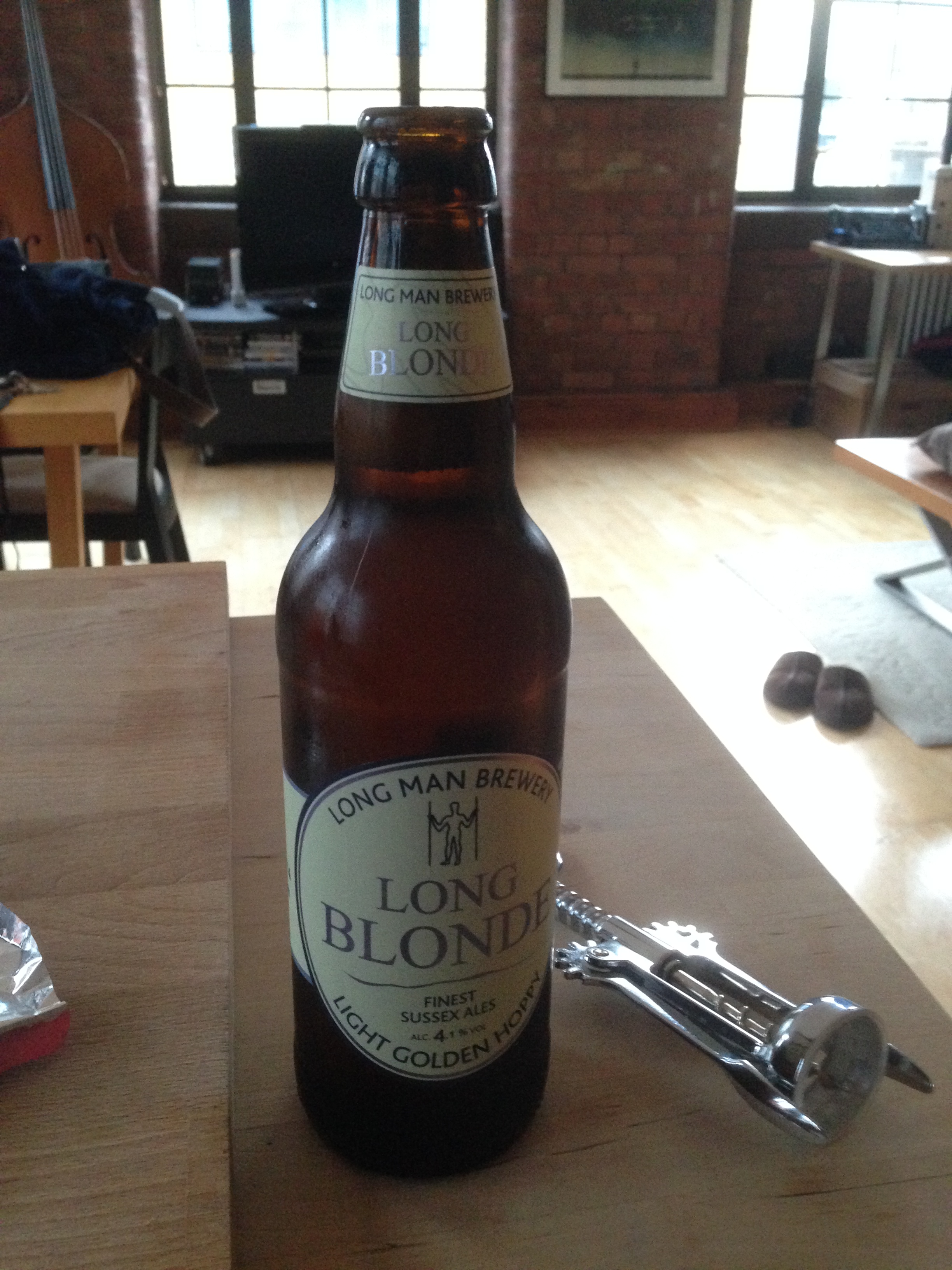
Location: The flat
Date: 09.04.14

Name: Long Blonde
Brewery: Long Man Brewery
ABV: 4.1%

Taste: 4
Mouthfeel: 4
Finish: 4
Branding: 1.5

photo (12)

Location: The flat
Date: 09.04.14

Name: Notting Hill Red
Brewery: Moncada Brewery
ABV: 6.0%

Taste: 3
Mouthfeel: 3.5
Finish: 3
Branding: 3.5

photo (13)

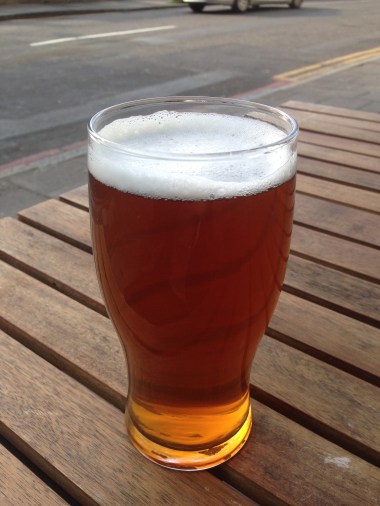
Location: The Swan, Coombe Hill
Date: 12.04.14

Name: Lion
Brewery: Hook Norton Brewery
ABV: 4.0%

Taste: 2.5
Mouthfeel: 4
Finish: 4
Branding: 4.5

photo     image

Location: The Swan, Coombe Hill
Date: 12.04.14

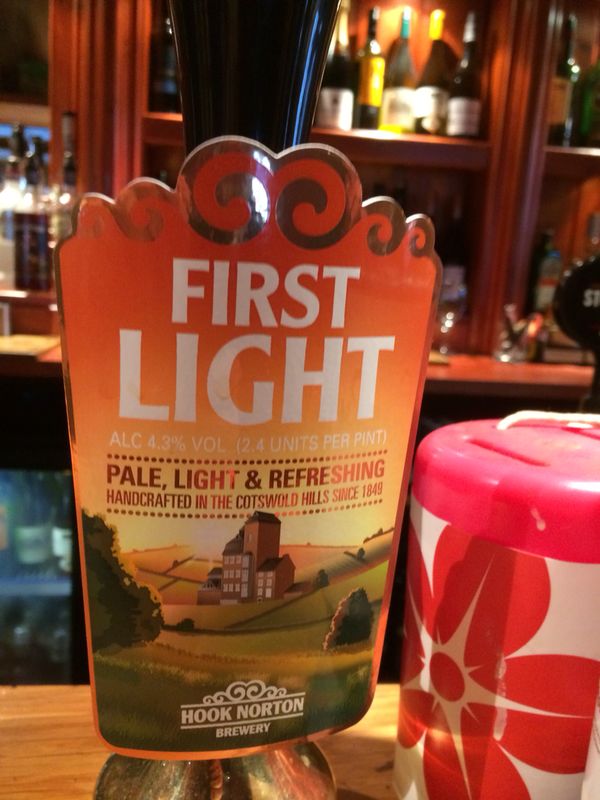
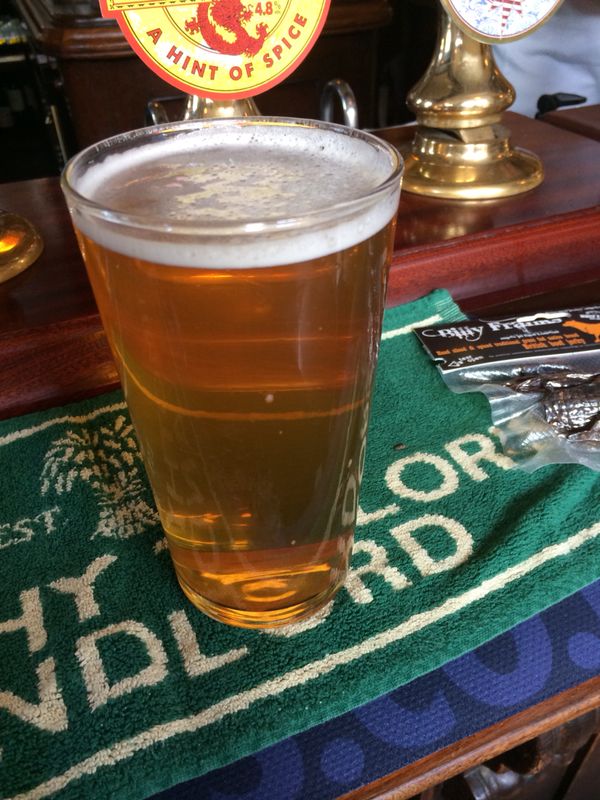
Name: First Light
Brewery: Hook Norton Brewery
ABV: 4.3%

Taste: 3.5
Mouthfeel: 4
Finish: 3
Branding: 2.5

image_2      image_3

Location: The Wenlock Arms, Old Street
Date: 13.04.14

Name: Summer Meltdown
Brewery: Dark Star Brewing Co.
ABV: 4.8%

Taste: 3
Mouthfeel: 3
Finish: 3
Branding: 3

image_1      image

Location: The Mayflower, Rotherhithe
Date: 15.04.14

Name: Scurvy Bitter
Brewery: Greene King House Ale
ABV: 3.9%

Taste: 3.5
Mouthfeel: 3
Finish: 2.5
Branding: 1

photo    image


One more to go…

Back in June I set myself the challenge of starting to play about with film.
I’ve been making mood films for work, which I’m actually pretty proud of.

I also set myself the challenge of watching 24 films I’ve never seen before.
Back then I was pretty embarrassed by the number of ‘canon-grade’ films that I hadn’t taken the time to watch.

Alas, I’m still pretty embarrassed. It’s moving much slower than the museums, and I think I’m going to end up having a mammoth film binge on June 13th…

Uh oh…

Here’s where I’m up to:

1. American Beauty
2. The Birds
3. The Empire Strikes Back
4. The Fog
5. The Godfather
6. King Kong
7. Up
8. Zorro
9. The Shawshank Redemption
10. Goodfellas
11. Se7en
12. The Usual Suspects
13. Casablanca
14. It’s A Wonderful Life
15. Reservoir Dogs
16. Singin’ In The Rain
17. Some Like It Hot
18. The Graduate
19. The Untouchables
20. The Good, The Bad And The Ugly
21. Memento
22. Donnie Darko
23. Fargo
24. A Clockwork Orange

On Sunday, we popped along to the Fashion and Textiles Museum in Bermondsey.
If I’m honest, it’s the one museum I hadn’t been looking forward to – but I was pleasantly surprised with what we found.
The exhibition on display when we visited was ‘Artist Textiles –Picasso to Warhol.’
The exhibition starts by explaining that from William Morris onwards, many artists in the late nineteenth and early twentieth centuries attempted to make their work more relevant to the lives of ‘ordinary’ people.
Design was recognized as a way to do this – particularly through manufactured textiles for the mass markets.
I liked this textile from Ben Nicholson, Britain’s leading constructivist artist of the twentieth century. If you look closely, Nicholson worked in a portrait of his lover, sculptor Barbara Hepworth.
 
The textile below was designed by Bernard Adenay in 1911, a member of the group ‘Omega Workshops’ that worked on a group of groundbreaking murals for the Borough Polytechnic in London.
This skirt was designed by Calkin James, a painter who set up ‘The Rainbow Workshops’ in London in 1916, which she hoped would carry the ideals of the Omega Workshops.
After the Second World War, there was an enthusiasm for modernity and new ways of living, and nothing showed a commitment to modernity more clearly than an association with modern art. Surrealism was probably the most fashionable and popular movement at the time and NYC textile converter Wesley Simpson quickly realized the commercial advantage of associationg the work of well-known artists with his company’s textiles.
Surrealist graphic design from Marcel Vertes stuck out for me, particularly his piece ‘Radishes’
Salvador Dali’s work for Wesley Simpson was there in force too.
British artists, including Henry Moore and Henri Matisse, were also hugely popular in textile design. Many were displayed at a huge exhibition in 1946 – ‘Britain Can Make it.’
One manufacturer stuck out for me – ‘David Whitehead Ltd’. They used a populist approach to good design, offering affordable textiles from artists such as Henry Moore, Eduardo Paolozzi and John Piper.
Paolozzi was a leading member of The Independent Group – he, with Nigel Henderson, created some of the most radical and influential designs of the period in Britain.
I found these patterns particularly striking.
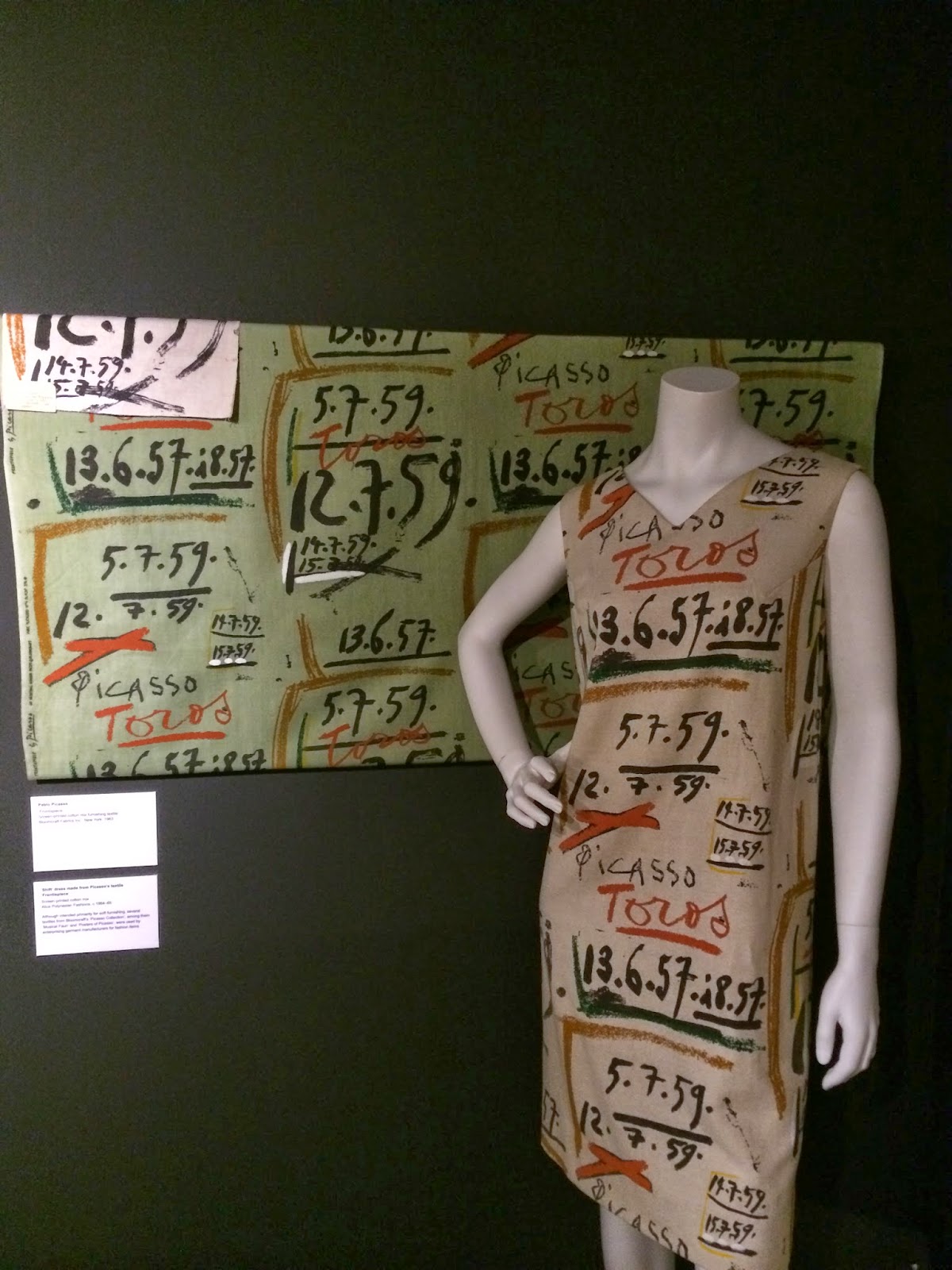
Picasso’s work in textiles was hugely impressive.

This print ‘Musical Faun’ was brought to life as ‘Hostess cocktail Culottes’ by White Stag Clothing Co.
This design ‘Frontispiece’ was also hugely striking.
I loved this picture of Picasso in his garden in 1955, comparing original designs of his Rooster print with the finished textile from Dan Fuller (Fuller Fabrics.)
The rooster textile was exhibited too, printed on a beautiful silk scarf.
Picasso designed the scarf below to be given away as a gift to students and young people attending the Berlin Peace Festival in 1951. Pretty amazing giveaway…
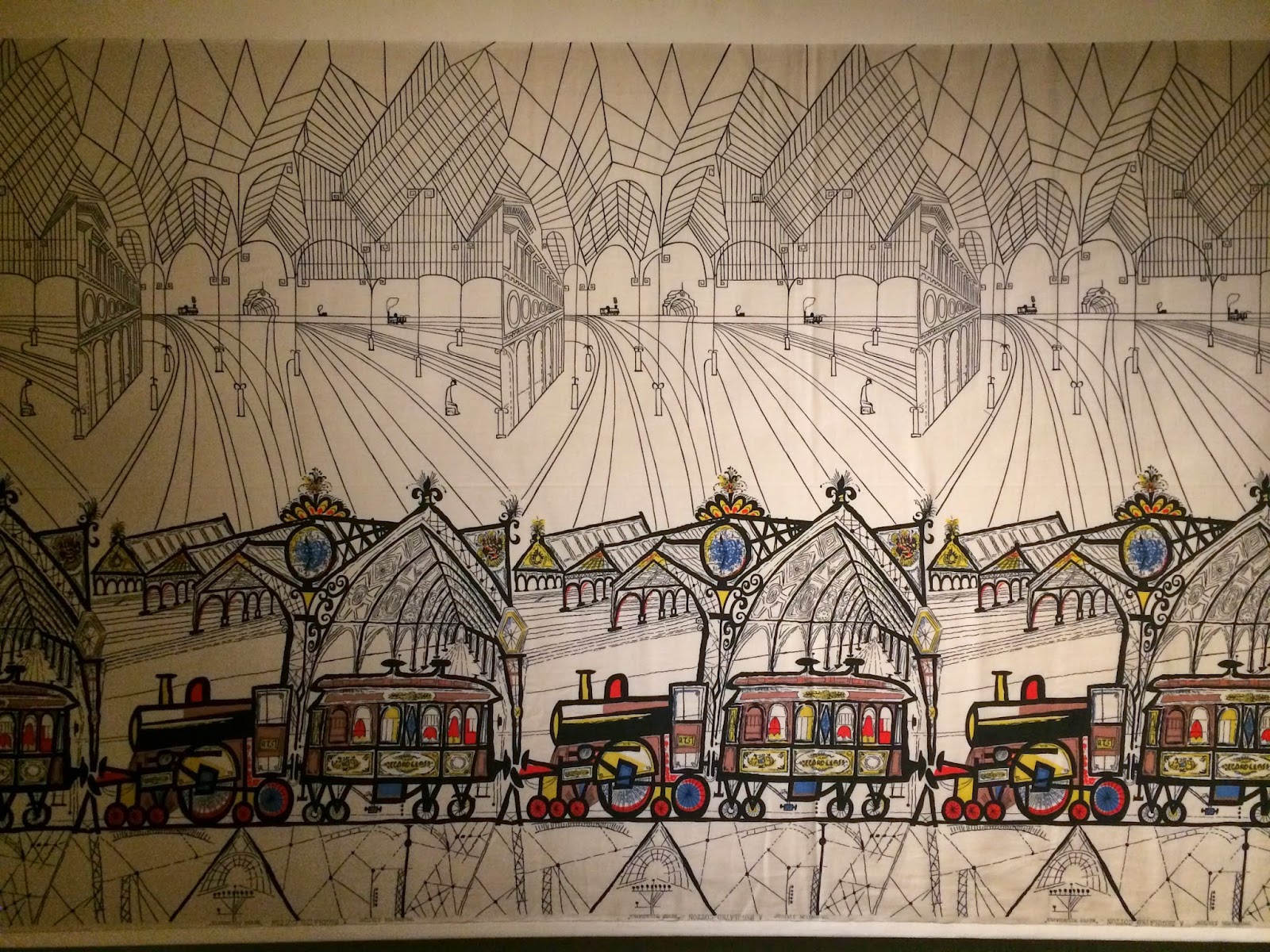
In the 1950s, a satirical illustration style emerged in New York – led by Saul Steinberg and John Rombola.
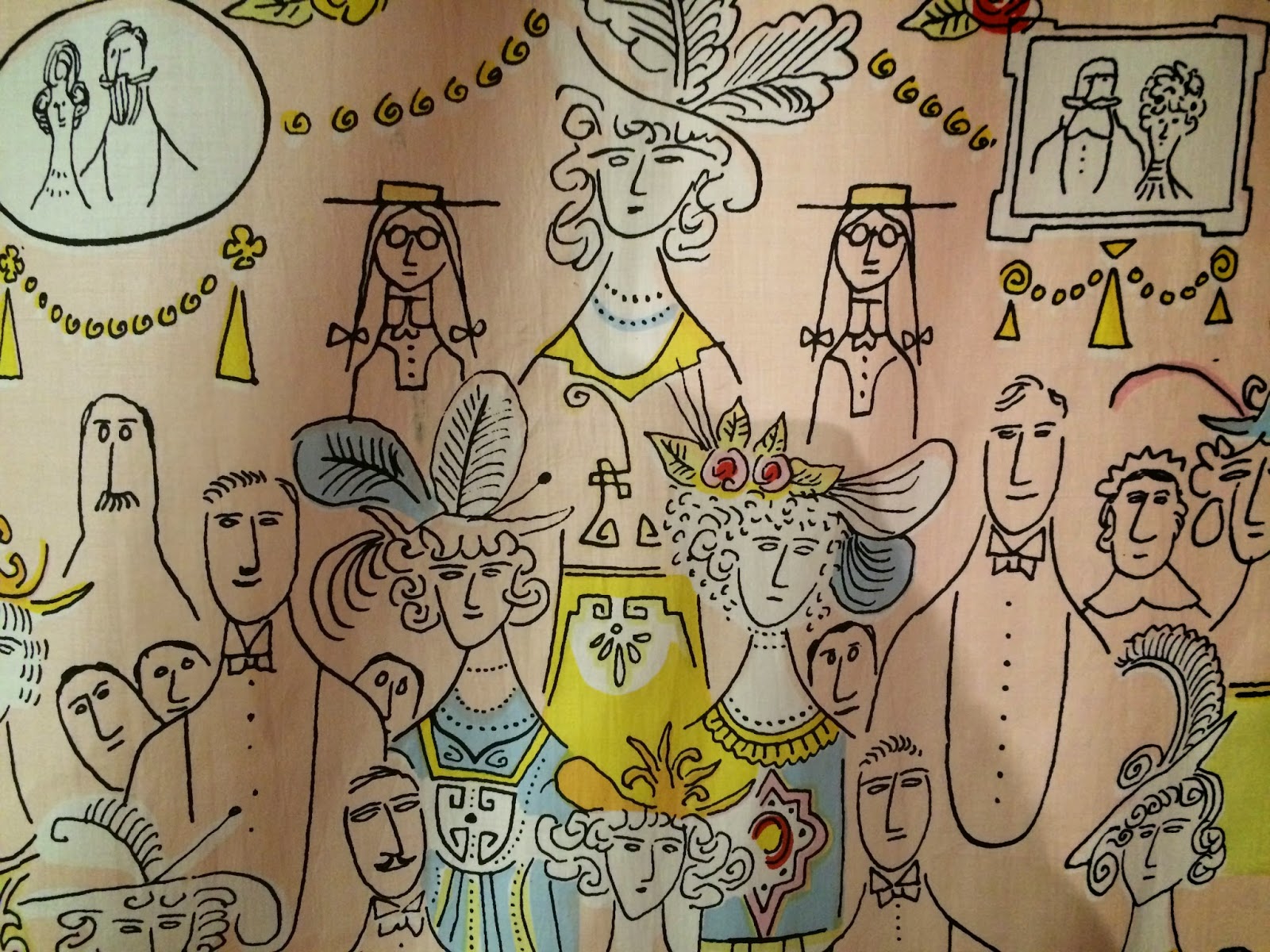
Here’s a Steinberg print, entitled Paddington Station.
And here’s a Rombola piece, entitled Parade.
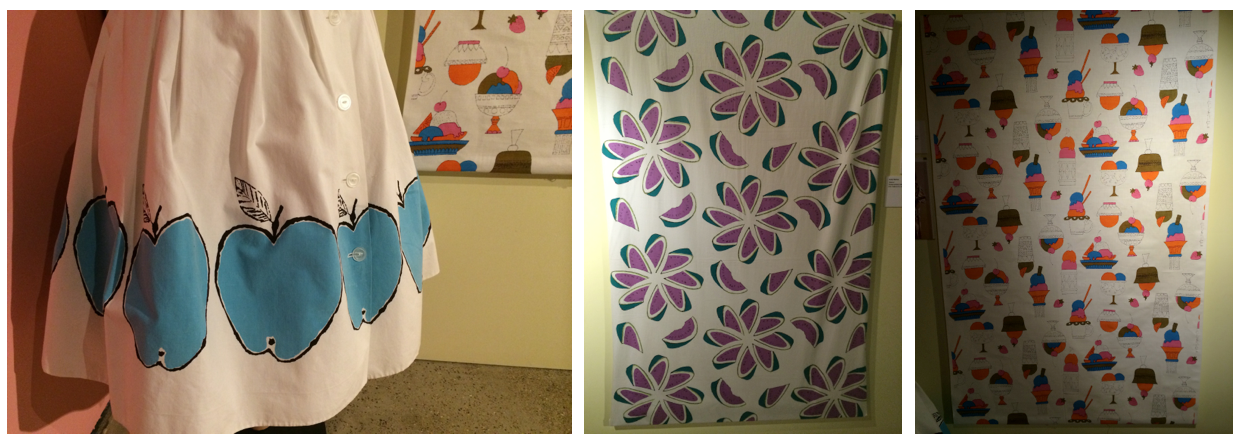
Through the 1950s, Andy Warhol – the Godfather of Pop – designed advertisements for textile companies. At the time, he also made several textile designs – but these have only come to light of late.
He seemed to have a penchant for bugs and food – as you can see below:
I’ve missed out a load of prints – so it’s well worth going and checking it out yourself. 
It’s an interesting museum and I’m going to be keeping my eyes open for what they have on next.
FIVE FACTS
#1. Paolozzi created his designs from an eclectic assortment of photographic material, images from popular culture, and ethnographic and scientific sources.
#2. One of Picasso’s designs (featuring bulls, suns and foliage) was originally drawn by him in the visitor book of the Institute of Contemporary Arts. He later gave permission to the Institute to use it as a print to raise funds.
#3. The Independent Group’s ideas and concepts were shown in the Whitechapel Gallery’s groundbreaking exhibition of 1956, THIS IS TOMORROW.
#4. The Warhol ‘Apple’ print above was first used as the LP cover for a recording of the William Tell Overture.

#5. Picasso by the Yard created draperies, lampshades, tablecloths, pillows using Picasso designs. The only thing they wouldn’t make was upholstery. As they put it, “by the maestro’s wishes, Picassos may be leaned against, not sat on.”
 
1. Cartoon Museum
2. Churchill War Rooms
3. Cinema Museum 
4. Dennis Sever’s House 
5. Dr Johnson’s house
6. Design Museum 
7. Down House 
8. The Geffrye Museum
9. London Film Museum 
10. London Transport Museum
11. Mansion House 
12. Brunel Museum 
13. Museum of the Order of St John 
14. Musical Museum 
15. Old Operating Theatre Museum & Herb Garret
16. Pollock’s Toy Museum 
17. Rose Theatre exhibition 
18. Fashion and Textile Museum 
19. Royal College of Music Archives and Museum of Instruments 
20. Sherlock Holmes Museum 
21. Twinings Museum
22. V&A Museum of Childhood 
23. Bank of England museum
24. The Stephens Museum 

On Friday morning, we shuffled down to the London Film Museum. As we’d be avoiding the weekend footfall, we assumed we’d have a relatively peaceful experience and would be around to peruse the film exhibitions at a leisurely pace.

How wrong we were.

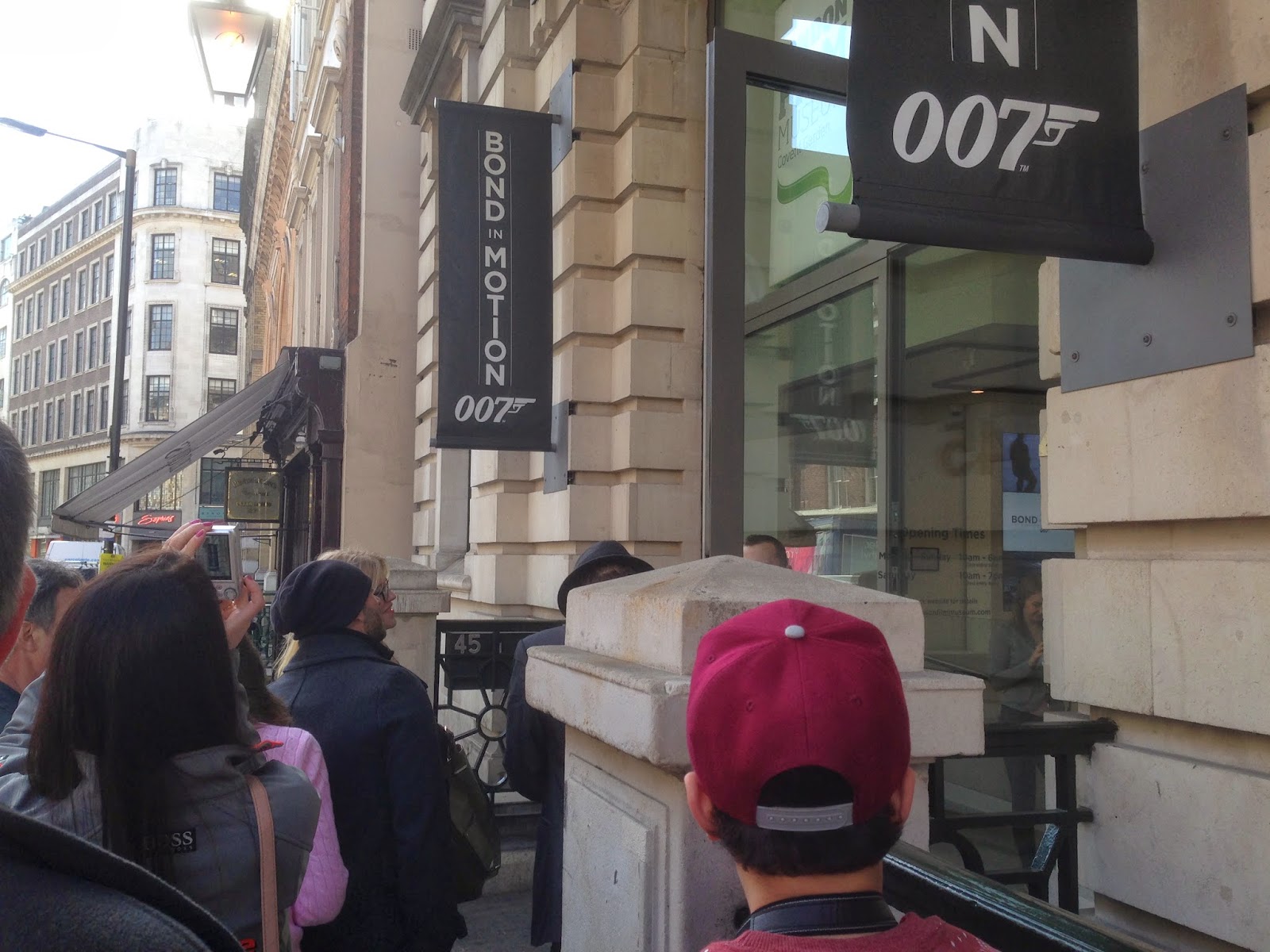
It turned out that Friday was the public opening of ‘Bond in Motion’ – the largest exhibition of 007 vehicles in the world. There was a mammoth queue snaking from the front of the building, full of diehard petrolheads. As we’d come this far, we decided we’d check it out and joined the queue.

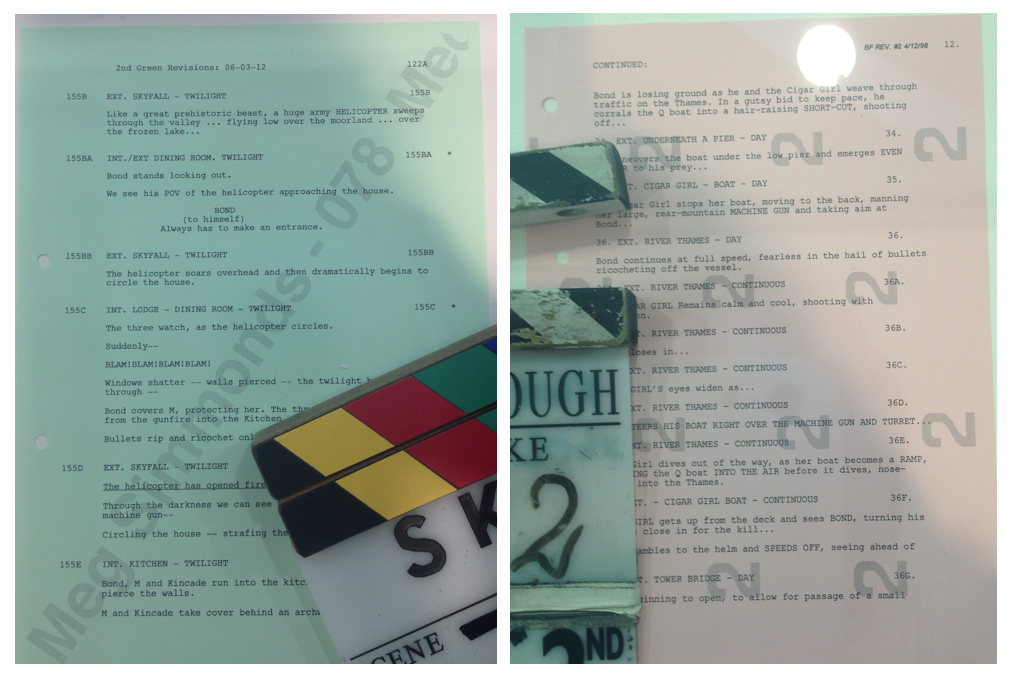
Our first stop inside was the mezzanine.

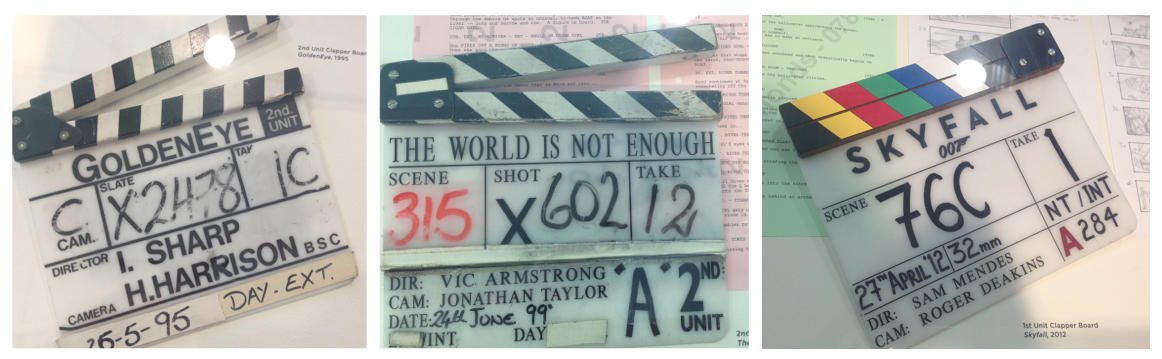
We saw clapperboards,

scripts,

and storyboards.

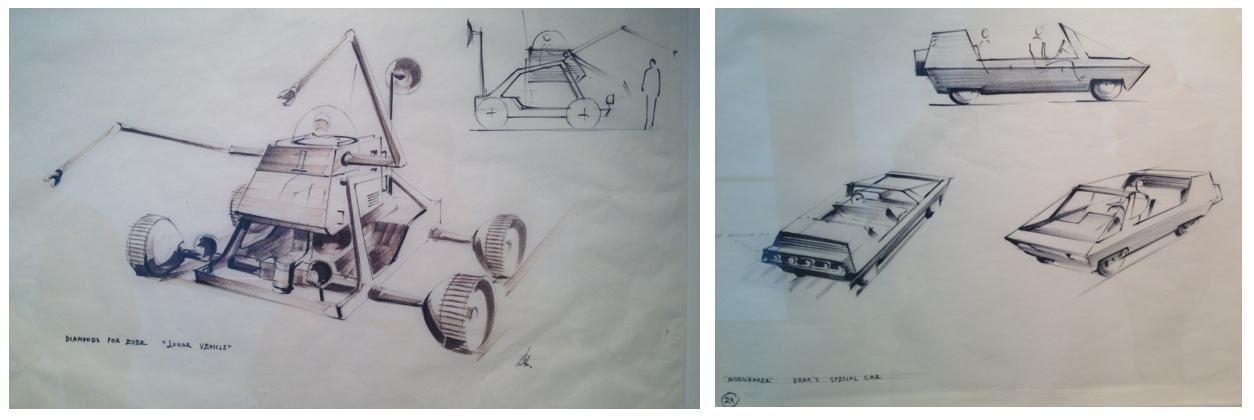
Sir Ken Adams has been the lead designer for a number of vehicle concepts used by Bond.
Here’s a couple of his creations:

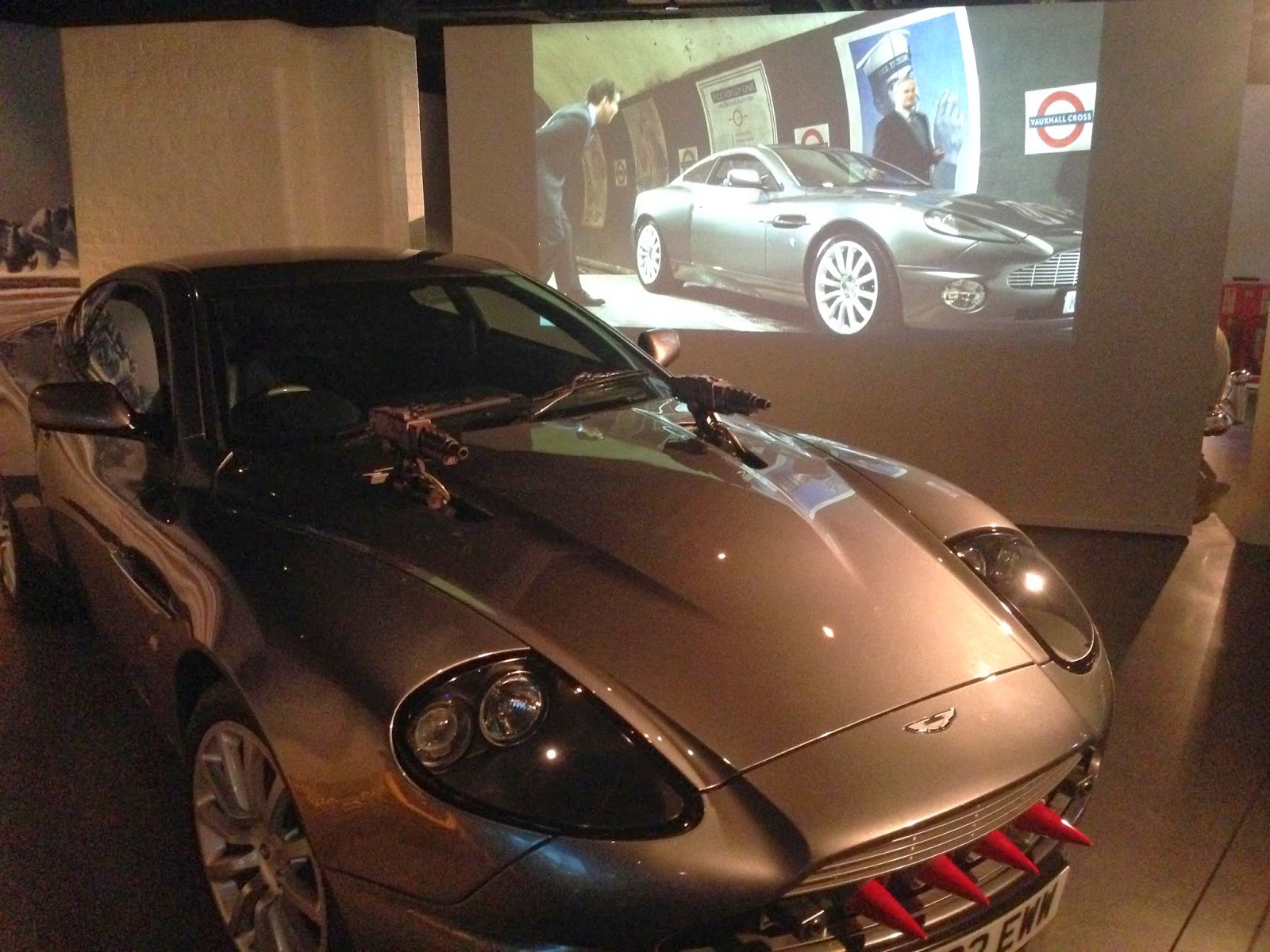
In the main exhibition space, a huge number of vehicles are on display.

First up was the Rolls Royce phantom from Goldfinger.
It’s a beautiful car:

There was another beautiful roller on display, from A View to a Kill:

There were a number of Bond props on display around the exhibition, which were interesting to see:

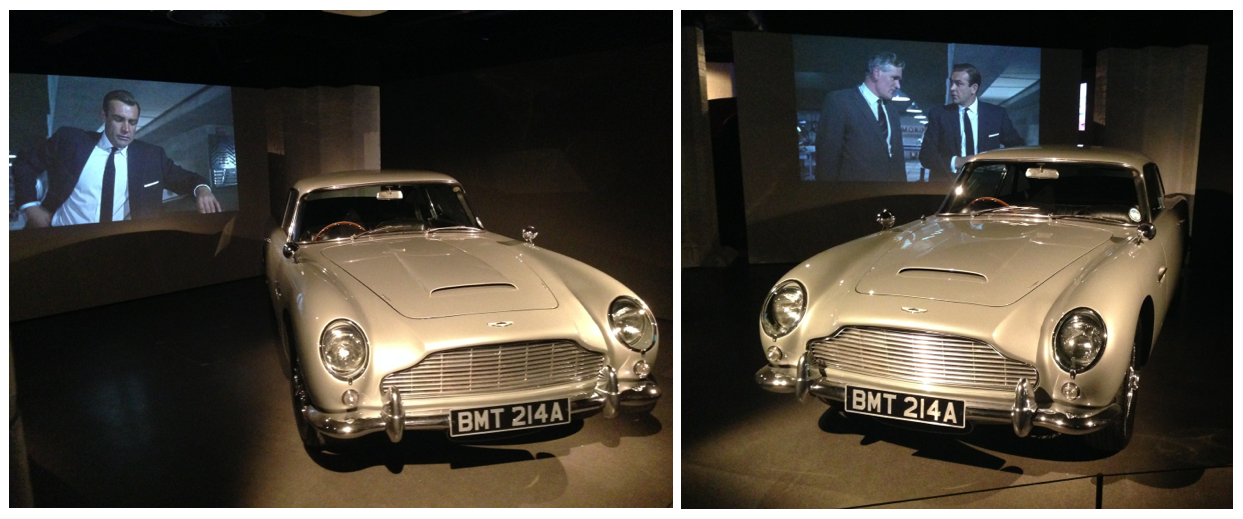
The exhibition did a really good job of showing clips of the cars in movies alongside each model – to jog your memory for each vehicle:

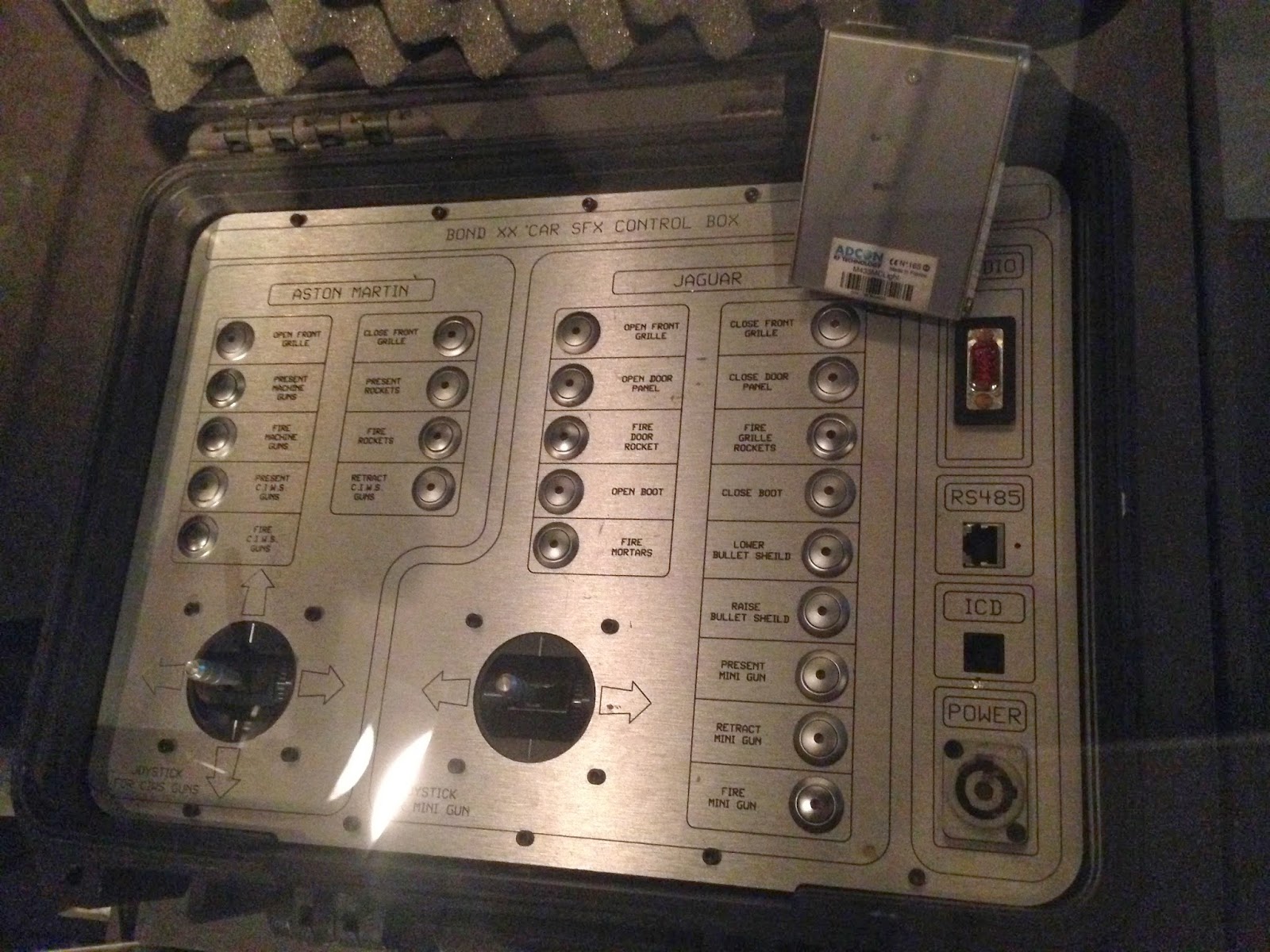
There was a pretty amazing SFX remote control unit on display, from the production of Die Another Day. What a great job – pressing those buttons and watching sparks fly.

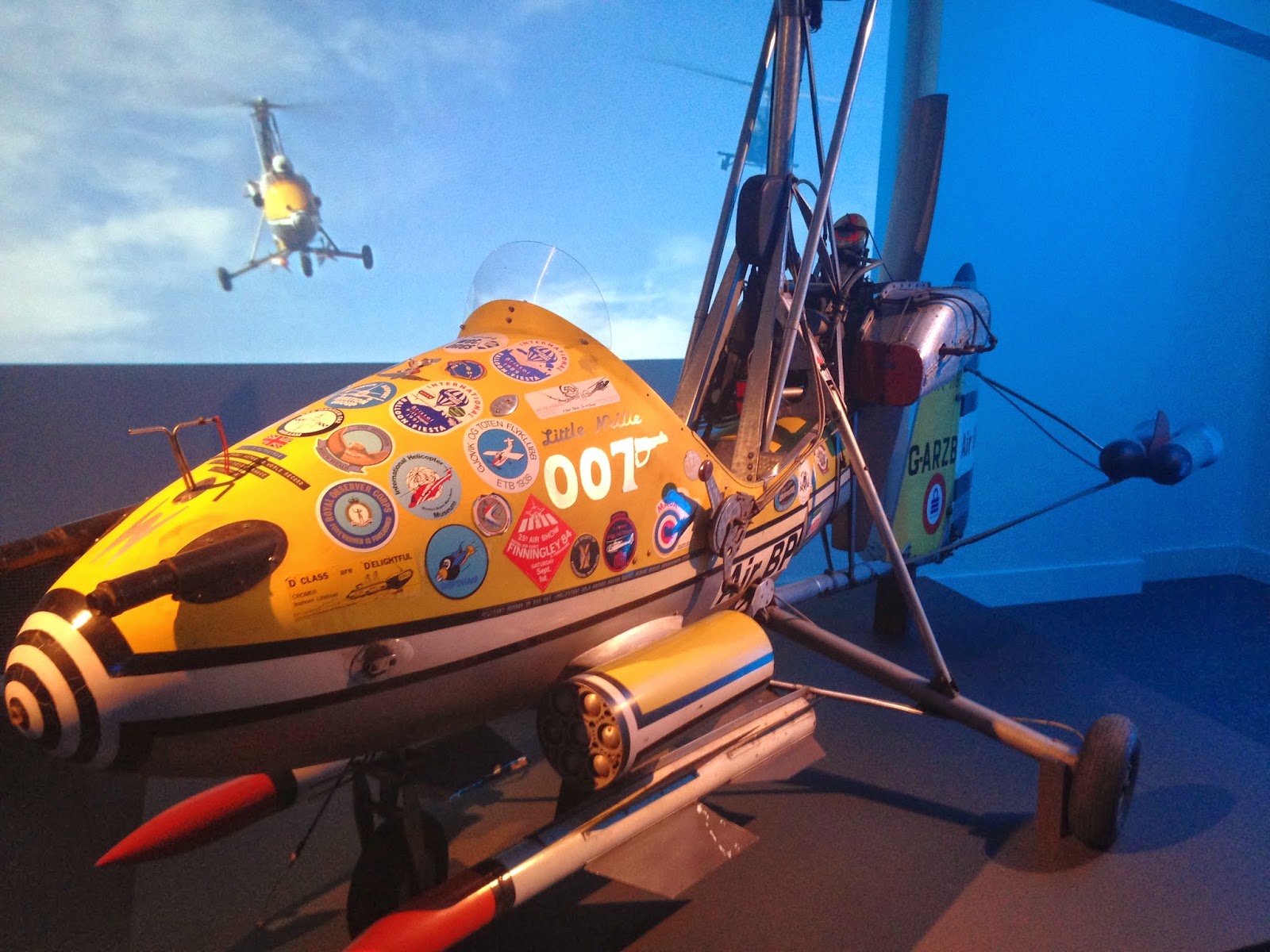
It wasn’t just cars – Little Nellie from You Only Live Twice was on display.

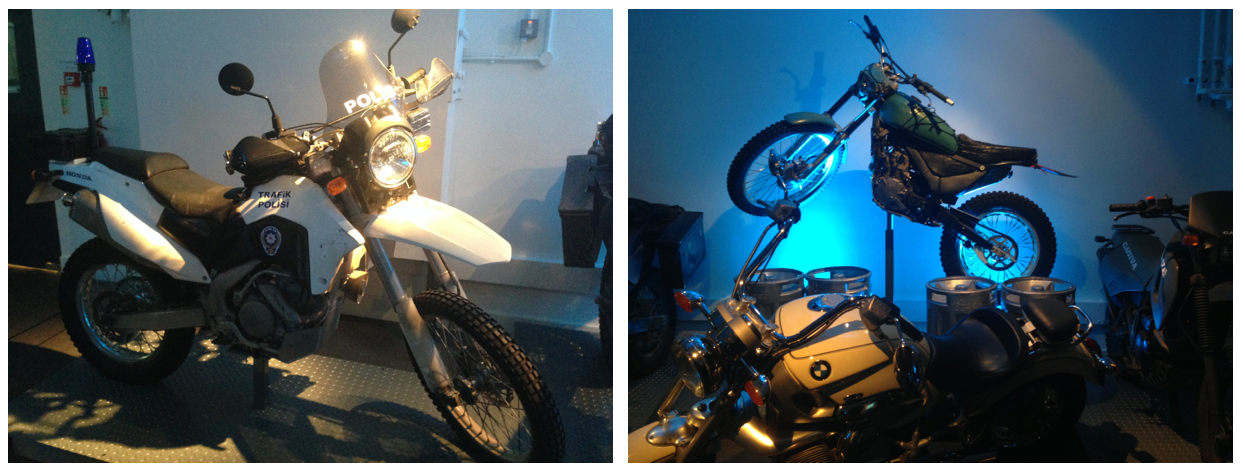
As were some of the motorbikes used in the last few films:

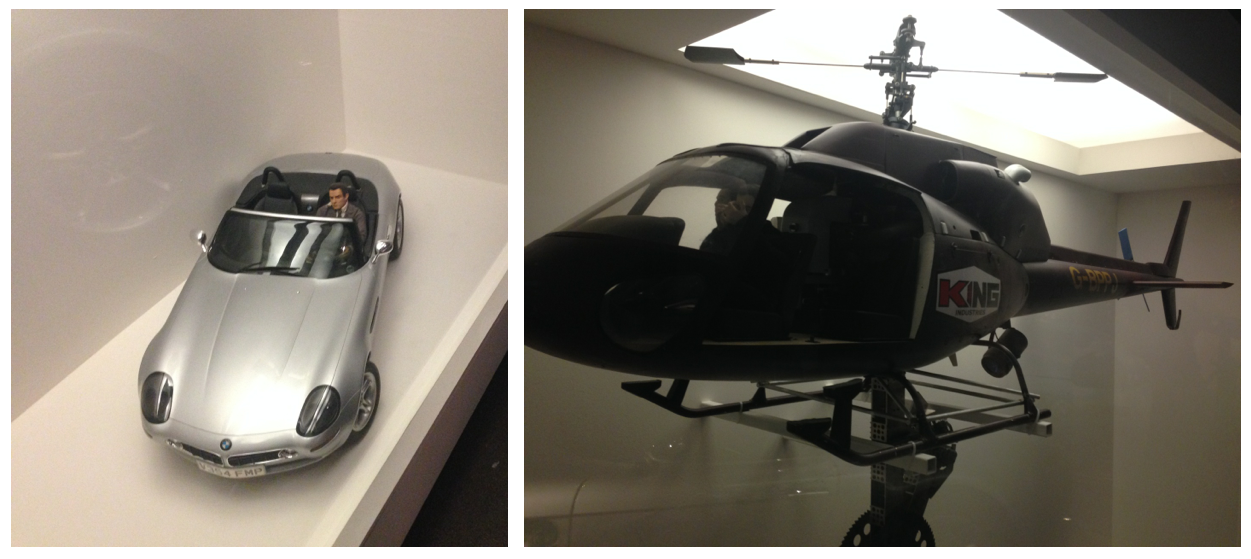
I was amazed to learn that the producers actually use 1/3 models to film a number of shots within a movie. Here’s a couple of them:

Note the Halle Berry/Pierce Brosnan action man figures in this helicopter:

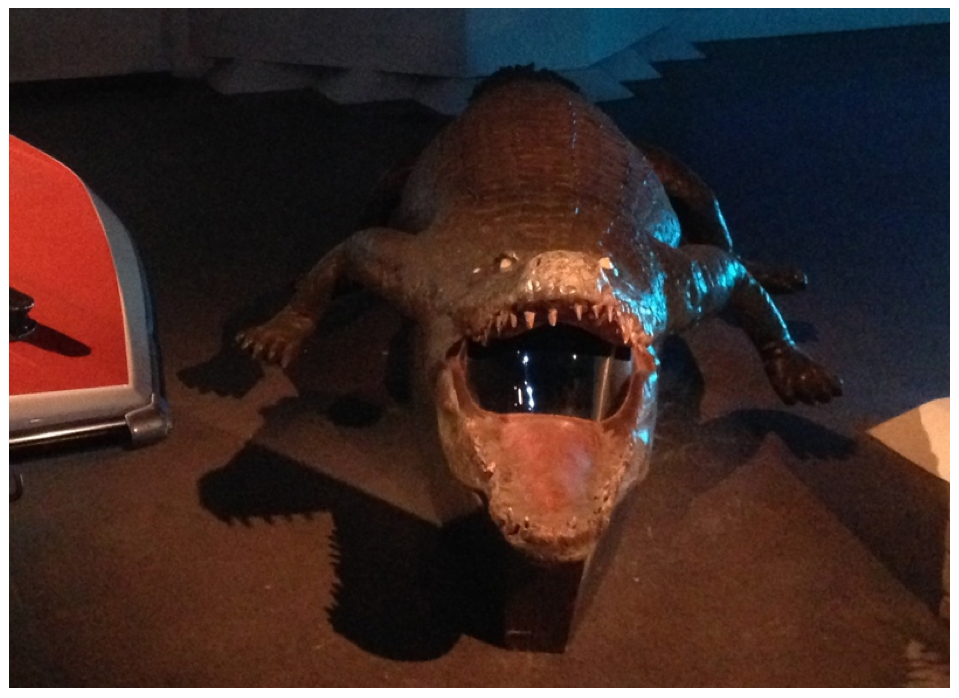
The fantastic Crocodile Submarine from Octopussy was on display.

The submarine Lotus Espirit was also on show, alongside the Neptune 2-man submarine, and a natty surfboard from Die Another Day – complete with C4 compartment.

There were a couple of beaten up Aston Martin Vantages, from the latest Daniel Craig films – including the car that broke the record for the number of stunt flips:

But without doubt, this was the main event – a beautiful Aston Martin DB5:

Overall, not quite what I was expecting for the London Film Museum (entirely Bond focused, almost entirely vehicle focused) but an interesting-ish morning all the same. That said, I’m light on facts…

FIVE FACTS
#1. Sir Ken Adam has worked on 7 Bond films – creating vehicles including the gadget laden Aston Martin DB5.
#2. The Timothy Dalton Bond passport and the Pierce Brosnan Bond passport have different dates of birth.
#3. Vesper’s role at the Treasury is ‘International Liason Officer’.
#4. The submarine from Diamonds Are Forever was called ‘The Bath-O-Sub’.
#5. 3D Printing was used in the production of Skyfall (a Bond first) to create a number of DB5 replicas for use in the attack on Bond’s estate.

1. Cartoon Museum
2. Churchill War Rooms
3. Cinema Museum
4. Dennis Sever’s House 
5. Dr Johnson’s house
6. Design Museum 
7. Down House 
8. The Geffrye Museum
9. London Film Museum 
10. London Transport Museum
11. Mansion House 
12. Brunel Museum 
13. Museum of the Order of St John 
14. Musical Museum 
15. Old Operating Theatre Museum & Herb Garret
16. Pollock’s Toy Museum 
17. Rose Theatre exhibition 
18. Fashion and Textile Museum 
19. Royal College of Music Archives and Museum of Instruments 
20. Sherlock Holmes Museum 
21. Twinings Museum
22. V&A Museum of Childhood 
23. Bank of England museum
24. The Stephens Museum 

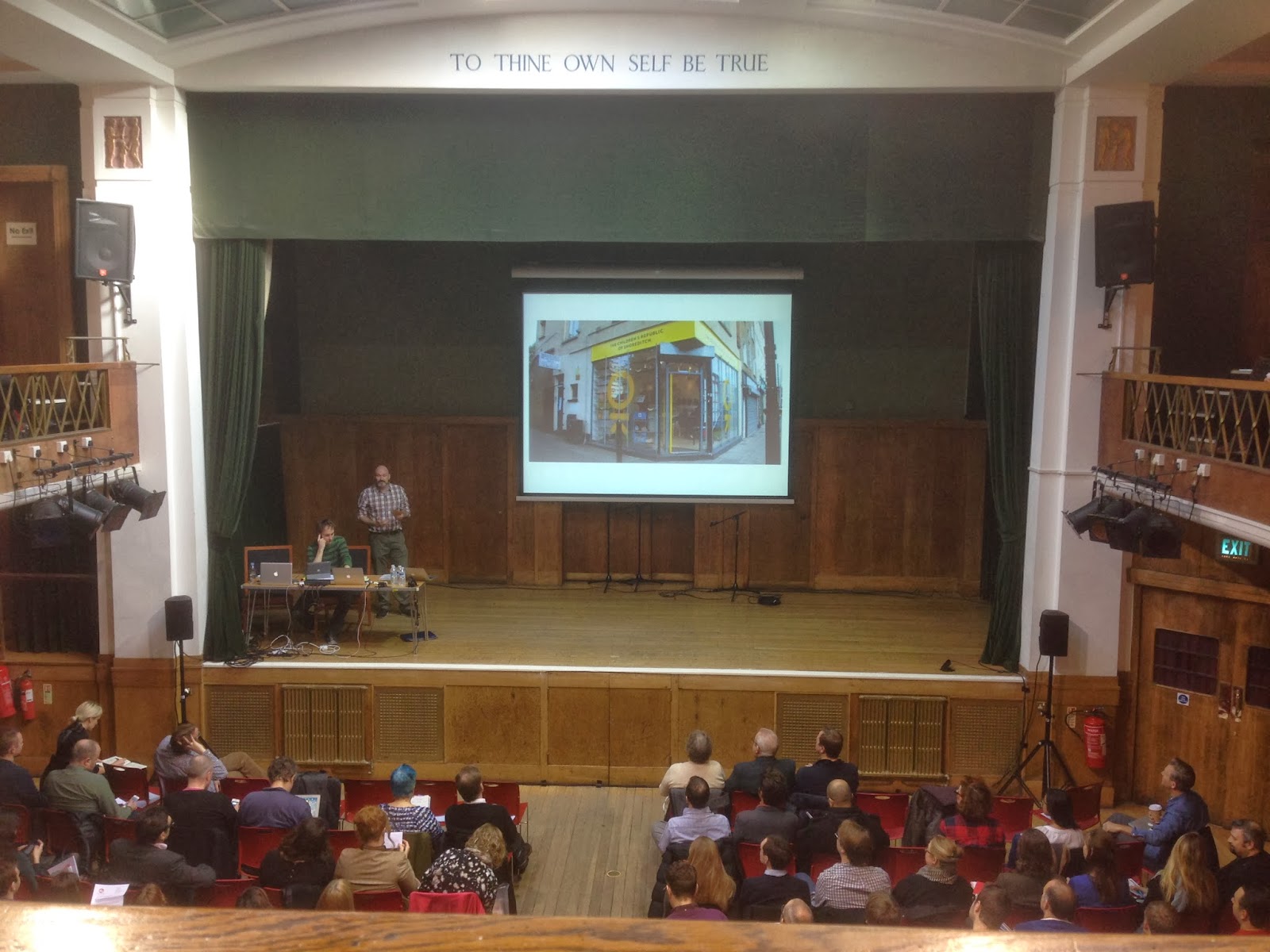
I spent the majority of yesterday at a fantastic conference – The Story 2014.

The Story is organised by Matt Locke. The line up this year was just incredible – I’m amazed he managed to pull that many big names together in one room.
Tech proved a bit of an issue throughout the day but it didn’t ruin the content – it just slowed it down a little bit. My phone also played up during the day, so I don’t have a photo of every speaker – which is a shame.

First up was Ben Payne from Ministry of Stories.
Ministry of Stories is a fantastic charity, helping improve literacy in the east end of London.
I’ve actually already been along to the Monster Supplies store – it’s well worth popping along to pick up some canned ‘escalating panic’ or impacted earwax.

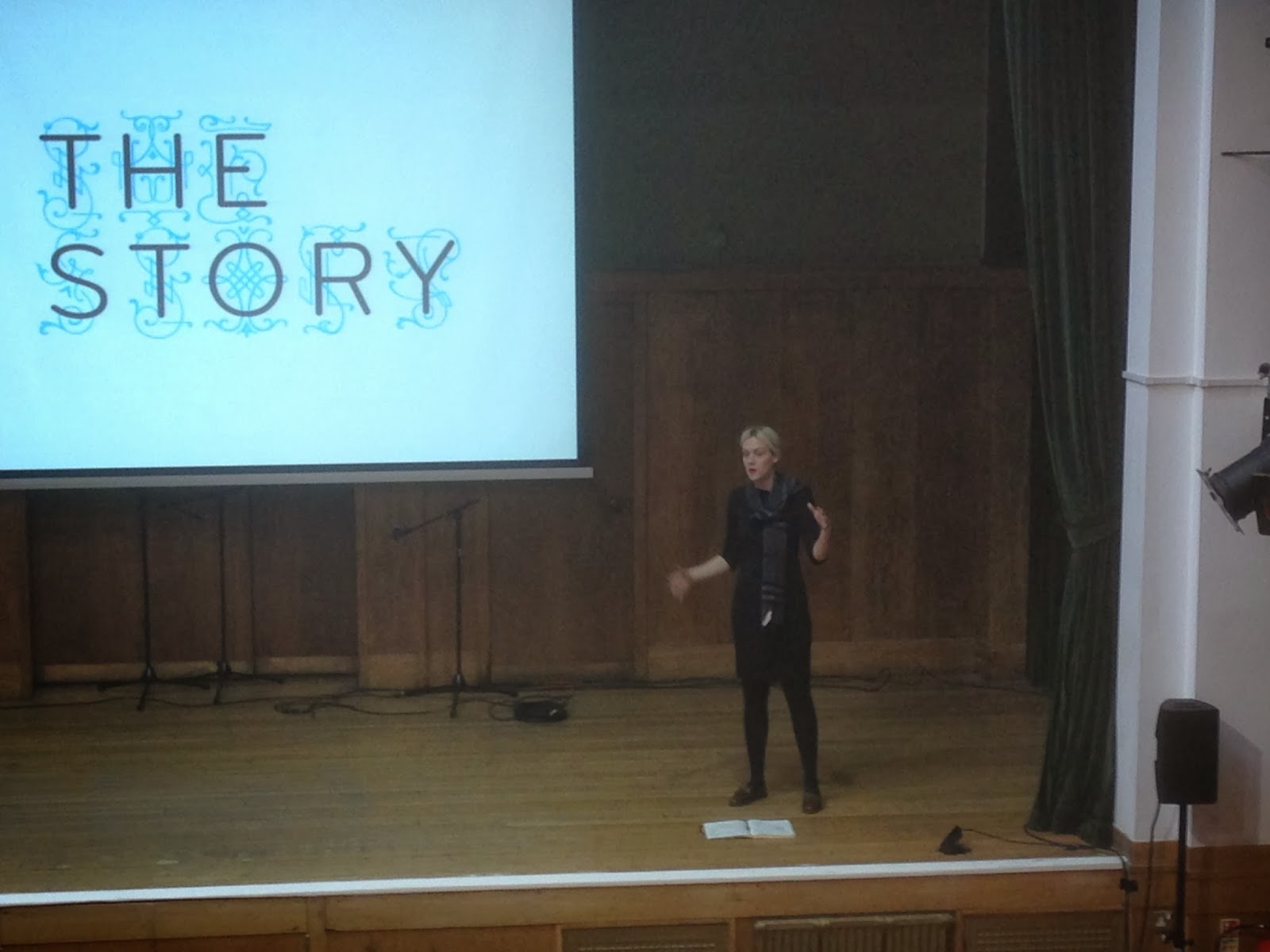
Next up was the performance artist Bryony Kimmings.
I’d never heard of Bryony before, but she was one of my favourite speakers on the day.
Her latest piece was inspired by an annual Stamford Uni survey, that asks young children what personality traits they would like to have when they grow up. For decades, the top personality trait has been ‘kind’. But it was recently pushed from the top spot when the children decided they’d rather be famous.
The project, called ‘Credible Likeable Superstar Rolemodel’, is a claw swipe at the manufactured pop industry. Under the watchful eye of her niece she’s created a new popstar called Catherine Bennett, an intelligent feminist with mockney pipes – the idea being that if it’s popstars that children look up to, we need to make sure our popstars are suitable rolemodels. No, Miley Cyrus doesn’t count.

Visual artists Ian Forsyth and Jane Pollard took to the stage after Bryony.
I thought they were brilliant. They’ve just finished filming a documentary about Nick Cave, called 20,000 days on earth.
They had a beautiful disarming way of presenting and you could tell they really love their work.
They’ve worked hard to make sure their documentary isn’t like any other rockumentary – drawing inspiration from the Stones film 1+1 Sympathy for the Devil and the Led Zeppelin documentary The Song Remains the Same. To do this, they worked to a number of principles.
Firstly, they decided they didn’t want to tell the biography of him, so they (1) reset expectations – showing the first 19,999 days of Nick’s life in the opening credits. (2) They decided they should embrace the myth – they didn’t want to create a documentary that showed the man under the mask (i.e Nick washing the car). Instead, they wanted to show Nick as he is – the man with the mask – a sort of hyper reality. (3) The best things come to those who wait. Endurance interviewing with a psycho analyst for 2 days gave them much better footage than they could have got from a string of half hour chats. And (4) they used mnemonic triggers to ensure Nick talked about the right things – showing him certain objects that would illicit memories from different periods in his life.
I can’t wait to see the documentary.
I hadn’t heard of Kyle Bean, but I’ve seen his work an awful lot.
I’ve even had his work set as my laptop background – without knowing it was him behind it!
He’s a great illustrator, that makes beautiful images out of physical things. he calls it ‘tactile illustration’.
He always tries to make his work topical – even his degree piece poked fun at technology news (he created a book-cum-laptop called ‘the future of books’. He talked a lot about his love for juxtaposition – combining two things in an unusual way to make a point. One of his most recent pieces involved creating an NSA branded whistle, with a USB stick for a mouthpiece – it was used for an article on the whistleblower Edward Snowden.
Kenyatta Cheese spoke next.
He was a bundle of energy, getting us all to stage fits of laughter for a photo shoot.
He talked about the history of the .gif file, through snow white gifs.
It was fantastic – a really impressive speaker.
Next up was Stella Duffy.
Stella had been through cancer surgery only two weeks before the conference, but she was up on stage running around, dragging up audience members to participate and lots more.
She started by taking us through dionysiac story structure (it wasn’t planned but she decided to do it after listening to Kenyatta’s talk.) After that, she explained the concept of a ‘Fun Palace’ and how it was her mission to create a number of these across the UK in 2014. The Fun Palace was originally concepted by Joan Littlewood and Cedric Price, under the motto ‘Everyone an Artist, Everyone a Scientist.’ The palaces aim to take art and science to the masses, as art and science HQs tend to be a bit scary and off-putting.
It sounds like a fantastic project – and I hope lots of people get involved. You can read more here: http://funpalaces.co.uk/
Barnaby Smith took to the stage after lunch.
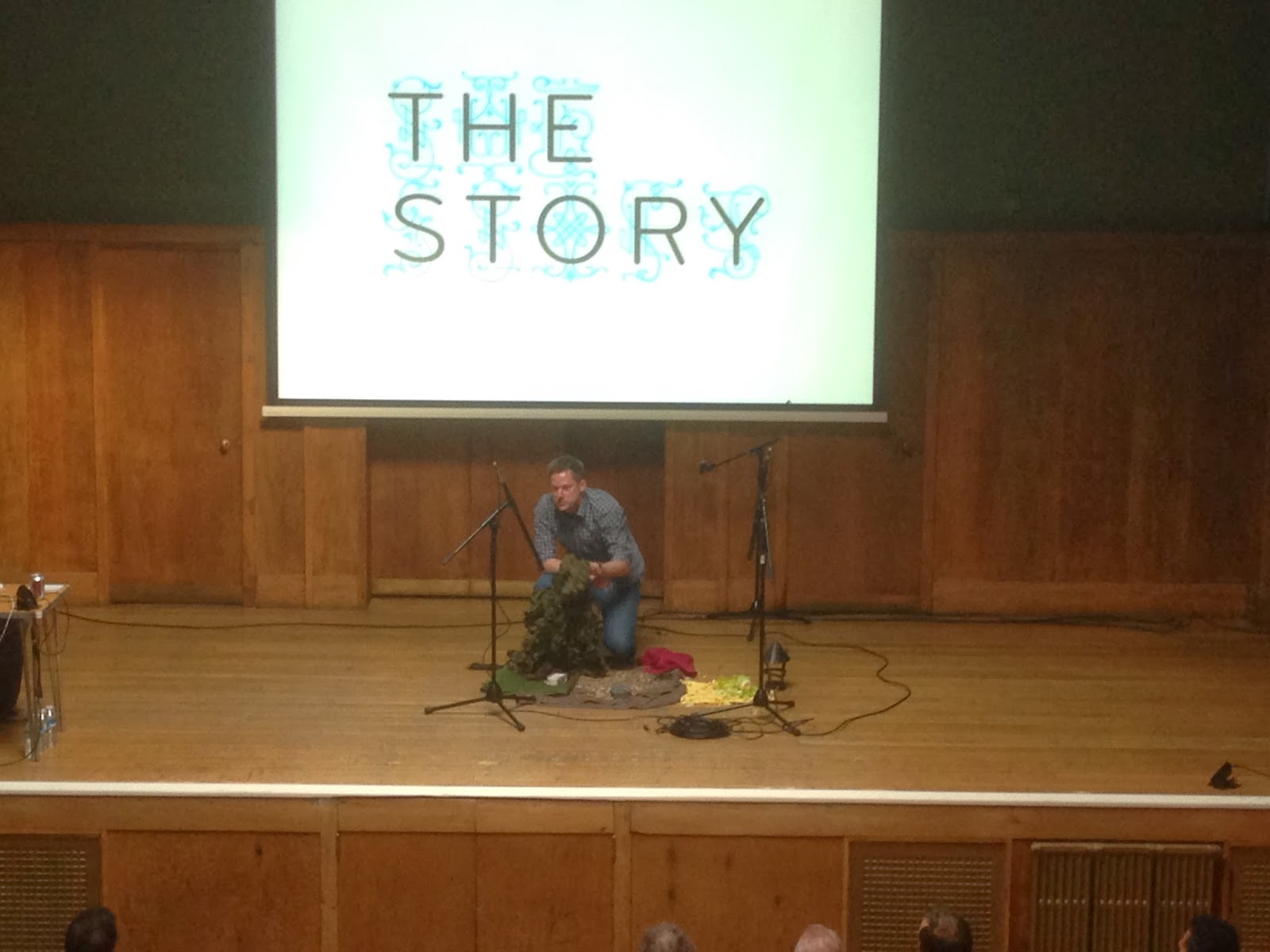
Barnaby is a Foley artist – a rather random job that involves creating bespoke sounds in a studio that sit as incidental sounds in film and TV. It generally involves creating three tracks: the movement track (body movements etc), the footsteps track (across any surface, in any shoes) and the spot FX (everything else – from scratches to explosions.)
He performed for us live, which was amazing – and showed us how each sound was made. Interestingly celery snapping and overcooked penne are used to create gory sounds.
And then he showed us just how important that sound is – sharing with us a scene from Tinker Tailor Soldier Spy (a film that he worked on) with and without foley.
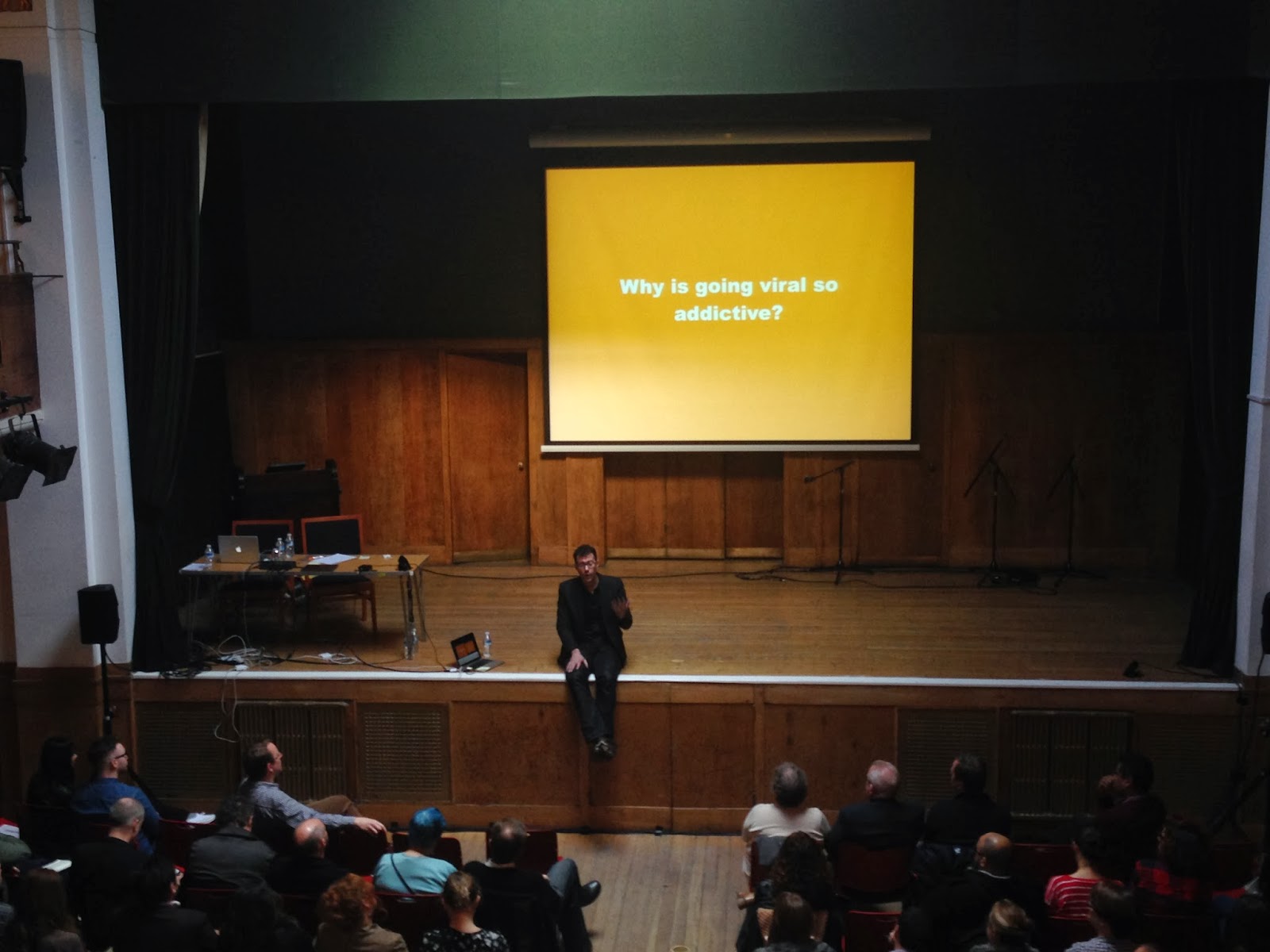
Next up came Bill Wasik.
Bill is an editor at Wired magazine, and (amazingly) the inventor of the Flash mob.
In 2003 he wondered what would happen if you took a viral email (FW: FW: Fwd: FW: Fwd: FW: Funny) and made it physical, creating ‘The Mob Project.’
The Mob Project involved sending a viral email out, stating everyone was to meet at a certain place at a certain time. The first email pointed at Claires Accessories in NYC. When he arrived at the shop, there was a line of police waiting for them – and the mob was cancelled. The next attempt worked – with 200 people descending on the rugs department in Macys. It was written about by a Californian blogger, who called them a flash mob, and the name stuck.
Bill’s recently written a book about the nature of things going viral – it sounds interesting.
Tony Ageh spoke next. He was my favourite speaker of the day.
He co-created the BBC iPlayer, conceived ‘The Guide’ at the Guardian, and helped launch Wired UK.
He decided when he was younger that he wanted to make the world a better place, and work in the media. So far, I think he’s done that!
He defined the media as the movement of thoughts and ideas through time and space. I like that.
Whilst working at the magazine ‘What Mortgages?’ he wrote about the government’s Right to Buy scheme with the headline ‘Wrong to Buy.’ After a clash with the publisher, the piece didn’t go ahead.
He quit his job when the publisher said ‘You think magazines are about information. They’re not. They’re just vehicles to hang advertising off of.’
The story of the iPlayer was an interesting one. When he joined the BBC he became the Head of Search listings and Core navigation sites. One day, a BBC website about a show featuring the model Jordan went up, and the beeb was accused of going ‘softcore’. The website came down and Tony was asked to sack the person responsible. He took the guy for a drink and told him that he’d been asked to sack him, and that they were going to sit in the bar until they’d come up with an idea that was so good, the management couldn’t sack him. After many drinks in the 24 hour bar in Bush House, the stumbled across the idea of iPlayer and popped home for a few hours kip. Tony called a friend in the middle of the night, in case he forgot the idea due to his current state of inebriation.
Bleary eyed the next morning, Tony got the softcore guy to write it up and email it to him. He forwarded it on to his boss, saying ‘He can’t be sacked, he’s got the best idea the BBC has ever seen.’
After Tony, we had the writer Meg Rosoff.
She’s read a lot of mediocre books in her time, and has most recently been trying to hunt down where mediocrity comes from. She used a horse-riding analogy – throughness (when a horse is perfectly submissive and working at one with the rider) to explain her views on the relationship between the conscious and unconscious mind. The more you can work to access and control your unconscious mind, the better your work will be. Nice.
Gruff Rhys from the Super Furry Animals came up next.
He talked about a Welsh explorer called John Evans that mapped the Missouri river, and tried to hunt down a tribe of Welsh speaking American-Indians. Gruff recently recreated the journey that John took, with a puppet version of John Evans in tow – and wrote a song about the experience.
Phil Larkin spoke next about writing and his experience of using vines for storytelling. He used a quote about how constraints inspire creativity. I like that. It’s why the tighter briefs are often the best briefs. And why branding briefs are the hardest of all.
Lisa Salem talked about her project ‘Walk LA with me’. It’s a nice project, that aims to reconnect people with the city around them and the people that they inhabit it with. Her next project is called ‘Please hold with me’ – aiming to brighten up the on-hold experience that you get with customer services.
Finally, Alan Rusbridger spoke on his experiences of the Edward Snowden case.
He talked about the corporate redefinition of the Guardian that occurred due to the new media age – and this led to the hiring of Glenn Greenwald – who wasn’t a traditional journalist, but also a lawyer and activist.
Rusbridger described Greenwald as highly knowledgeable (his articles are almost scholarly) and obsessive about civil liberties and internet privacy. When Snowden made contact with Glenn, Rusbridger brought in personal friend and trusted employee Ewan MacAskill to work on the story with him – as it was such a high pressure piece.
Rusbridger came across as highly intelligent, friendly and opinionated. I’m sure he’s a fantastic person to work for.
That’s it – thanks to Matt Locke for organising such a great conference!
An amazing list of things the iPhone has supplanted.
The number of industries that must have been crushed by one tiny device – it’s unbelievable.


Physical objects fully supplanted by iPhone 4S with retina display:

1) 50 pounds of books (via Kindle, iBooks)

2) Kindle e-reader

3) daily newspaper

4) pocket digital camera (via built-in camera)

5) holga film camera (via Instagram, ToyCamera app)

6) pocket foreign language dictionaries

7) scanner (via Genius Scan)

8) bank ATMs (via USAA’s app, which allows deposits via snapshot)

9) GPS device

10) road maps / printouts from Mapquest and Google Maps

11) reporter’s notebook (I find tapping out notes isn’t any slower than writing them)

12) voice recorder

13) handwritten grocery lists (via DropBox-syncing Plaintext)

14) Nintendo DS

15) iPod

16) radio (via NPR app / Hype Machine / iTunes / Spotify / Pandora)

17) paper comics (via Comixology)

18) set-top box remote (via the Roku app)

19) paper receipt file (via EZ receipts)

Partially supplanted:
20) television

21) business cards (via CardCloud)

Will be supplanted:
22) Credit and debit cards (via app, NFC or QR codes)

23) loyalty cards

Could be supplanted:
24) set-top boxes

25) driver’s license or other forms of ID

26) laptop (via a docking solution)

Via: http://www.technologyreview.com/view/428579/a-surprisingly-long-list-of-everything-smartphones-replaced/