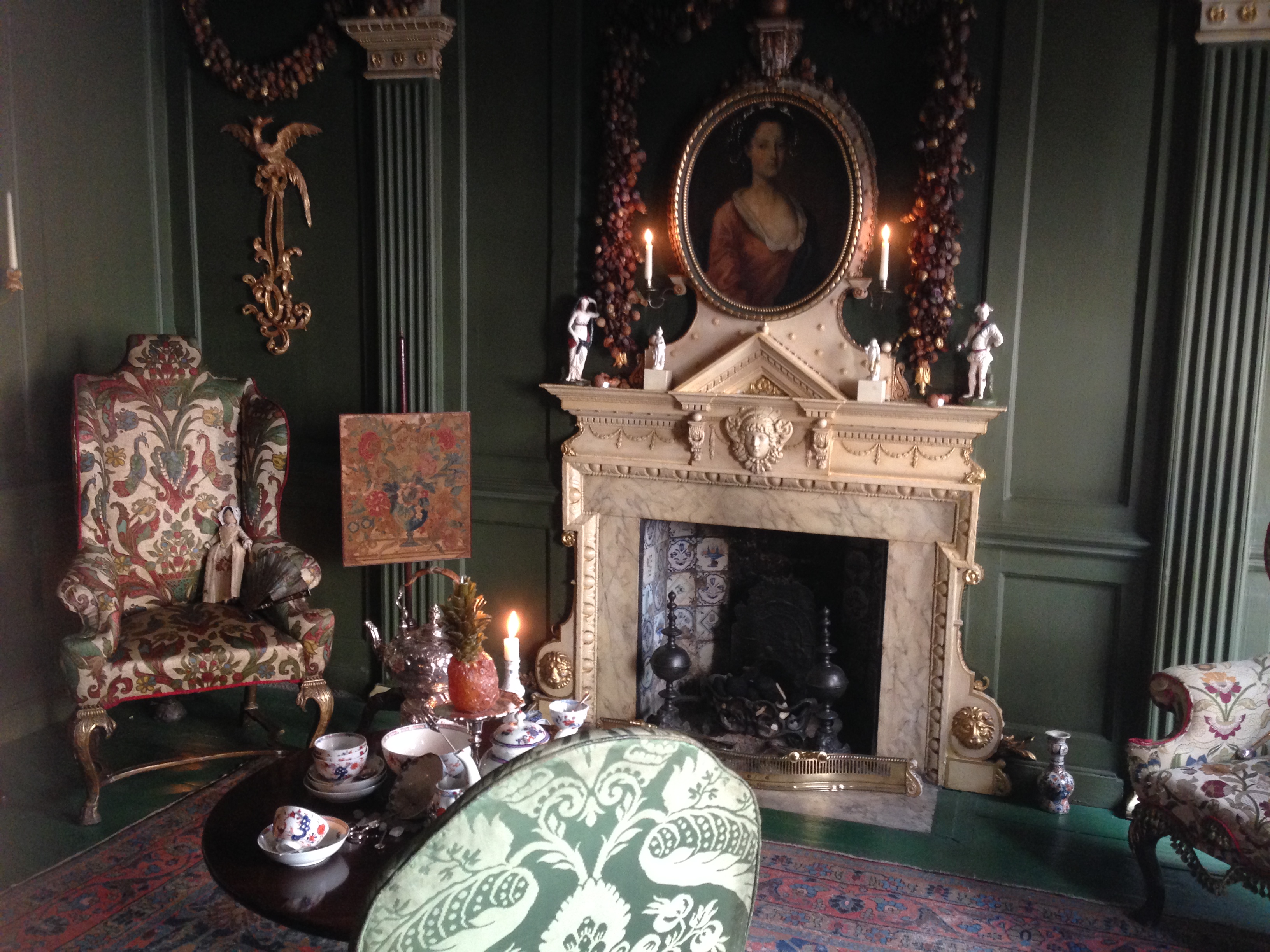
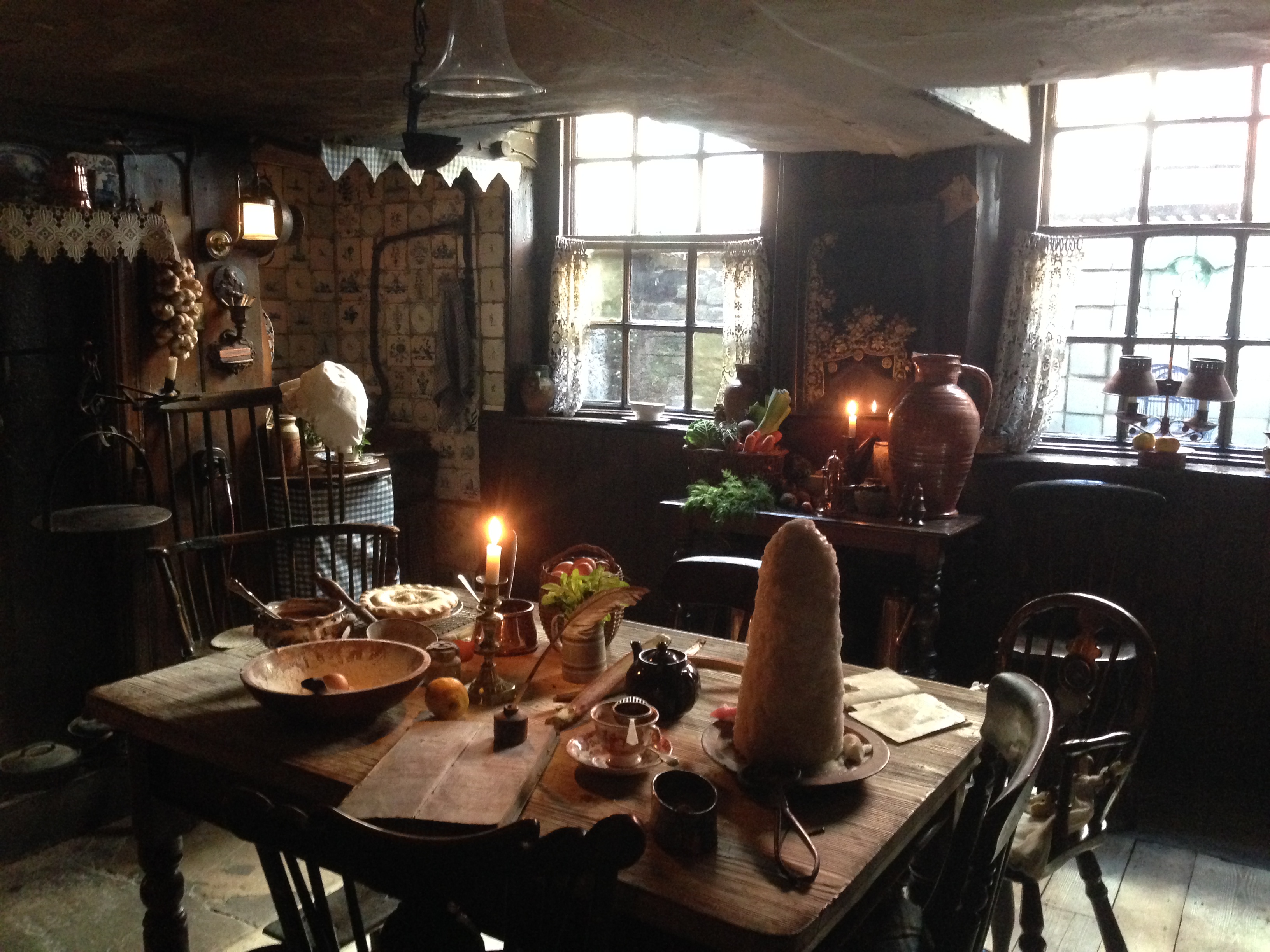
Dennis Severs House is a 18th/19th century time-capsule in the depths of Spitalfields. It was devised by a man called Dennis Severs, a Canadian eccentric that travelled to the UK in the 1960s, in search of what he called ‘English Light.’

The concept revolves around an imaginary family – The Jervises. Each room is assembled to give the feeling that the family has just vacated, leaving behind cooking smells, spilled wine and more.
Updated Sever.001

The phrase ‘As you enter, they leave. As you leave, they enter’ is pasted throughout the house. (If I’m honest, it gets a bit repetitive.)

Walking around the house feels more like immersive Punchdrunk-style theatre than a museum tour. For that reason, it probably shouldn’t have been put on my Museum list. That said, the house has received so many positive reviews that I thought it was worth a pop. And it many ways, it was like the Geffrye museum without any barriers.

IMG_1091

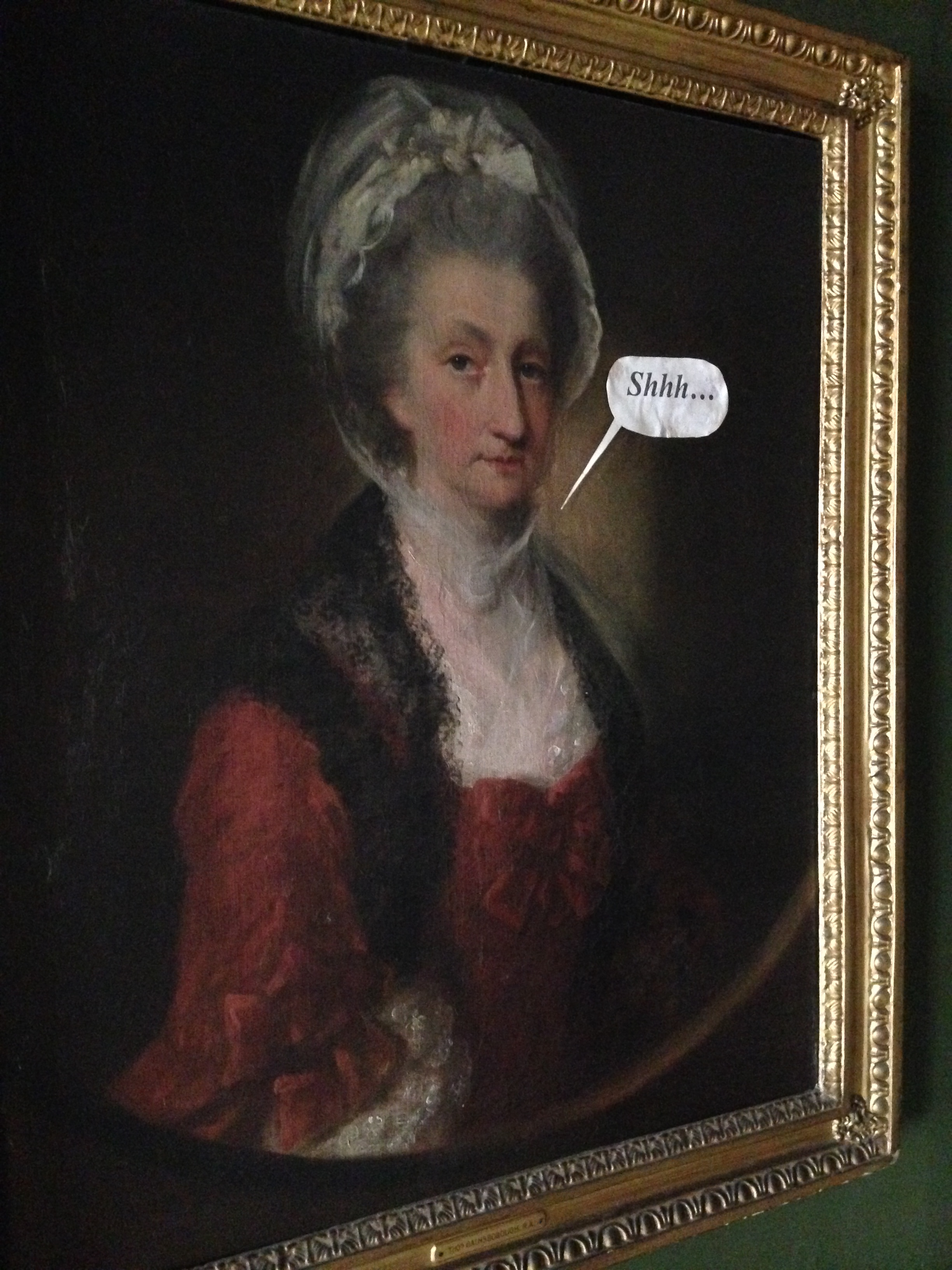
The house is peppered with slightly condescending signs, saying things like ‘Oh no, you’re still looking at things. Try and see the whole thing’ or ‘C’mon. You’re still not seeing it’ in an attempt to nudge you into believing it’s an experience not just a collection of old artefacts.

IMG_1090

Which is great. I totally understand that if you experience a room as a whole, it will feel more like you’ve been transported back in time.

But whilst the majority of the displays felt fantastically realistic, in almost every room there was something to wrench you back to the present day. The best perhaps being a big jar of Tesco Finest mint jelly in the drawing room cabinet.

In an odd way, it’s a pity we didn’t see the place whilst Dennis was alive. I can’t imagine he’d have been happy with ‘Shh’ signs stuck on paintings, or modern brands and products sitting next to authentic old ones.

IMG_1094

Dennis’ personal motto was ‘You either see it or you don’t.’

Unfortunately for Dennis, it wasn’t that I hadn’t seen it – in fact, I’d seen too much.


FIVE FACTS

Not one! It feels a bit cruel chastising the house for not having facts on display. It’s immersive history – I get that.

It’s just a little annoying it was so hard to get immersed.

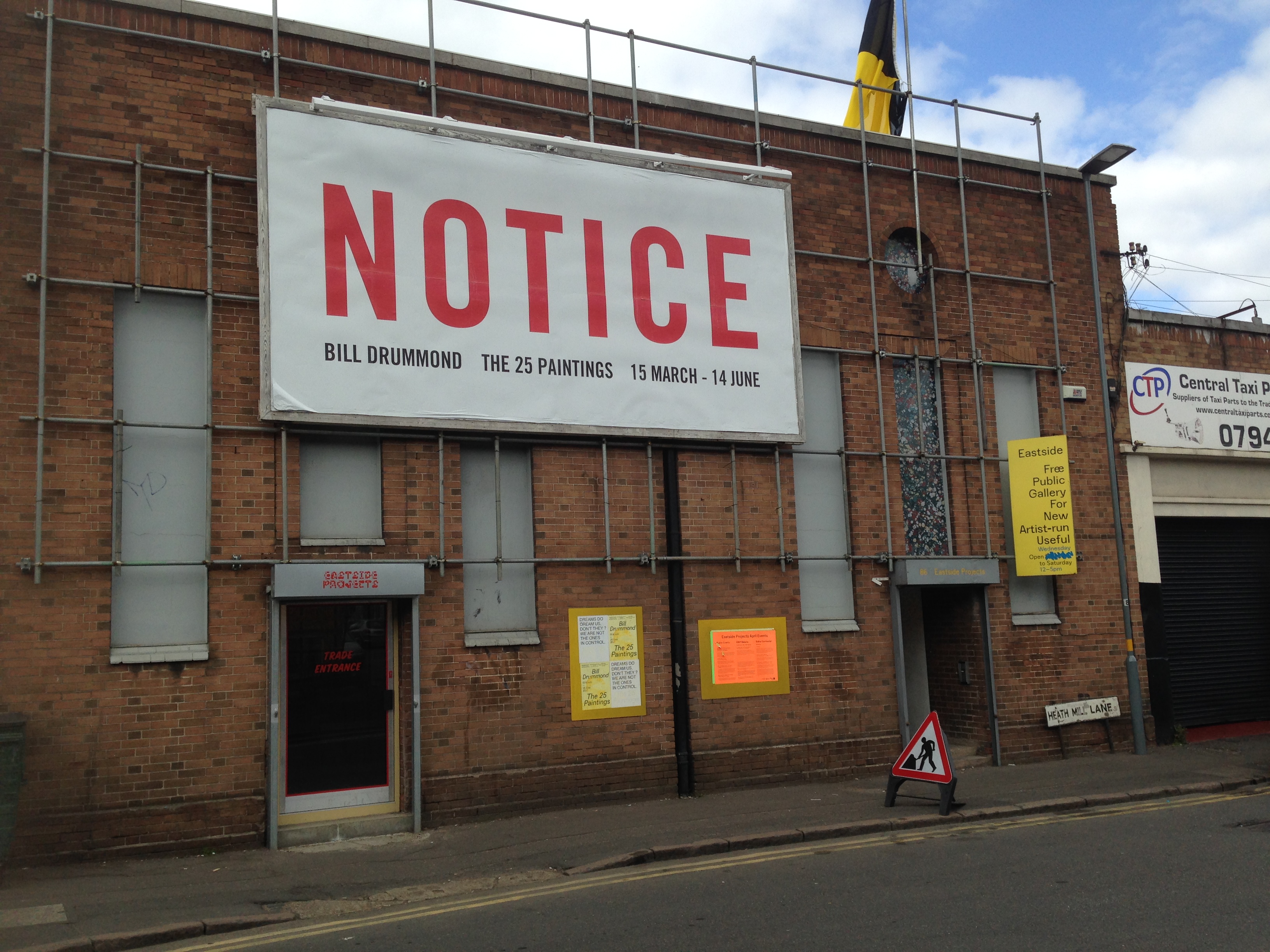
We were walking through Digbeth the other day, and I spotted a huge poster out the corner of my eye. Turned out it was advertising the first date of the ‘Bill Drummond World Tour’ – his 25 Paintings.

IMG_0781

We popped inside – it was brilliant.

Drummond creates art through activities – what he calls ‘sculptures’.

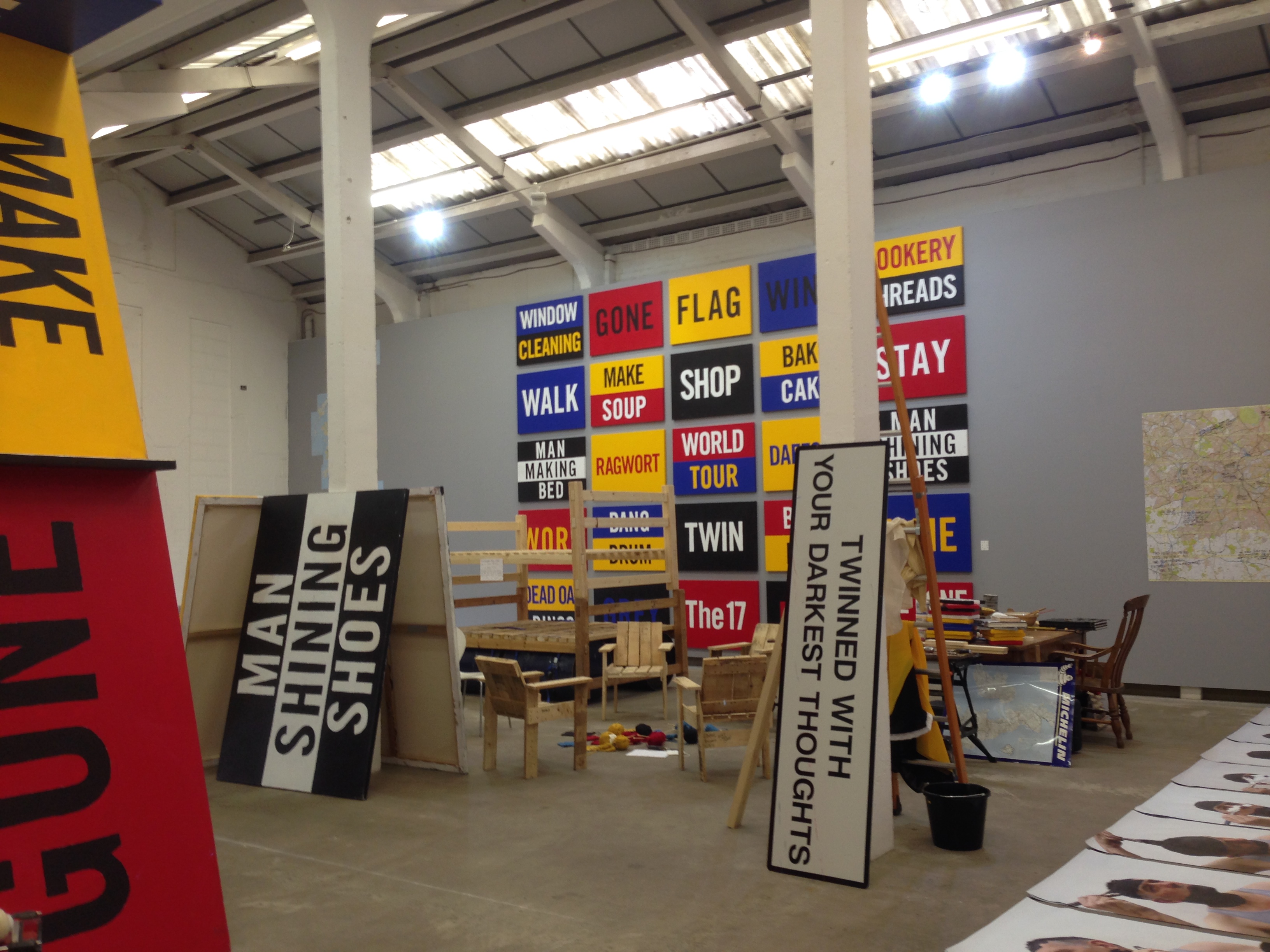
Each of the 25 paintings created advertise or signify one of the activities.

IMG_0792

Some of the activities include knitting…

Knitting.003

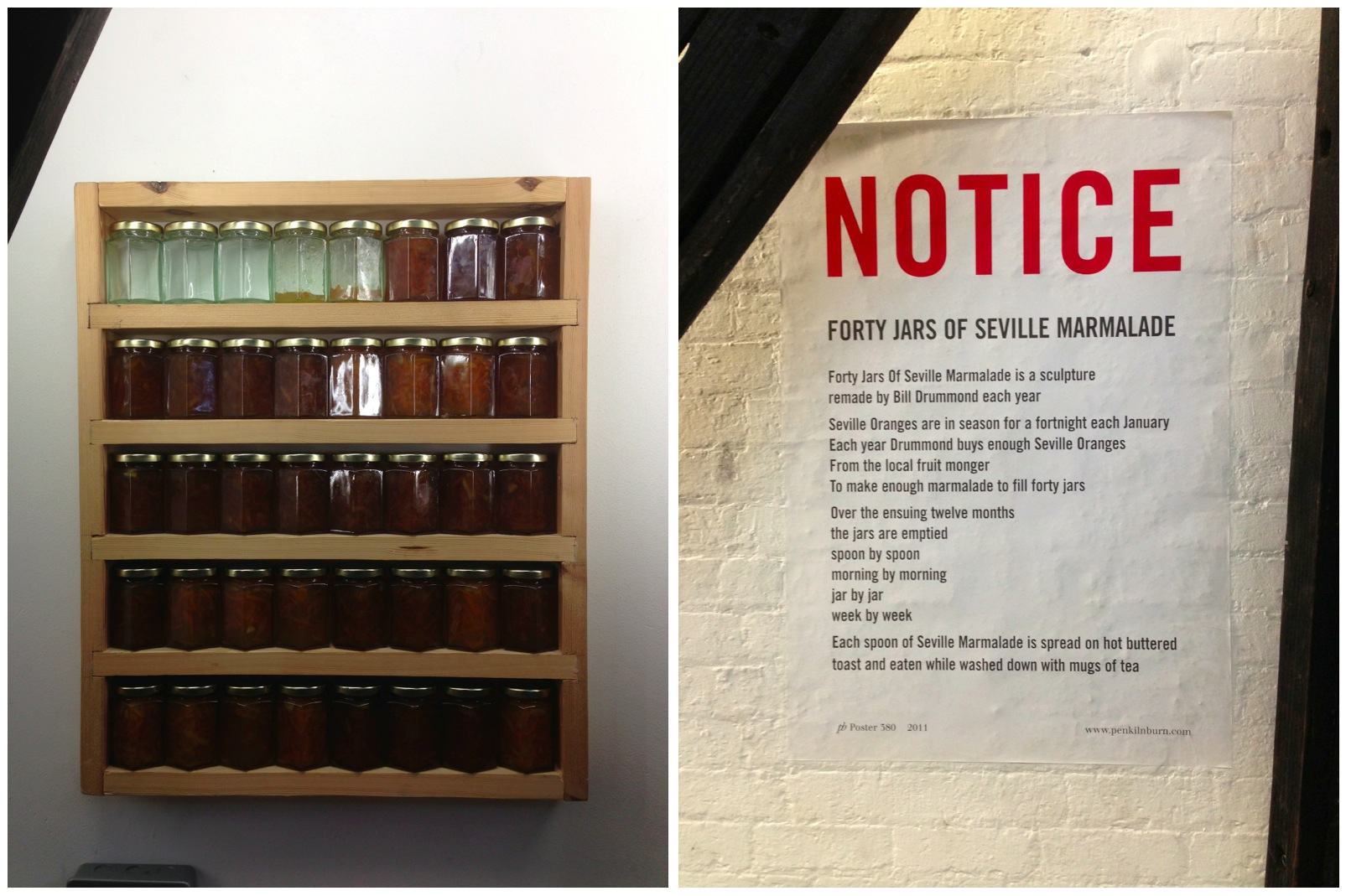
Marmalade…

Marmalade.001

and balancing.

House of Cards.002

They’re all beautifully random.

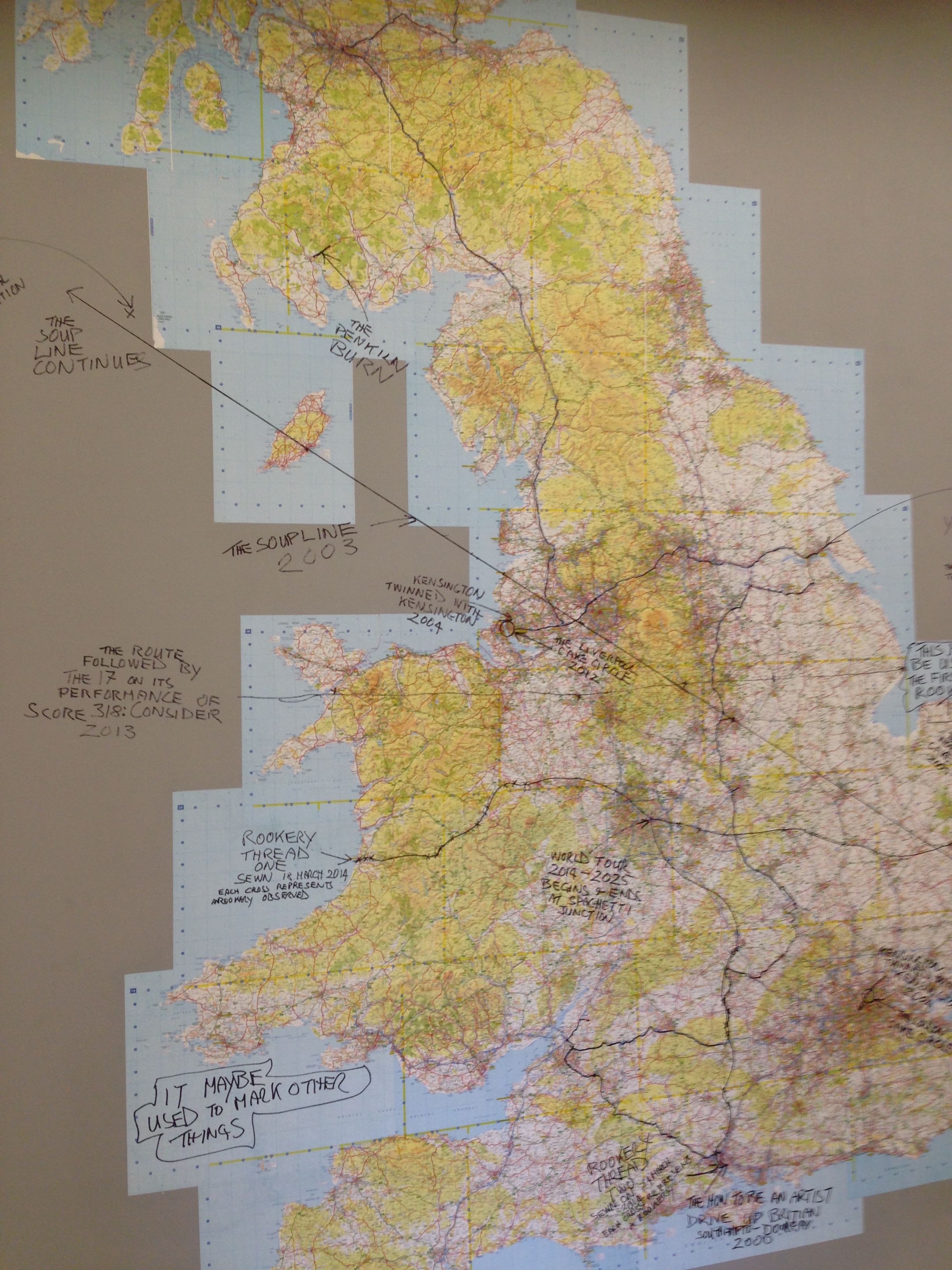
I particularly like the Soup Line – if your house sits on the Soup Line, Drummond will come and make a vat of soup for you.

IMG_0788

Drummond has also been twinning towns – this one was hilarious:

IMG_0805

The 25 paintings are changed are repainted everytime an activity finishes and a new one is started.

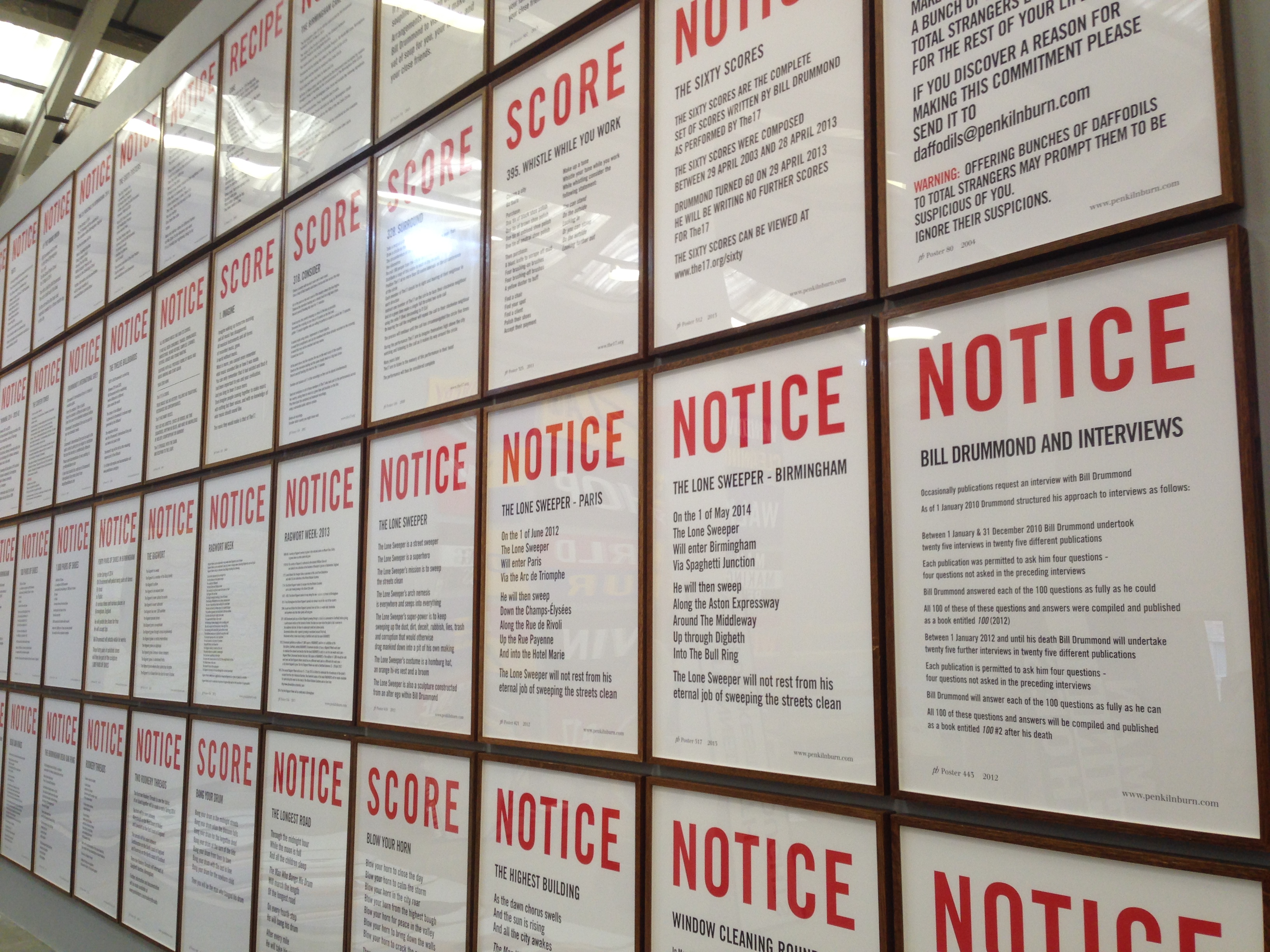
Each activity has a notice – there’s a huge wall of them on display – but Drummond has been through over 600 so far.

IMG_0847

Whilst the exhibition may be small, it continually evolves from one week to the next – so you’ll see different things and over the next 11 years he’ll amass a huge amount of work.

IMG_0844

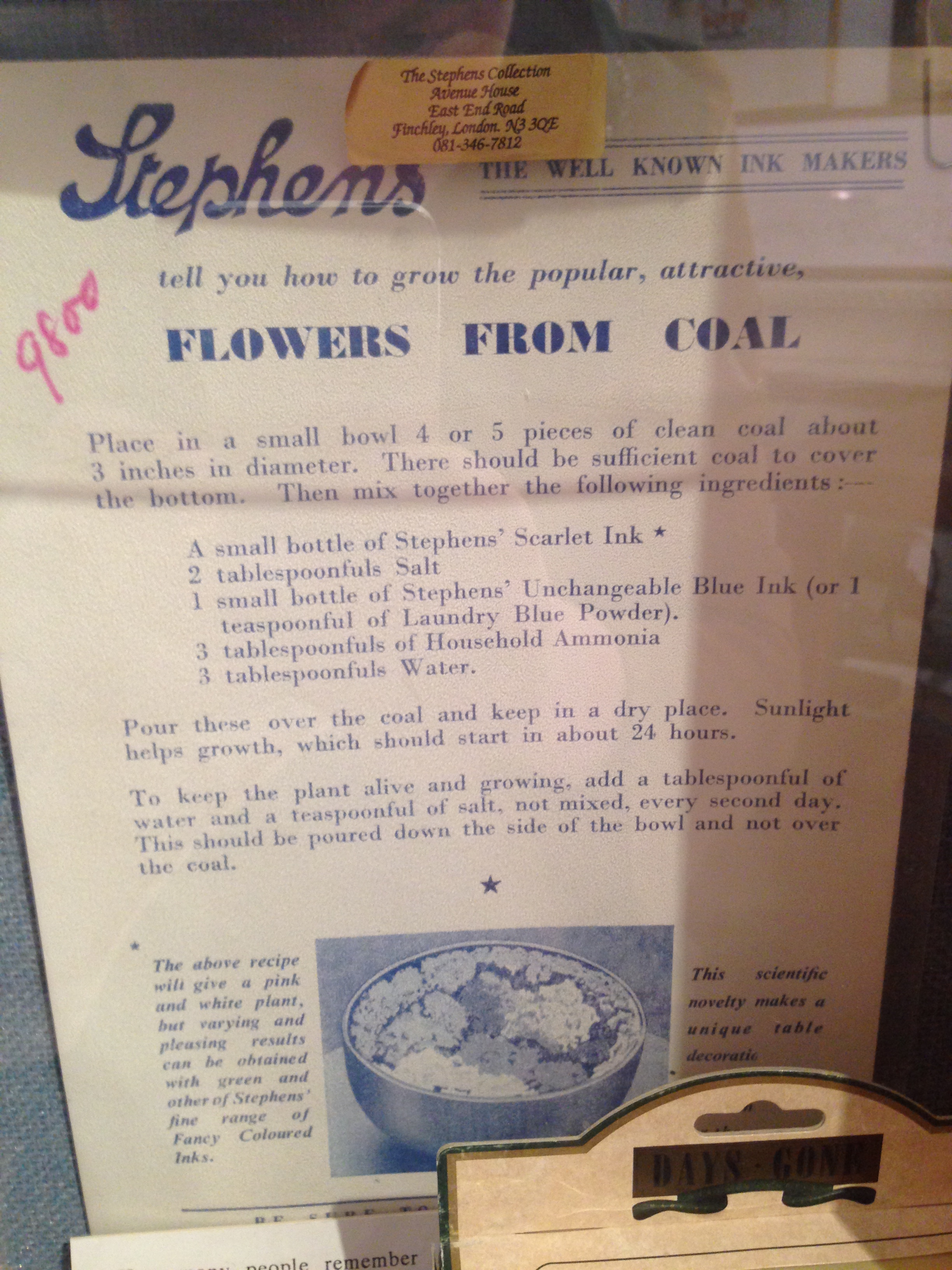
The collection is housed within Avenue House, a mansion in Finchley that ‘Inky’ Stephens bequeathed to the council for the enjoyment of the public.

It’s a small exhibition, devoted entirely to Stephens Ink.

The ink was invented by Dr Henry Stephens.

IMG_0604

He was apprenticed to Mr John Winkfield in 1816, and after 5 years was awarded his certificate to practise medicine.

Whilst training, a fellow student was poet John Keats. He also got to know Charles Dickens and Charles Lamb during his studies.

In the basement of his house, he experimented with methods for developing his own ink. He later manufactured and sold it – patenting his processes and associated products.

Henry Charles Stephens, son of Dr Stephens, expanded the Stephens Ink Company into international renown. He was affectionately known as ‘Inky’ Stephens.

Inky followed in his father’s footsteps with regards to product development, forever tinkering with microscopes and chemicals in his laboratory, in an attempt to improve the ink products.

IMG_0614

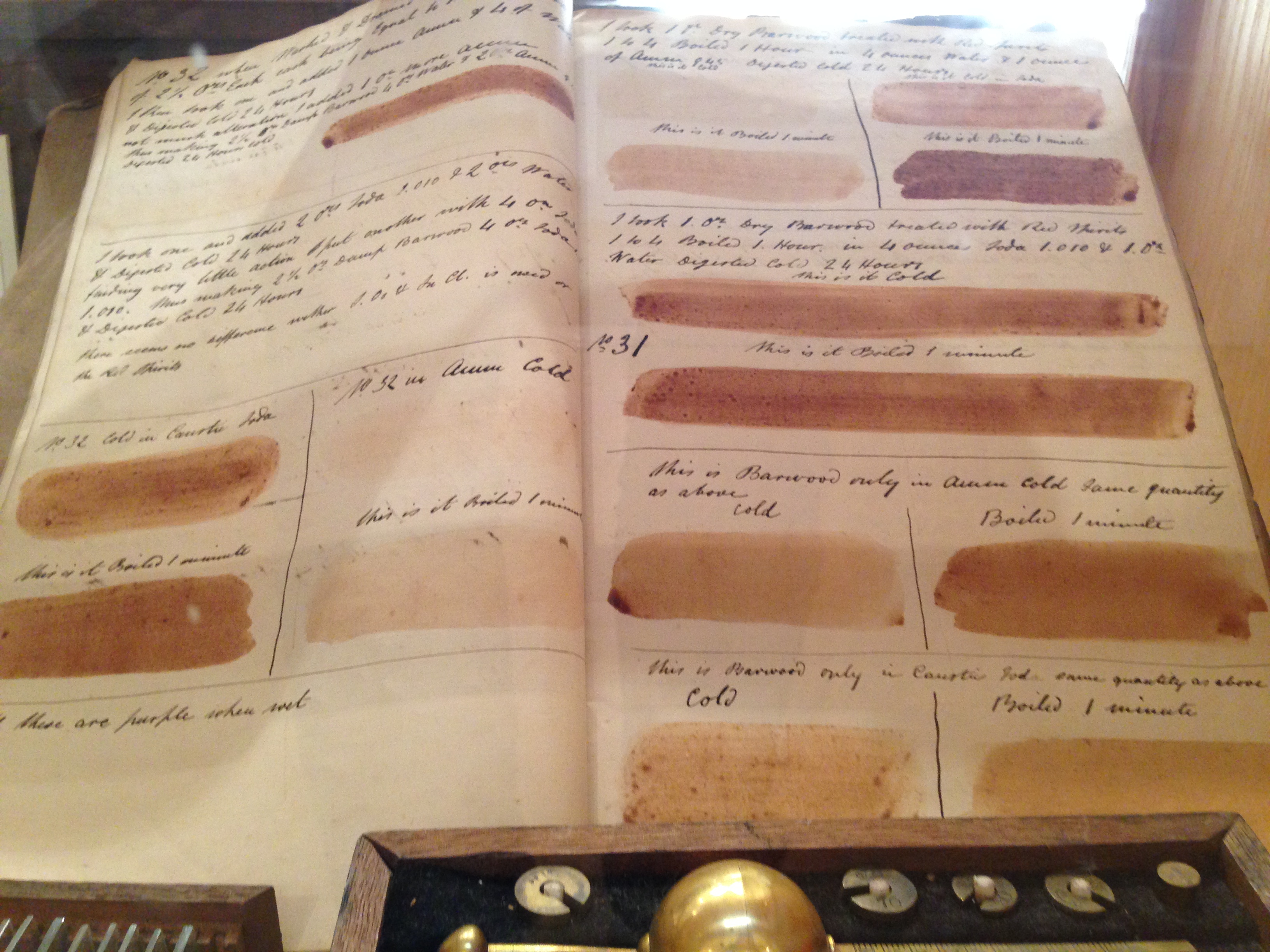
Here’s a copy of his book, used to record those experiments.

Almost every great person we’ve learned about on the museum challenge this year has kept, and obsessively used a notebook or lab-book.

IMG_0617

One formula he created for black ink (c. 1910) included 1lb of crushed galls in 12 pints of soft water, heated to boiling, before adding 8oz green vitriol and bottling. The bottle was then shaken daily for several weeks before 6oz of gum was added, it was strained and then rebottled. Hard work to produce!

Early advertising for the Stephens’ Company products included bus tickets, letter openers and a rather flash press advert featuring a young Des O’Connor.

IMG_0654

How’s this for an early example of ‘content’ from a manufacturer too?

IMG_0659

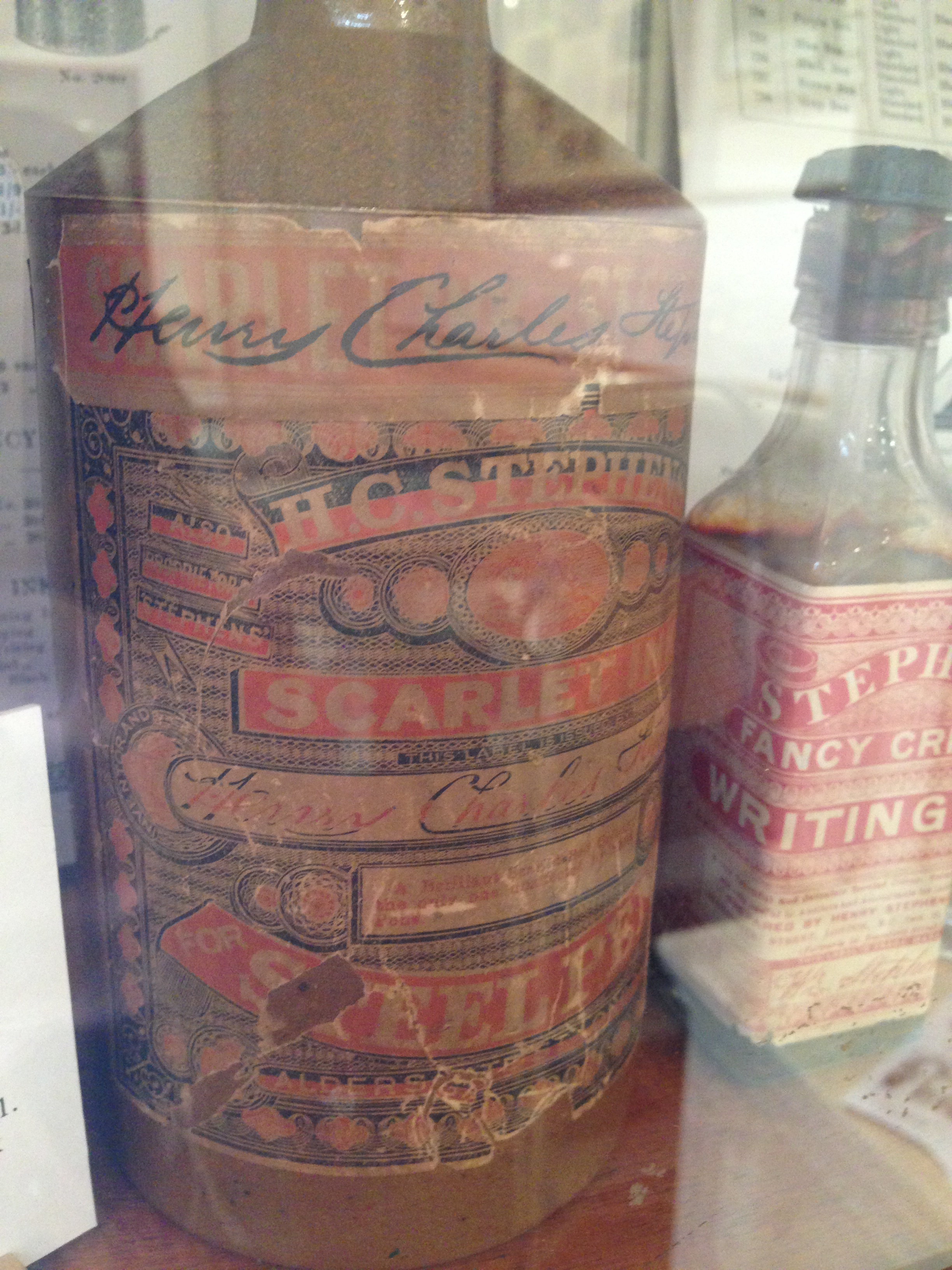
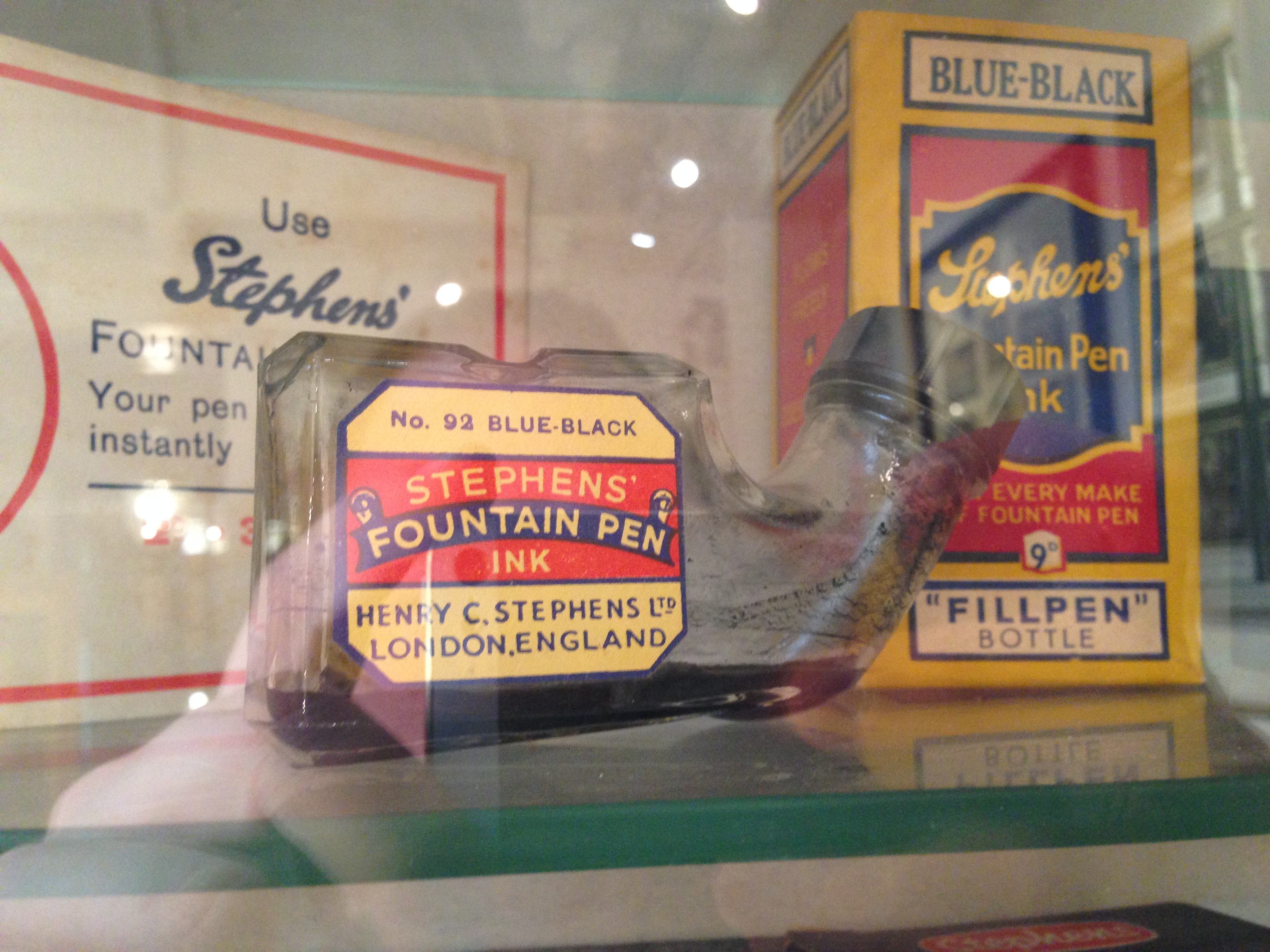
There were lots and lots of old product examples.

IMG_0634

Including this one from 1870!

IMG_0680

I love how this bottle shape has been created with the user in mind, not the manufacturing process. Beautiful.

IMG_0684

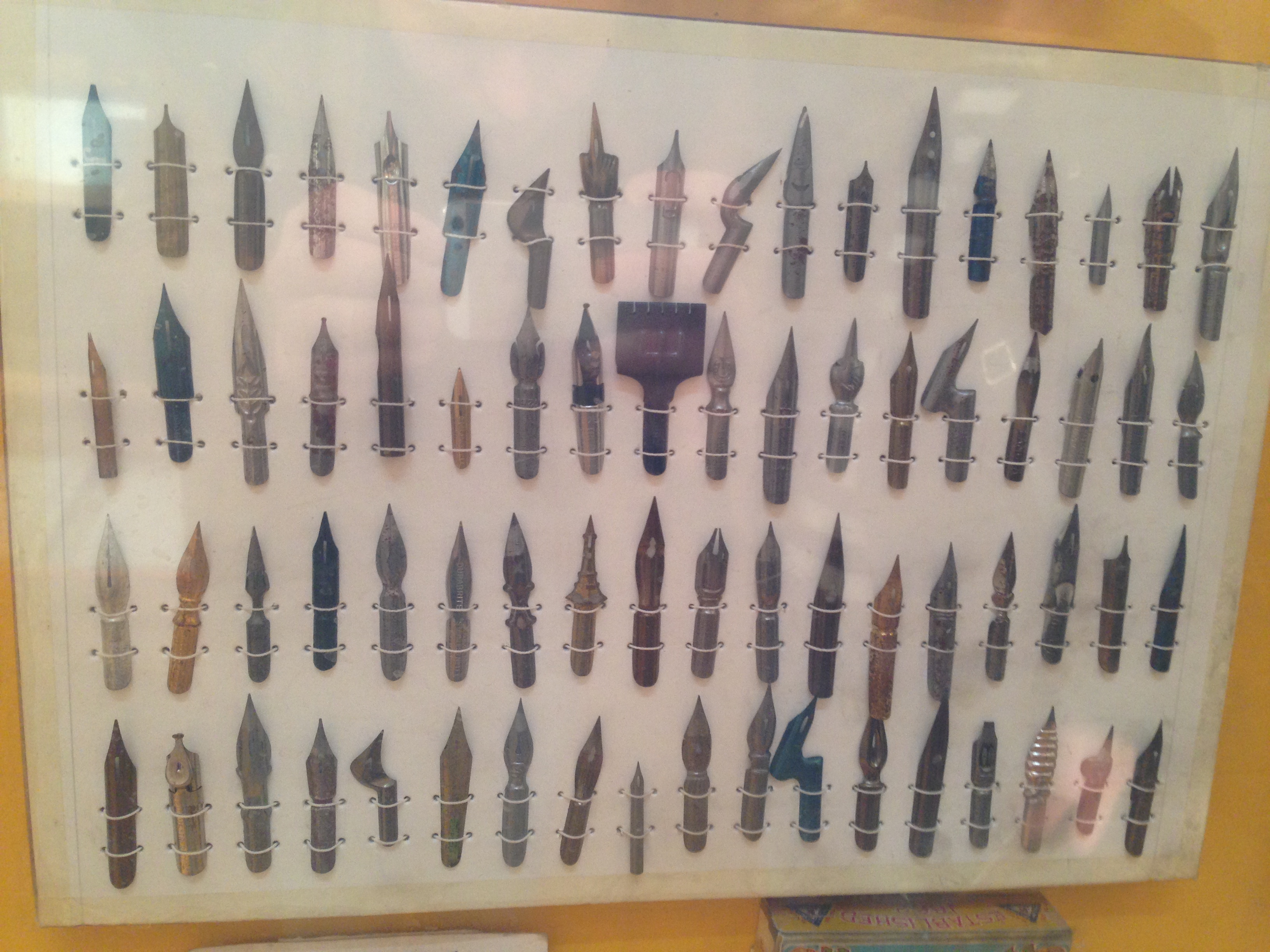
And lots of lovely pen nibs too.

IMG_0730

A small, but beautifully formed exhibition.

FIVE FACTS

#1. Inky Stephens published books on a wide-range of subjects, including Parochial Self-Government.

#2. Owing to a shortage of new ink bottles in occupied France during WWII, the Stephens’ Company in Paris had to resort to selling ink in wine bottles.

#3. Dr Stephens and John Keats shared lodgings in Poultry whilst they were studying.

#4. The earliest fountain pen was patented by the Waterman company in 1884 in New York.

#5. In Europe, the quill was the writing instrument of choice for over 1000 years.

I loved this visit.

IMG_0451


Not so much a museum, as a working office, a home and a court of justice.

Mansion House is the residence of the Lord Mayor of the City of London.

The Mayor acts as a diplomat for the city – promoting its businesses and helping to improve the welfare of its residents.

It may sound like quite a nice life – but we were informed it’s a busy one.

The Mayor regularly has over 12 engagements a day, and almost every meal is a working one – a working breakfast followed by a working lunch followed by a working dinner. She never gets to just kick back, put on a film and eat cheese. How sad.

In the entrance hall sits an original porter’s chair – it’s beautiful, almost regal.

IMG_0455

We were lucky enough to visit on the day of the Mayor’s Easter Banquet.

IMG_0464

The thrones were laid out for the greeting ceremony. Later that evening, the Lord Mayor, the Mayor’s two sheriffs, and all of their partners would have sat here and greeted the banquet guests. Quite a daunting affair.

IMG_0458

In the Egyptian Hall, the staff were busy preparing the tables for the banquet.

IMG_0482

On the table, you can see the Guild’s Loving Cups. The Ceremony of the Loving Cup is said to go back to Saxon times, before the Norman conquest of 1066. The ceremony is fairly complicated, and involves ‘drinking to your neighbour’, who ensures you aren’t stabbed in the back (literally) whilst drinking.

IMG_0485

We also got to see the Mayor’s Mace and Sword up close – which was pretty awesome.

IMG_0546

But perhaps the best thing was the gents – look how great that sign is!

IMG_0553

FIVE FACTS

#1. The porter’s chair in the entrance hall has a drawer below the seat. In the past the drawer held hot coals to warm the porter’s bottom.

#2. The Queen walked through the same entrance that we did at her Diamond Jubilee a few years ago.

#3. The chandeliers are the weight of nearly 3 average men.

#4. The house is closed for the entire month of August and over 300 litres of paint are used in its renovation.

#5. In one of the stained glass windows, you can see the scene of the Peasant Revolt, in which the leader Tyler is stabbed by the Lord Mayor, who believed he was planning to kill the King.

The Brunel Museum is located in Brunel’s engine house in Rotherhithe.

Image

It’s a bit ramshackle – there’s a piano and watering cans on the lower deck – but it’s sort of lovely because of that.

It feels a bit like someone was so passionate about Brunel, they made a museum in their shed. That’s not a bad thing – the passion really does show through.

Image

The tunnelling technique used for the Thames Tunnel was actually invented by Marc Isambard Brunel, Isambard Kingdom Brunel’s father.

In the early 19th century, the Thames was as congested as the city’s roads are today. At any time, there were up to 3000 large merchant ships and thousands of small boats on the water. Any bridges were horrendously crowded, and the Thames waterman used this to their advantage, charging huge sums of money to ferry people from one side of the river to the other.

Engineers struggled to build bridges downriver that were high enough for merchant ships to travel beneath. Brunel suggested ‘a bridge underground’ – developing plans for a tunnel beneath the Thames.

The wet earth of the Thames riverbed collapses easily, making tunnelling impossible. Marc Brunel developed a tunnel shield, that held the earth in place whilst workmen build brick tunnel walls beneath.

Image

Isambard Kingdom Brunel was raised by his father to be an engineer. His education included several years at the prestigious Henri Quatre college in Paris and an apprenticeship with the world famous watchmaker Abraham Louis Breguet. Only a few months into the project, and at only 19 years old, Isambard took on the role of chief engineer at the tunnel site.

The project moved at a slow pace. In optimal conditions, the tunnel advanced about 7 feet a week. This dropped to less than a foot a month in poor conditions.

The tunnel took 18 years to complete – costing Marc Brunel his wealth and his health.

Once completed, the tunnel became a huge visitor attraction, and many guidebooks were published in different languages – explaining how it was built and offering detailed illustrations for interested guests.

Image

It was custom in the 19th century to celebrate a great achievement by producing a set of special medals. The tunnel was no exception and a commemorative set of medals were on display in the museum.

Image

The tunnel shafts were painted with famous scenes from around the world to amuse and educate pedestrians on their long climb.

Today, the tunnel is used by Transport for London – making in the oldest section of tunnel in the oldest underground system in the world.

FIVE FACTS

#1. The Thames Tunnel was dubbed ‘The Great Bore’ by The Times.

#2. At the time of the Thames Tunnel, Marc Brunel already claimed several famous inventions, including a boot-making machine, circular saws, an early sewing machine, and a device for copying out letters.

#3. All digging for the Thames Tunnel was done by hand, as there were no power tools.

#4. The tunnel was referred to as the eighth wonder of the world by governments around the world.

#5. Isambard lived on the site of the Cabinet War Rooms, holding an office next door.


Location: The flat
Date: 02.04.14

Name: New World IPA
Brewery: Northern Monk Brew Co
ABV: 6.2%

Taste: 3.5
Mouthfeel: 3
Finish: 3.5
Branding: 3.5

photo (10)


Location: The flat
Date: 05.04.14

Name: Windermere Pale
Brewery: Hawkshead Brewery
ABV: 4.0%

Taste: 4.5
Mouthfeel: 4.5
Finish: 5
Branding: 2.5

photo (11)

Location: The flat
Date: 09.04.14

Name: Long Blonde
Brewery: Long Man Brewery
ABV: 4.1%

Taste: 4
Mouthfeel: 4
Finish: 4
Branding: 1.5

photo (12)

Location: The flat
Date: 09.04.14

Name: Notting Hill Red
Brewery: Moncada Brewery
ABV: 6.0%

Taste: 3
Mouthfeel: 3.5
Finish: 3
Branding: 3.5

photo (13)

Location: The Swan, Coombe Hill
Date: 12.04.14

Name: Lion
Brewery: Hook Norton Brewery
ABV: 4.0%

Taste: 2.5
Mouthfeel: 4
Finish: 4
Branding: 4.5

photo     image

Location: The Swan, Coombe Hill
Date: 12.04.14

Name: First Light
Brewery: Hook Norton Brewery
ABV: 4.3%

Taste: 3.5
Mouthfeel: 4
Finish: 3
Branding: 2.5

image_2      image_3

Location: The Wenlock Arms, Old Street
Date: 13.04.14

Name: Summer Meltdown
Brewery: Dark Star Brewing Co.
ABV: 4.8%

Taste: 3
Mouthfeel: 3
Finish: 3
Branding: 3

image_1      image

Location: The Mayflower, Rotherhithe
Date: 15.04.14

Name: Scurvy Bitter
Brewery: Greene King House Ale
ABV: 3.9%

Taste: 3.5
Mouthfeel: 3
Finish: 2.5
Branding: 1

photo    image


One more to go…

Back in June I set myself the challenge of starting to play about with film.
I’ve been making mood films for work, which I’m actually pretty proud of.

I also set myself the challenge of watching 24 films I’ve never seen before.
Back then I was pretty embarrassed by the number of ‘canon-grade’ films that I hadn’t taken the time to watch.

Alas, I’m still pretty embarrassed. It’s moving much slower than the museums, and I think I’m going to end up having a mammoth film binge on June 13th…

Uh oh…

Here’s where I’m up to:

1. American Beauty
2. The Birds
3. The Empire Strikes Back
4. The Fog
5. The Godfather
6. King Kong
7. Up
8. Zorro
9. The Shawshank Redemption
10. Goodfellas
11. Se7en
12. The Usual Suspects
13. Casablanca
14. It’s A Wonderful Life
15. Reservoir Dogs
16. Singin’ In The Rain
17. Some Like It Hot
18. The Graduate
19. The Untouchables
20. The Good, The Bad And The Ugly
21. Memento
22. Donnie Darko
23. Fargo
24. A Clockwork Orange

On Sunday, we popped along to the Fashion and Textiles Museum in Bermondsey.
If I’m honest, it’s the one museum I hadn’t been looking forward to – but I was pleasantly surprised with what we found.
The exhibition on display when we visited was ‘Artist Textiles –Picasso to Warhol.’
The exhibition starts by explaining that from William Morris onwards, many artists in the late nineteenth and early twentieth centuries attempted to make their work more relevant to the lives of ‘ordinary’ people.
Design was recognized as a way to do this – particularly through manufactured textiles for the mass markets.
I liked this textile from Ben Nicholson, Britain’s leading constructivist artist of the twentieth century. If you look closely, Nicholson worked in a portrait of his lover, sculptor Barbara Hepworth.
 
The textile below was designed by Bernard Adenay in 1911, a member of the group ‘Omega Workshops’ that worked on a group of groundbreaking murals for the Borough Polytechnic in London.
This skirt was designed by Calkin James, a painter who set up ‘The Rainbow Workshops’ in London in 1916, which she hoped would carry the ideals of the Omega Workshops.
After the Second World War, there was an enthusiasm for modernity and new ways of living, and nothing showed a commitment to modernity more clearly than an association with modern art. Surrealism was probably the most fashionable and popular movement at the time and NYC textile converter Wesley Simpson quickly realized the commercial advantage of associationg the work of well-known artists with his company’s textiles.
Surrealist graphic design from Marcel Vertes stuck out for me, particularly his piece ‘Radishes’
Salvador Dali’s work for Wesley Simpson was there in force too.
British artists, including Henry Moore and Henri Matisse, were also hugely popular in textile design. Many were displayed at a huge exhibition in 1946 – ‘Britain Can Make it.’
One manufacturer stuck out for me – ‘David Whitehead Ltd’. They used a populist approach to good design, offering affordable textiles from artists such as Henry Moore, Eduardo Paolozzi and John Piper.
Paolozzi was a leading member of The Independent Group – he, with Nigel Henderson, created some of the most radical and influential designs of the period in Britain.
I found these patterns particularly striking.
Picasso’s work in textiles was hugely impressive.

This print ‘Musical Faun’ was brought to life as ‘Hostess cocktail Culottes’ by White Stag Clothing Co.
This design ‘Frontispiece’ was also hugely striking.
I loved this picture of Picasso in his garden in 1955, comparing original designs of his Rooster print with the finished textile from Dan Fuller (Fuller Fabrics.)
The rooster textile was exhibited too, printed on a beautiful silk scarf.
Picasso designed the scarf below to be given away as a gift to students and young people attending the Berlin Peace Festival in 1951. Pretty amazing giveaway…
In the 1950s, a satirical illustration style emerged in New York – led by Saul Steinberg and John Rombola.
Here’s a Steinberg print, entitled Paddington Station.
And here’s a Rombola piece, entitled Parade.
Through the 1950s, Andy Warhol – the Godfather of Pop – designed advertisements for textile companies. At the time, he also made several textile designs – but these have only come to light of late.
He seemed to have a penchant for bugs and food – as you can see below:
I’ve missed out a load of prints – so it’s well worth going and checking it out yourself. 
It’s an interesting museum and I’m going to be keeping my eyes open for what they have on next.
FIVE FACTS
#1. Paolozzi created his designs from an eclectic assortment of photographic material, images from popular culture, and ethnographic and scientific sources.
#2. One of Picasso’s designs (featuring bulls, suns and foliage) was originally drawn by him in the visitor book of the Institute of Contemporary Arts. He later gave permission to the Institute to use it as a print to raise funds.
#3. The Independent Group’s ideas and concepts were shown in the Whitechapel Gallery’s groundbreaking exhibition of 1956, THIS IS TOMORROW.
#4. The Warhol ‘Apple’ print above was first used as the LP cover for a recording of the William Tell Overture.

#5. Picasso by the Yard created draperies, lampshades, tablecloths, pillows using Picasso designs. The only thing they wouldn’t make was upholstery. As they put it, “by the maestro’s wishes, Picassos may be leaned against, not sat on.”
 
1. Cartoon Museum
2. Churchill War Rooms
3. Cinema Museum 
4. Dennis Sever’s House 
5. Dr Johnson’s house
6. Design Museum 
7. Down House 
8. The Geffrye Museum
9. London Film Museum 
10. London Transport Museum
11. Mansion House 
12. Brunel Museum 
13. Museum of the Order of St John 
14. Musical Museum 
15. Old Operating Theatre Museum & Herb Garret
16. Pollock’s Toy Museum 
17. Rose Theatre exhibition 
18. Fashion and Textile Museum 
19. Royal College of Music Archives and Museum of Instruments 
20. Sherlock Holmes Museum 
21. Twinings Museum
22. V&A Museum of Childhood 
23. Bank of England museum
24. The Stephens Museum