Cocktail #8. Martini
Source: Sipsmith Recipe Card
Recipe:
Stir 50ml of Sipsmith V.J.O.P and 25ml of Dry Vermouth (Noilly Prat) over ice and then strain into a chilled martini glass. Garnish and serve.
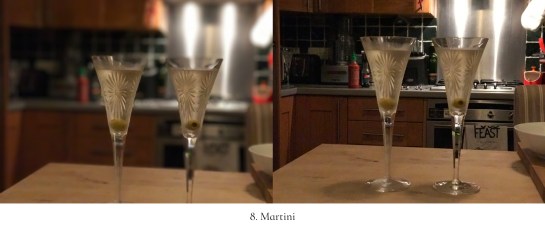
Cocktail #8. Martini
Source: Sipsmith Recipe Card
Recipe:
Stir 50ml of Sipsmith V.J.O.P and 25ml of Dry Vermouth (Noilly Prat) over ice and then strain into a chilled martini glass. Garnish and serve.
Thoughts on 2016:
The Big Stuff:
A weird year for the world. I didn’t expect Brexit. But I predicted (and bet on) Trump. Both outcomes were awful. Had a brilliant first year of marriage. Our honeymoon in April was unforgettable (flight into LA, road-trip through Austin, New Orleans, Memphis, Nashville and NYC.) Since then, we’ve accepted an offer on our flat, and viewed lots of houses. We found somewhere nice, but had to pull out after the survey. So the search continues.
The Small Stuff:
Ordered too much Banana Tree from Deliveroo. Discovered the rejuvenating qualities of the Shoreditch Grind raw breakfast salad. Started committing to early Monday morning week-planning. Didn’t go to enough gigs. Had lots of nice weekends away. Dry November. Half dry January. Happy with life.
Travels:

Quote of the year:
“IT’S ALL YOUR FUCKING FAULT YOU PLANNERY CUNT.”
Books read: 32
Best three books:

Work emails sent: 1621
Personal emails sent: 590
Number of photos: 12992
Number of songs starred on Spotify: 129
Most listened to track: Winter 1 – Vivaldi’s Four Seasons: Recomposed by Max Richter
Series watched: Black Mirror, House of Cards, Chef’s Table, Better Call Saul, Narcos, Twenty Twelve, How I Met Your Mother, The Trip (Italy).
Album of the Year: Scott Matthews – Home Part 2
Film of the Year: Weiner
Pub Quizzes Partaken: 4
Pub Quizzes Won: 4 (a lucky year, with fantastic team mates)
Trips to the doctor: 2
Trips to the dentist: 2
Trips to the vet: 0
Museums visited: 35
Museums by month:


New Year’s Resolutions 2017:
Give blood. Practice knife skills. Dry Jan. Monthly tech sabbaths. 10 ideas a day. Buy house.
#9. BBC Television Centre, Wood Lane
Thanks to programs like Children in Need, this was one of the first London buildings that I became aware of . It’s one of my all time favourites. An icon of my childhood – with its question mark shape, ‘atomic dot’ decoration and, of course, the Blue Peter garden. I was lucky enough to visit it several times thanks to generous housemates past; we frolicked around the corridors of BBC comedy, visited the Top of the Pops bar, and hung out backstage at Jools Holland recordings. It had a wonderful dusty smell. And a strange feeling as you walked about; a curious mix of creativity and bureaucracy, baked into its very foundations. The BBC recently sold the building to property developers, so it will be interesting to see if they keep much of its original character. Unfortunately the cranes and hoardings were already up by the time I got around to taking a photo.
 #10. Natural History Museum, Cromwell Rd
After I’d finished university, I started interviewing for graduate jobs in London. But being short of a bob or two, I used to ride the Megabus into town. The bus would always crawl past the Natural History Museum on Cromwell Road, so I spent quite a bit of time craning my neck to look at it. It’s a wondrous structure of beautiful brick patterns and intricate window carvings. A cathedral for science. Inside, the main atrium is jaw-dropping. Bridges at either end draw the eye, and elongate the proportions. And at the top of the far staircase, a statue of Darwin sits proudly over a domain given up to rational thought and nature’s beauty.

Restaurant: Anzu, Norris St
Time: Monday evening
With: Wist
Stand-out dish: Seafood katsu teishoku
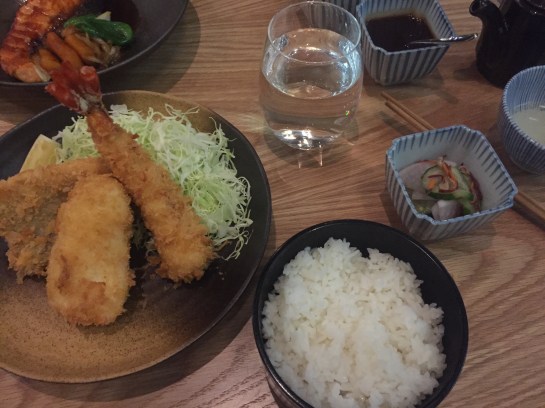
New restaurant in St James market, from the folk behind Tonkotsu. Pristine inside, with that new furniture smell. We visited on their first day of full trading, with the soft launch having finished the night before. There weren’t many customers in, but there were lots and lots of staff on. I wasn’t feeling too well, so plumped for the greasier options on the menu. The prawn korokke was fantastically gooey. And the seafood katsu teishoku was enormously generous. The miso had a deep mushroomy flavour, the pickles were crisp and sour, and the fish was lightly fried and tasty. Nice one Anzu.

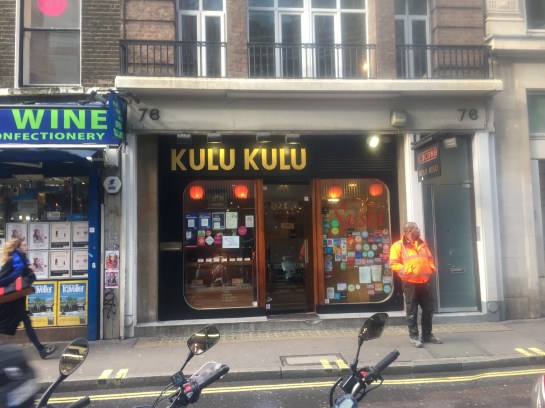
Restaurant: Kulu Kulu, Brewer St
Time: Wednesday lunchtime
With: James F
Stand-out dish: Prawn tempura hand roll
Shabby inside. Horse-shoe conveyor at the centre, with primary-school-sized stools following in parallel. Coat hooks line the walls around the conveyor. Staff conversations are minimal; you’ll have to flag one down if you’d like a drink. Many people arrive and leave in the time we’re there – if you’re after a lightning-quick lunch stop, it provides. The most expensive dishes are £4; it appears cheap, but adds up fast. The food isn’t fantastic, but it’s perfectly good for lunchtime sushi. I picked a few wild cards – including something that looked a bit like a Japanese style sausage and mash. Which turned out to be Japanese style sausage and mash. Who’d’ve thought. But the best dish of the day was the prawn tempura hand roll. Lovely.

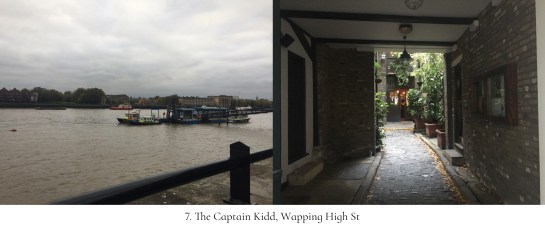
#7. The Captain Kidd, Wapping High St
The Captain Kidd is a beauty, overlooking the Thames. Its a warehouse conversion (coffee I think), converted in the 1980s,so the details are all surface, but the atmosphere doesn’t suffer for it. From the beer garden, you look directly onto the water. The HQ for the Met’s marine division is to your right, and their fleet is often bobbing up and down in the water. Inside, it all goes a bit nautical. But it’s a friendly boozer and one you can settle into for a session. The pub is run by Sam Smiths – headache beer – so I recommend you only stay for one or two, to take in the view.
#8. Fifteen, Westland Place
Jamie Oliver’s first restaurant opened back in 2002. The space inside is pretty fine, but it’s on this list for its exterior. As you walk up the cobbles of Westland Place, the building juts out at a sharp angle, perfectly framing it against the warehouse buildings in front and behind. It’s a muscular industrial structure, offset with awnings and warm lighting. Red brick, with sandstone banding. And a beautiful circular pediment on the top. For me – it’s the best looking restaurant in London. The area around it has monstrously gentrified in recent years, and I often worry that property developers will decide it will make more money as a bunch of swanky warehouse flats than a swanky restaurant. But so far, so good. The cocktails and food served inside aren’t half bad either.

Popped along to the Edward Ardizzone exhibition at the House of Illustration the other day.
Johnny the Clockmaker was one of my favourite books when I was a child, so it was wonderful to see them roughs and layouts up close.

Here’s Ardizzone’s self portrait.

He was commissioned by quite a few commercial clients, including the Radio Times. I thought this Guinness poster was great. Ardizzone wasn’t so sure. It was his only poster to be displayed on street hoardings, and he wrote to his daughter once it was posted to say ‘London is now plastered with a rash of them, and I creep around feeling rather ashamed of myself. The multiplicity is overpowering and destroys what little virtue there may be in the job.’

I also was excited to see the illustration he’d created of the Festival of Britain’s tin fountain. A guide I’d spoken to at the Southbank had referred to the bucket fountain, but didn’t have any reference for how it looked. Now we know.

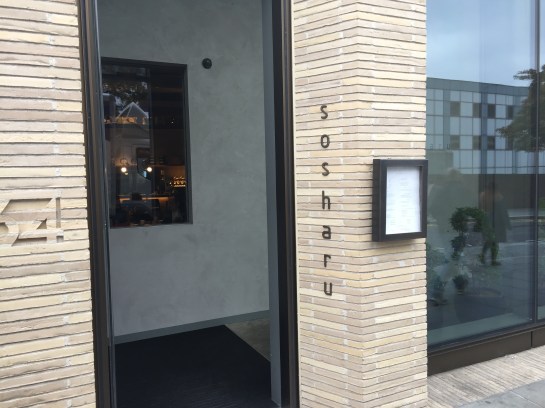
Restaurant: Sosharu, Turnmill St
Time: Thursday lunchtime
With: Leo B-J
Stand-out dish: Tuna open temaki
Swish interior. They’ve not dropped any details; everything is beautiful, from the wallpaper to the glassware. The staff are curt but quick. Lots of business meetings happening around us. It’s expensive, but not at the Sushi Tetsu extreme. The chashu pork belly was messy but fantastically tasty. The assorted sashimi was masterfully served and delicate in flavour. But the Tuna open temaki was the stand out dish. It was beautiful – served taco-style (rather than rolled) on a crisped seaweed shell, with spiced mayonnaise and scallion tobiko. Well worth a trip.

#5. St John’s Gate, Clerkenwell
Hidden behind trees, and flanked by two rather ugly buildings, sits St John’s Gate. Built in the early 16th century, it’s one of the few remaining structures linking Clerkenwell with its monastic past. From Clerkenwell Road, its barely visible. But as you walk closer, it rears up all muscular and solid. Inside, a small but well-curated museum about the Order of St John.

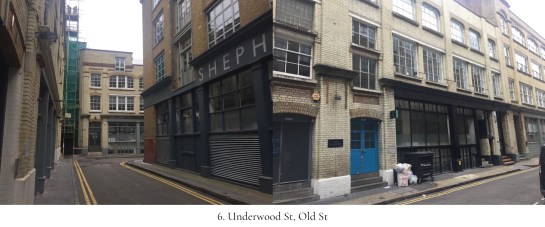
#6. Underwood St, Old St
A feature on many morning walks to work, this street never fails to rouse me. Warehouse buildings on either side – once storage for feather merchants and the like, now airy office spaces and swanky flats. A little slice of New York’s Meatpacking district, here in London. Unfortunately its over almost before its started; by the time you hit Nile Street, that Manhattan feeling is gone.
Cocktail #3. Manhattan
Source: Café Royal Cocktail Book, William J Tarling
Recipe:
1/3 Rye or Bourbon Whisky.
1/3 French Vermouth.
1/3 Italian Vermouth.
Stir and strain into cocktail glass, with cherry. A dash of Angostura can be added if desired.


